Clipboard Malware Explained
Clipboard malware, sometimes called a clipper, is a small program that watches what you copy. When it spots a crypto wallet address, it silently swaps it for an address the attacker controls. You paste, you confirm, and your funds go to a stranger. This guide explains how clippers work and the simple check that stops them.
The 20-second version
Malware on your device can replace a copied crypto address at the moment you paste it. Because addresses are long, you may not notice. The fix: always verify the full pasted address against the real one before confirming any send, and keep your devices clean.
What clipboard malware is
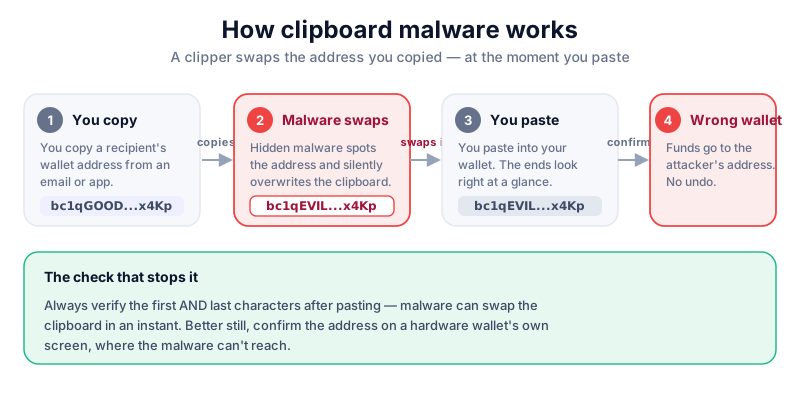
When you copy text, your device stores it on the clipboard until you paste it. Clipboard malware sits in the background monitoring that clipboard. The instant it detects something that looks like a crypto address, it overwrites it with the attacker's address of the same type.
Some clippers keep a list of lookalike addresses and choose one whose first and last characters resemble the one you copied, making the swap even harder to notice. This is the kind of malware that arrives through pirated software, fake wallet apps, malicious browser extensions, and phishing downloads. Confirming the address on a hardware wallet's own screen — like the air-gapped Keystone — defeats it, because the malware can't alter what the device displays.
How a swap happens
- You copy a recipient's wallet address from an email or app.
- The malware detects an address on the clipboard and replaces it.
- You paste into your wallet — now it shows the attacker's address.
- You glance at the ends, they look right, and you confirm.
- The funds are gone and the transaction can't be undone.
This is related to, but not the same as, address poisoning
Address poisoning plants a decoy in your transaction history; a clipper changes what you paste in real time. Both are beaten by the same habit — verifying the full address before you send.
How to protect yourself
- Always check the full pasted address against the original before confirming — including the middle, not just the ends.
- Use a hardware wallet and confirm the receiving address on the device's own screen, where malware can't reach.
- Send a small test amount first for any new or large transfer.
- Only install wallet and crypto software from official sources; avoid pirated apps and unknown browser extensions.
- Keep your operating system updated and run reputable security software; consider a dedicated, clean device for large transactions.

A hardware wallet displays the true destination on its own screen, so a swapped clipboard can't fool you. The Trezor Safe 5 is a solid open-source choice — read our reviews first.
If you suspect an infection
- Stop making transactions on that device immediately.
- Move funds to a wallet created on a known-clean device, never trusting the infected one again for your seed phrase.
- Run a full malware scan and, if in doubt, fully reset the device.
- Remember: a transaction sent to the wrong address cannot be reversed, so prevention is everything.
Never enter your seed phrase to 'clean' a wallet
No legitimate fix asks for your seed phrase. Anyone offering to recover swapped funds for a fee is a second scammer. See how to avoid crypto scams.
Key takeaways
- Clipboard malware swaps your copied address for the attacker's at paste time.
- Verify the full pasted address before confirming — never just the ends.
- A hardware wallet lets you confirm the real address on a trusted screen.
- Only install crypto software from official sources and keep devices clean.
Frequently asked questions
How would clipboard malware get on my device?
Commonly through pirated software, fake or cracked wallet apps, malicious browser extensions, and files from phishing emails. Sticking to official sources sharply reduces the risk.
Will antivirus catch it?
Reputable security software catches many clippers, but not all, and not instantly. Treat your verify-before-send habit as the real safety net.
Does this affect hardware wallet users?
The malware can still alter what you paste on your computer, but you'll catch it when you check the address shown on the hardware device's screen before approving.
Keep reading
Address Poisoning Scams Explained
Address poisoning plants a lookalike wallet address in your transaction history so you copy the wrong one. Lea
How to Avoid Crypto Scams: The Cornerstone Safety Guide
The common crypto scams — fake support, phishing, giveaways, romance and rug pulls — and the simple habits tha
Wallet Drainer Scams Explained
How wallet-drainer scams trick you into signing a malicious transaction that empties your wallet in seconds —