Crypto Giveaway Scams: Why 'Send 1, Get 2 Back' Is a Trap
If a celebrity or major project appears to be giving away free crypto, it isn't. 'Send some crypto and we'll send double back' is one of the oldest tricks online, dressed up with famous faces and fake live streams. This guide explains the con and the one rule that defeats it.
The 20-second version
No real giveaway ever asks you to send crypto first. 'Send 1, get 2 back' is always a scam — the moment your coins arrive, they're gone. Ignore it, no matter whose name or face is attached.
How giveaway scams work
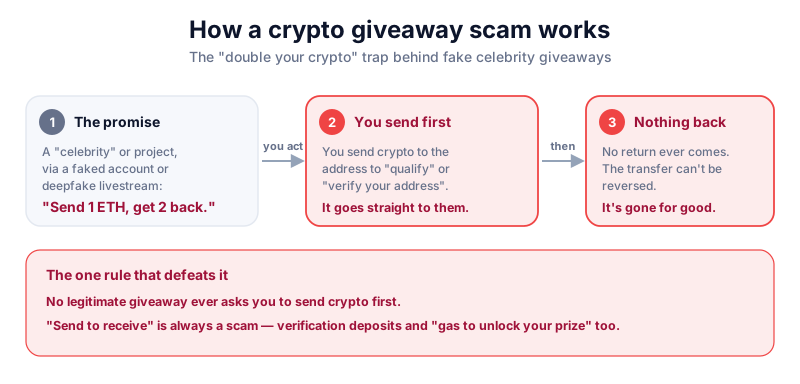
The pitch is built around a fake sense of opportunity and trust. Scammers impersonate a well-known figure — a tech founder, an exchange, or a celebrity — often using a hacked or lookalike account, a hijacked livestream replay, or a deepfake video. The 'event' looks official, complete with logos and a countdown timer.
The instruction is always the same: send crypto to the address shown and you'll receive double or more in return. To make it feel real, the page may show a stream of fake 'confirmations' from other winners. But anything you send simply goes straight to the scammer. There is no return transaction — ever.
- Impersonated accounts of celebrities, founders or big projects.
- Fake or replayed livestreams with a payment address on screen.
- Deepfake videos that put words in a famous person's mouth.
- Fake winner feeds designed to create fear of missing out.
The one rule that always works
Never send crypto to receive crypto
No legitimate giveaway, airdrop or promotion requires you to send funds first. The instant an offer asks you to pay to get paid, it's a scam. Crypto transactions can't be reversed, so once it's sent, it's gone.
This single rule covers nearly every version of the scam. It doesn't matter how convincing the video looks or how official the account seems — the request to send first is the tell. Treat 'verification deposits', 'gas fees to unlock your prize', and 'matching deposits' the same way.
How to protect yourself
- Assume every 'giveaway' that needs a payment is fake — there are no exceptions.
- Check accounts carefully: verified badges can be faked or bought, and handles are easily copied.
- Be extra wary of links in the comments or descriptions of live streams.
- Ignore countdowns and 'winner' feeds — they exist only to rush you.
- If you're tempted, walk away and confirm via the real project's official site. The 'offer' won't be there.

Cold storage means your long-term holdings aren't sitting in a hot wallet you might be tempted to spend on a fake 'deal'. The Trezor Safe 5 is a strong open-source option — see our reviews first.
Key takeaways
- Real giveaways never ask you to send crypto first — that request alone marks a scam.
- Famous names, verified badges and live streams are all easily faked.
- Countdowns and fake 'winner' feeds exist only to rush your decision.
- Crypto transfers can't be reversed, so a sent payment is gone for good.
Frequently asked questions
A verified account is running the giveaway — doesn't that make it real?
No. Verified badges can be purchased, faked, or the account can be hacked. Verification is not proof of a genuine promotion. The 'send first' request is what actually reveals the scam.
I saw a video of a famous founder announcing it. Could it be a deepfake?
Yes — scammers routinely use deepfake video and audio, or replay old footage with a fake payment overlay. Never act on a video alone. Confirm any promotion through the project's official website.
I sent crypto to a giveaway address. Can I get it back?
Unfortunately, crypto transactions are irreversible and these addresses are controlled by scammers, so recovery is extremely unlikely. Report it to the platform and to your local authorities, and treat it as a lesson rather than expecting a refund.
Keep reading
How to Avoid Crypto Scams: The Cornerstone Safety Guide
The common crypto scams — fake support, phishing, giveaways, romance and rug pulls — and the simple habits tha
Crypto Phishing Scams Explained (And How to Spot Them)
How crypto phishing scams trick you into handing over passwords, seed phrases and wallet approvals — and the s
Pig Butchering Scams: The Long Con That Targets Trust
Pig butchering scams blend fake romance and friendship with a fake investment platform. Learn how the long con