Fake Exchange Scams: Spotting a Counterfeit Trading Site
A fake exchange is a polished website that looks like a real trading platform but exists only to swallow your deposits. They're a favourite tool in investment and romance scams, and they can be hard to tell from the real thing. This guide shows how counterfeit exchanges work and how to confirm a platform is genuine before you fund it.
The 20-second version
Fake exchanges accept deposits but block withdrawals, often demanding 'fees' or 'taxes' to release funds that don't exist. Stick to well-known, independently reviewed exchanges you reached by typing the address yourself — never one a stranger sends you.
How fake exchanges work
A fake exchange is built to look completely legitimate: real-time price charts, a sleek dashboard, customer support chat, even an app. Some clone the branding of a genuine exchange with a near-identical web address. You can usually register, deposit, and watch your 'balance' move — everything works until you try to take money out.
That's when the trap springs. Withdrawals are 'pending', then blocked behind a 'verification fee', a 'tax', or a 'minimum balance' you have to top up first. Each payment you make to free your funds simply adds to what the scammers take. The numbers on screen were never real — the platform is software the scammers control entirely. These sites are often the engine behind pig butchering and other investment cons.
- Cloned branding and lookalike domains of trusted exchanges.
- Fake balances that rise to encourage bigger deposits.
- Blocked withdrawals released only after you pay 'fees'.
- Promoted by a 'friend' or 'advisor' rather than discovered yourself.
How to verify a real exchange
A few checks will sort almost any genuine exchange from a counterfeit one.
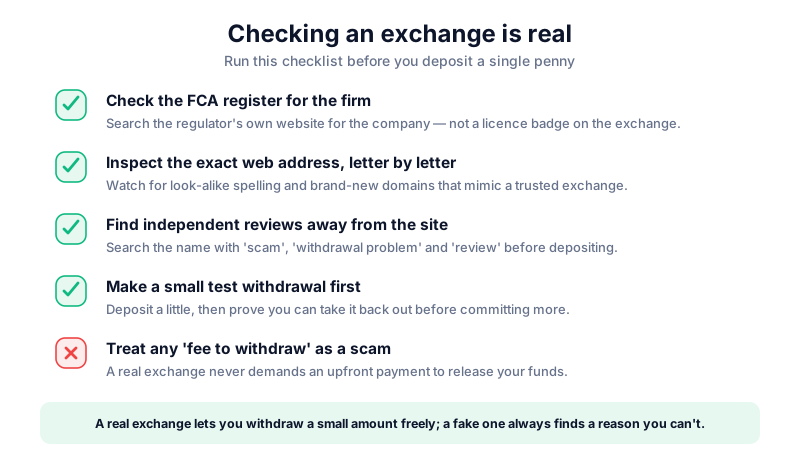
- Stick to major, established exchanges with a long public track record and independent reviews.
- Type the web address yourself and check it letter by letter — never arrive via a link or ad.
- Look for proper regulation and registration in your country, and verify it on the regulator's own website.
- Search the exchange name with words like 'scam', 'withdrawal problem', and 'review' before depositing.
- Be suspicious of any platform you only heard about from someone you met online.
Withdrawal 'fees' are the giveaway
A real exchange deducts trading and network fees from your balance automatically. It never demands a separate upfront payment to 'unlock' a withdrawal. If you're asked to deposit more to take money out, the platform is fake.
How to protect yourself
- Choose your exchange from independent reviews and reach it by typing the address yourself.
- Verify any regulatory claims on the regulator's official register, not the exchange's own page.
- Start with a small test deposit and a test withdrawal before committing more.
- Move crypto you're not actively trading off the exchange into your own wallet.
- Walk away from any platform a stranger or online 'mentor' is pushing you toward.
Even a genuine exchange holds your keys, so funds you aren't trading are safest in self-custody. A hardware wallet like the Ledger Nano X keeps them offline — read our review and buy direct from the manufacturer.
If you've deposited to a fake exchange
Stop sending money straight away — do not pay the 'fee' that supposedly unlocks your balance, as it never does. Take screenshots of your account, the deposit addresses, and all communications, then report it to your bank (if you paid by card or transfer), your local police, and your national fraud authority. Be wary of anyone who contacts you afterwards promising to recover your funds for a fee. Learn the broader patterns in how to avoid crypto scams.
Key takeaways
- Fake exchanges accept deposits but block withdrawals behind invented 'fees'.
- The on-screen balance is fake software the scammers fully control.
- Real exchanges never demand an upfront payment to release a withdrawal.
- Use established, reviewed exchanges you reached by typing the address yourself.
Frequently asked questions
The exchange looks completely professional — how can it be fake?
A polished design is cheap to build and proves nothing. Scammers clone real platforms down to the charts and support chat. Judge an exchange by its track record, independent reviews, and verifiable regulation — not how it looks.
I can see my balance and it's growing. Isn't the money real?
Not necessarily. On a fake platform the numbers are invented to keep you depositing. The real test is whether you can withdraw freely — and on a scam exchange, you can't without paying ever more 'fees'.
How do I check if an exchange is regulated?
Find the regulator that covers crypto businesses in your country and search their official public register for the company name. Don't rely on a licence number or badge shown on the exchange's own site — those are easily faked.
Keep reading
How to Avoid Crypto Scams: The Cornerstone Safety Guide
The common crypto scams — fake support, phishing, giveaways, romance and rug pulls — and the simple habits tha
Pig Butchering Scams: The Long Con That Targets Trust
Pig butchering scams blend fake romance and friendship with a fake investment platform. Learn how the long con
Crypto Phishing Scams Explained (And How to Spot Them)
How crypto phishing scams trick you into handing over passwords, seed phrases and wallet approvals — and the s