Public and Private Keys Explained
Every crypto wallet is built on a pair of keys: one you can share freely, and one you must guard with your life. Understanding the difference between public and private keys is the foundation of keeping your crypto safe.
The 20-second version
Your public key (and the address derived from it) is like an email address — share it to receive funds. Your private key is like the password that controls those funds — whoever has it owns the coins. Never share your private key or seed phrase with anyone, ever.
A matched pair
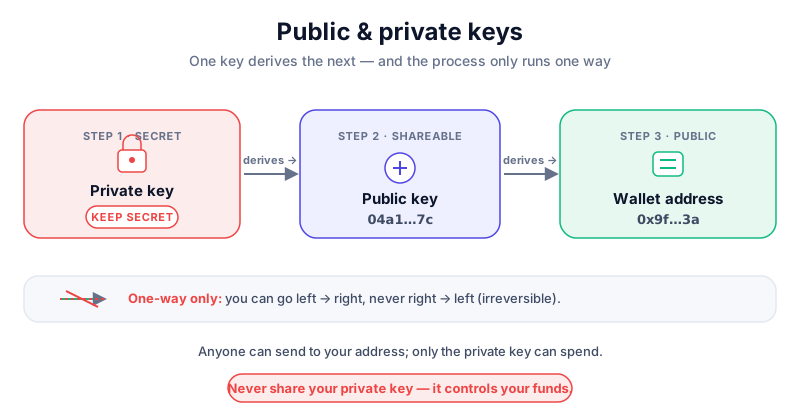
Public and private keys are created together as a mathematically linked pair. The clever part: the public key can be shared openly without revealing the private key. Anyone can use your public address to send you crypto, but only the private key can authorise spending it.
- Public key / address — share it to receive funds. Safe to post anywhere.
- Private key — proves ownership and signs transactions. Must stay secret.
- The maths only runs one way: you can't work out the private key from the public one.
How they're used
When you send crypto, your wallet uses your private key to create a digital 'signature' that proves the request is genuinely yours. The network checks that signature against your public key — confirming you authorised it without ever seeing the private key itself.
In practice you rarely handle the raw private key. Your wallet manages it, and your backup is usually a seed phrase — a list of words that can regenerate your keys if your device is lost. That phrase is just as powerful as the private key, so it deserves the same protection.
Protecting your private key
Whoever holds the private key owns the coins
There is no 'forgot password' in crypto. No exchange, wallet or support agent will ever ask for your private key or seed phrase — anyone who does is trying to rob you. Never type it into a website, store it as a photo, or share it. The safest way to protect it is a hardware wallet.
A hardware wallet keeps your private keys on a secure chip that never touches the internet. The Ledger Nano X is our top pick for beginners — read our full review before you buy, and only ever buy from the manufacturer.
Key takeaways
- Public and private keys are a linked pair generated together.
- Share your public address to receive funds; keep your private key secret.
- Your private key (or seed phrase) signs transactions and proves ownership.
- No legitimate service ever asks for your private key — keep it offline.
Frequently asked questions
Is my wallet address the same as my public key?
Closely related. Your address is derived from your public key and is what you actually share to receive funds. Both are safe to make public.
What happens if someone gets my private key?
They can take everything in that wallet, instantly and irreversibly. That's why protecting it — and never sharing your seed phrase — is the single most important rule in crypto.
Can I recover a lost private key?
Only if you have your seed phrase backup, which can regenerate it. Without that backup, lost keys mean permanently lost funds — there's no central authority to help.
Keep reading
What Is a Seed Phrase? (And Why You Must Never Share It)
A plain-English guide to seed phrases: what they are, how they back up your crypto wallet, how to store one sa
How to Store Bitcoin Safely (Step by Step)
Keep your Bitcoin safe from hackers and mistakes: hot vs cold wallets, hardware wallets, seed-phrase backups,
What Is a Crypto Transaction?
What happens when you send crypto: how a transaction is signed, confirmed and recorded, why fees and confirmat