Staking vs Crypto Lending: What's the Difference?
Staking and crypto lending are two of the most common ways people try to earn a return on crypto they already hold. They sound similar but work very differently under the hood — and carry very different risks. This guide compares them without suggesting you do either.
The 20-second version
Staking means locking coins to help secure a blockchain, earning rewards from the network itself. Lending means handing your crypto to a platform that lends it out and pays you interest. Lending adds counterparty risk — you're trusting a company to give it back.
How each one works
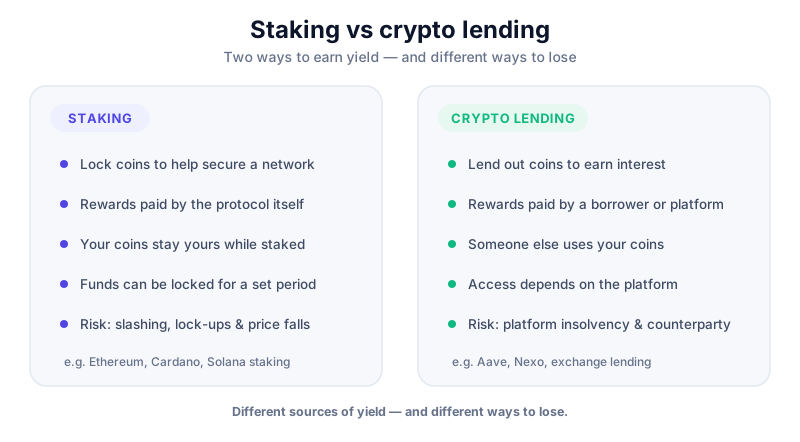
Staking is part of how 'proof of stake' blockchains like Ethereum and Solana operate. You lock up coins to help validate transactions, and the network pays you newly issued rewards in return. The yield comes from the protocol itself.
Crypto lending is different: you deposit crypto with a platform (centralised or DeFi) that lends it to borrowers and shares the interest with you. The yield comes from borrowers — and depends entirely on the platform staying solvent and honest.
Staking vs lending at a glance
| Feature | Staking | Crypto lending |
|---|---|---|
| Where yield comes from | The blockchain protocol | Borrowers paying interest |
| Main role | Securing the network | Providing loanable funds |
| Who you trust | The protocol (+ any validator/platform) | The lending platform & borrowers |
| Counterparty risk | Lower (if self-staking) | Higher — platform can fail |
| Typical lock-up | Sometimes an unbonding period | Varies; some allow instant withdrawal |
| Specific risk | Slashing, price drops | Default, platform insolvency, freezes |
The risks are not the same
- Staking risks include 'slashing' (losing some staked coins if a validator misbehaves), lock-up periods where you can't access funds, and — like all crypto — the underlying coin's price falling.
- Lending risks are largely about the platform. Several high-profile lending firms collapsed in 2022, freezing or wiping out customer deposits. When you lend, you typically give up custody and rely on the platform's promises.
- Both are exposed to the volatility of the underlying asset — a high advertised yield means nothing if the coin's value drops.
High yields are a warning sign, not a feature
If a platform advertises unusually high or 'guaranteed' returns, treat it as a major red flag — that's a classic pattern in crypto scams. Only ever risk what you can afford to lose. This is education, not financial advice.
The balanced verdict
Staking and lending aren't competing products so much as different mechanisms with different risk profiles. Staking ties your reward to securing a network; lending ties it to a counterparty's ability to repay. Understanding where the yield comes from — and who could fail — matters far more than the headline percentage. One habit worth adopting from day one: delegate from a hardware wallet like the Trezor Safe 5, so staking never means exposing your keys.
Key takeaways
- Staking earns rewards from a blockchain protocol for helping secure it.
- Lending earns interest from borrowers via a platform you must trust.
- Lending adds counterparty risk — platforms have collapsed before.
- Both expose you to the coin's volatility; high 'guaranteed' yields are a red flag.
Frequently asked questions
Which earns more, staking or lending?
Advertised rates change constantly and a higher number usually reflects higher risk, not free money. Focus on where the yield comes from and what could go wrong rather than chasing the biggest percentage.
Is staking safer than lending?
Self-staking generally avoids the counterparty risk of handing crypto to a lending firm, but it has its own risks like slashing and lock-ups. Neither is 'safe' — both can lose value, and nothing here is a recommendation.
Do I lose control of my coins?
With most lending you give up custody to the platform. With staking it varies: some self-custody methods let you keep control, while staking through a third party means trusting them. Always understand who holds your keys.
Keep reading
What Is Staking? How It Works and What It Costs
A plain-English guide to crypto staking: how it secures proof-of-stake networks, how rewards work, and the loc
What Is DeFi? Decentralised Finance Explained
A beginner's guide to decentralised finance: what DeFi is, how lending, trading and yield work without a bank
What Is a Stablecoin? How the Peg Works (and Fails)
A clear guide to stablecoins: how they aim to hold a steady value, the different types, and the very real peg