What Is a DeFi Vault? Automated Yield Explained
A DeFi vault is a smart contract that puts your crypto to work automatically, running a yield strategy so you don't have to manage it by hand. The convenience is real — and so are the risks. This guide explains what vaults do, how they generate yield, and what can go wrong.
The 20-second version
A DeFi vault is an automated savings strategy run by a smart contract. You deposit a token, the vault farms yield and reinvests it for you ('auto-compounding'), and you receive a share token representing your stake. Returns are not guaranteed, and a contract bug can lose your entire deposit.
Understand the risk first
Yield is never free money
Advertised vault yields ('APY') change constantly and are not guaranteed. The real risks are smart-contract bugs, strategy failure, and the value of the underlying token falling. Only deposit what you can afford to lose, and never chase the highest number you can find. This is education, not financial advice.
What is a DeFi vault?
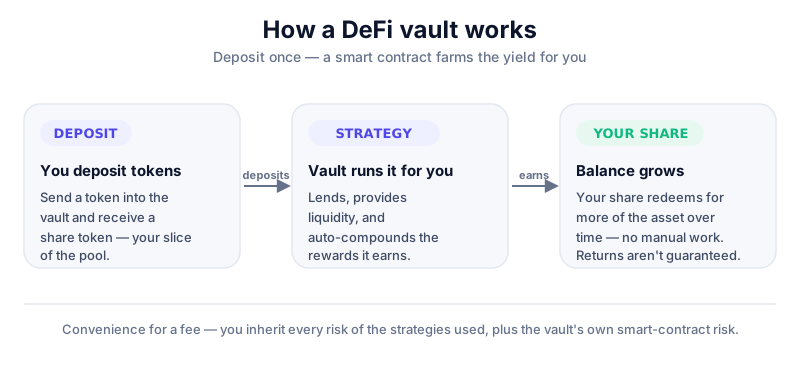
A DeFi vault is a smart contract that automates a yield strategy. Instead of manually moving funds between lending markets, DEXs and staking protocols to earn a return, you deposit into the vault and it does the work for you.
When you deposit, the vault gives you a share token (sometimes called a vault token or receipt token) that represents your slice of the pool. As the strategy earns, your share becomes redeemable for more of the underlying asset.
- Automated — the strategy runs without you babysitting it.
- Pooled — many users' funds are combined, which saves on transaction fees.
- Composable — vaults often plug into other DeFi protocols to source yield.
Auto-compounding and where yield comes from
Most vaults auto-compound: they regularly harvest the rewards a strategy earns and reinvest them, so your returns earn returns. Doing this by hand would cost gas fees and constant attention — a vault batches it for everyone.
The yield itself usually comes from one or more of these sources:
- Lending interest — paid by borrowers in a money market.
- Trading fees — earned by providing liquidity to a DEX.
- Staking or protocol rewards — tokens emitted to attract deposits.
- Stablecoin yield strategies — built around dollar-pegged assets.
The risks that matter
- Smart-contract risk — a bug or exploit in the vault, or in any protocol it connects to, can drain funds. Audits reduce this risk but never remove it.
- Strategy risk — the strategy can underperform, and 'impermanent loss' from providing liquidity can leave you with less than you deposited.
- Underlying-asset risk — if the token you deposited falls in value, your share falls with it, yield or not.
- Reward-token risk — yields paid in a volatile reward token can collapse if that token's price drops.
How to vet a vault
Favour established protocols with public audits and a long track record. Read what the strategy actually does. Be deeply suspicious of triple-digit APYs — they usually signal high risk or unsustainable token emissions. And learn how to avoid crypto scams before connecting your wallet.
Staying in control of your funds
Depositing into a vault means approving a smart contract to handle your tokens. Protect yourself by connecting through a hardware wallet, checking the official URL every time, and reviewing token approvals. No legitimate vault will ever need your seed phrase. A hardware wallet that displays exactly what you're approving — like the Keystone — turns most signing mistakes into near-misses.
Key takeaways
- A DeFi vault automates a yield strategy and hands you a share token for your deposit.
- Auto-compounding reinvests rewards so your returns can compound over time.
- Yield comes from real activity — lending, trading fees, staking — and varies constantly.
- Smart-contract and strategy risks are real; only deposit what you can afford to lose.
Frequently asked questions
Is a DeFi vault the same as a savings account?
No. It can feel similar, but there is no deposit insurance and no guaranteed rate. Your funds sit in smart contracts that can be exploited, and returns can fall or turn negative.
What does APY mean on a vault?
APY is the annualised yield assuming current conditions and compounding hold for a year. It is an estimate that changes in real time — not a promise of what you'll earn.
How do I get my money back out?
You redeem your share token through the vault, which returns the underlying asset plus (or minus) whatever the strategy earned or lost, less any fees.
Keep reading
What Is Stablecoin Yield? Earning on Dollar-Pegged Crypto
A plain-English guide to stablecoin yield: where the interest actually comes from, the difference between lend
What Is a Liquid Staking Token (LST)?
A clear guide to liquid staking tokens: how LSTs let you earn staking rewards while keeping your assets usable
What Is DeFi? Decentralised Finance Explained
A beginner's guide to decentralised finance: what DeFi is, how lending, trading and yield work without a bank