What Is KYC in Crypto?
Sign up for almost any mainstream crypto exchange and you'll be asked to upload your ID and a selfie before you can trade. That process is called KYC, and understanding it helps you know what you're sharing and why.
The 20-second version
KYC (Know Your Customer) is the identity check exchanges run to comply with anti-money-laundering laws. You typically provide ID and proof of address. It reduces fraud but means a company holds your personal data.
What KYC is and why it exists
KYC stands for Know Your Customer. It's the process by which a regulated company verifies who you are. In crypto it's part of broader anti-money-laundering (AML) rules designed to stop fraud, terrorism financing and sanctions evasion.
Most reputable exchanges are legally required to do it in the countries they serve. That's why a custodial platform will ask for verification before you can deposit, trade or withdraw beyond small limits.
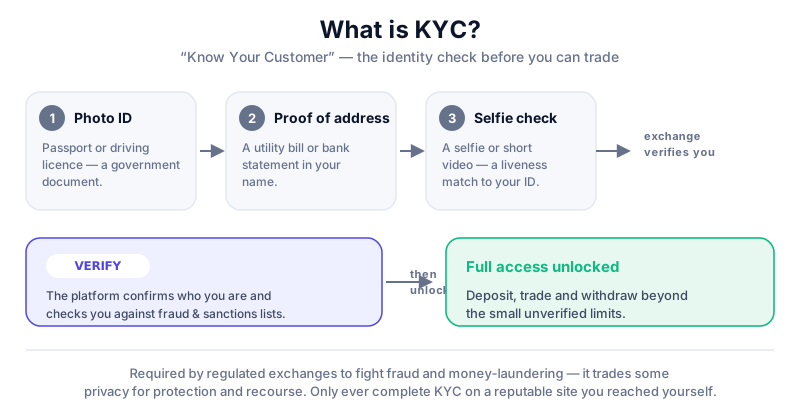
What you'll be asked for
- A government photo ID (passport or driving licence).
- A selfie or short video to match your face to the ID.
- Proof of address, such as a utility bill or bank statement.
- Sometimes details about your source of funds for larger accounts.
The upside: KYC makes it harder for criminals to use exchanges and can help with account recovery. The downside: a company now stores sensitive personal data, which can be exposed in a breach.
Privacy and safety
Only complete KYC with reputable, properly regulated exchanges. Scam sites and fake 'verification' pages exist purely to harvest your ID and selfie. Always check you're on the genuine website, and never send ID documents in response to an unexpected message or link.
Verify before you share your ID
Your passport, selfie and address are valuable to identity thieves. Only upload them on a verified, reputable platform you reached yourself — never via a link in an email or DM. Learn how to avoid crypto scams. This is education, not financial advice.
A VPN encrypts your traffic and hides your IP — sensible on public Wi-Fi and before logging into any exchange. NordVPN also blocks known phishing and malware sites. It's privacy, not anonymity — it won't undo on-chain traceability.
Key takeaways
- KYC is identity verification exchanges run to meet anti-money-laundering laws.
- You'll usually provide photo ID, a selfie and proof of address.
- It cuts fraud but means a company stores your personal data.
- Only complete KYC on reputable platforms you reached yourself, never via a link.
Frequently asked questions
Why does an exchange need my ID?
Regulated exchanges are legally required to verify customers under anti-money-laundering rules. Refusing usually means you can't deposit, trade or withdraw normally.
Is it safe to give an exchange my ID?
With a reputable, regulated exchange the risk is lower, but no company is immune to data breaches. Stick to well-established platforms and never share ID via unsolicited links or messages.
Keep reading
What Is Crypto Custody?
Custodial vs self-custody explained: who holds your keys, the trade-offs, and what 'not your keys, not your co
How to Avoid Crypto Scams: The Cornerstone Safety Guide
The common crypto scams — fake support, phishing, giveaways, romance and rug pulls — and the simple habits tha
How to Buy Bitcoin Safely (Step by Step)
A careful, beginner-friendly walk-through of buying Bitcoin on a regulated exchange — verifying your account,