What Is Tezos (XTZ)? A Plain-English Guide
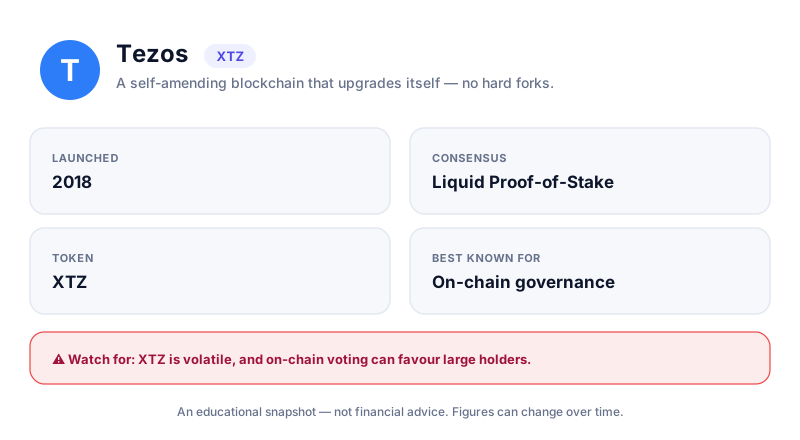
Tezos is a proof-of-stake blockchain best known for one unusual feature: it can upgrade itself without splitting into two competing chains. This guide explains what Tezos is in plain English, how its self-amending design and on-chain governance work, and how to think about its XTZ token sensibly.
The 20-second version
Tezos is a proof-of-stake blockchain whose native token is XTZ. Token holders vote on protocol upgrades, which then install automatically — no hard forks needed. You can earn rewards by 'baking' or by delegating your XTZ to a baker.
What is Tezos?
Tezos is a public, open-source blockchain that launched its main network in 2018 after one of the largest token sales of 2017. Like Ethereum, it can run smart contracts and host decentralised apps. Its native token is XTZ, sometimes called a 'tez' or 'tezzie'.
What sets Tezos apart is its self-amending design. Most blockchains can only change their core rules through a contentious 'hard fork', which sometimes splits the community in two. Tezos instead lets token holders vote on upgrades that then install themselves automatically across the network.
How Tezos works
Tezos secures itself with a proof-of-stake system that its community calls Liquid Proof-of-Stake. Instead of energy-hungry mining, participants put up XTZ as a stake to win the right to add new blocks.
- Baking is Tezos's word for validating. Bakers create and sign blocks and earn XTZ rewards.
- Delegation lets ordinary holders point their XTZ at a baker and share in the rewards, without handing over their coins.
- On-chain governance lets XTZ holders propose and vote on protocol changes in fixed periods.
Baking vs delegating
Running your own baker traditionally needed a large XTZ stake and an always-on server. Delegating is the simpler route for most people — you keep control of your coins and just lend your stake's voting and reward weight to a baker.
Self-amendment and governance
Tezos has upgraded itself many times through its on-chain process, with each amendment historically given a name from a city — Athens, Babylon, Granada, Nairobi and so on. A proposal moves through several voting periods; if it passes, the network adopts the new rules automatically.
Supporters argue this makes Tezos more adaptable and less prone to the community splits that have produced rival chains elsewhere. Critics note that formal on-chain voting can favour large holders and that turnout in governance rounds varies.
What Tezos is used for
- Smart contracts and apps — Tezos uses a language called Michelson designed to make contracts easier to verify formally.
- NFTs and digital art — Tezos became a popular home for energy-light NFTs through marketplaces built on it.
- DeFi and tokens — a range of DeFi apps, stablecoins and tokenised assets run on the network.
A fair warning
XTZ's price is highly volatile, and adoption of any single blockchain can rise or fall. Only ever risk what you can afford to lose, and never borrow to buy crypto. This guide is education, not financial advice.
Where to go next
Now you know what Tezos is, the natural next steps are learning how to buy Tezos safely, how to store it, and — if you want to earn rewards — how Tezos staking works. It also helps to understand the basics of staking in general. And however you weigh the trade-offs, keep meaningful holdings in cold storage — a Trezor Safe 5 — rather than on an exchange.
Key takeaways
- Tezos is a proof-of-stake blockchain whose token is XTZ.
- Its self-amending design lets it upgrade without hard forks.
- Holders earn rewards by baking or delegating their XTZ.
- It's volatile — only risk what you can afford to lose.
Frequently asked questions
What is XTZ used for?
XTZ pays transaction fees, secures the network through staking, and gives holders a vote in Tezos's on-chain governance. You can also delegate it to earn rewards.
Is Tezos the same as Ethereum?
Both run smart contracts, but they differ in design. Tezos uses on-chain governance and self-amendment, a different proof-of-stake model, and a contract language called Michelson. See what is Ethereum for comparison.
How do I earn rewards with Tezos?
Most people delegate their XTZ to a baker, keeping control of their coins while sharing in rewards. Read Tezos staking explained for the details.
Keep reading
How to Buy Tezos (XTZ): A Step-by-Step Guide
A beginner's guide to buying Tezos (XTZ) safely: choosing a reputable exchange, verifying your account, placin
How to Store Tezos (XTZ) Safely
Keep your Tezos safe from hackers and mistakes: hot vs cold wallets, hardware wallets, seed-phrase backups, de
Tezos Staking Explained: Baking and Delegation
How earning rewards on Tezos works: baking vs delegation, Liquid Proof-of-Stake, how rewards and risks compare