Bitcoin ETFs Explained
In January 2024, US regulators approved the first spot Bitcoin exchange-traded funds (ETFs) — a milestone that let people gain exposure to Bitcoin's price through an ordinary brokerage account. This guide explains what a Bitcoin ETF is, why the approval mattered, and how it compares to owning Bitcoin directly.
The 20-second version
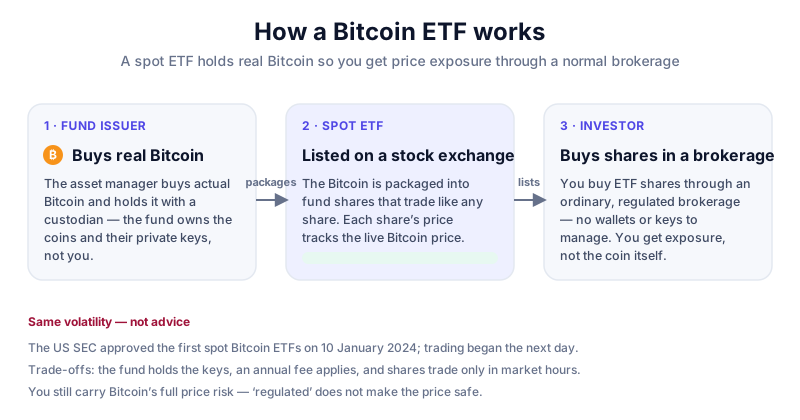
A spot Bitcoin ETF is a fund that holds real Bitcoin and trades on a stock exchange, so you can get price exposure through a normal brokerage. The US approved the first spot ETFs in January 2024. The trade-off: you don't hold the actual Bitcoin or its keys — the fund does.
What is a Bitcoin ETF?
An ETF (exchange-traded fund) is an investment fund that trades on a stock exchange like a share. A spot Bitcoin ETF holds actual Bitcoin, and its price tracks the price of Bitcoin. When you buy a share of the ETF, you're getting exposure to Bitcoin's price without buying or storing the coin yourself.
This is different from earlier futures ETFs, which tracked Bitcoin futures contracts rather than holding the coin directly. The 2024 milestone was specifically about *spot* ETFs holding real Bitcoin.
Why the 2024 approval mattered
For years, US regulators rejected spot Bitcoin ETF applications. That changed on 10 January 2024, when the Securities and Exchange Commission (SEC) approved a batch of spot Bitcoin ETFs from major asset managers, which began trading the next day.
- It let large institutions and everyday investors access Bitcoin through regulated, familiar brokerage accounts.
- It folded Bitcoin exposure into retirement and advisory accounts that can't easily hold crypto directly.
- It was widely seen as a step toward mainstream acceptance — though acceptance is not the same as endorsement.
ETF vs holding Bitcoin yourself
An ETF is convenient and removes the need to manage wallets and keys. But it comes with trade-offs worth understanding before assuming it's automatically 'safer'.
- You don't hold the keys. The fund custodies the Bitcoin; you own a share, not the coin. This reverses the self-custody benefit central to crypto.
- Fees apply. ETFs charge an annual management fee that you don't pay holding Bitcoin directly.
- Market hours. ETFs trade during stock-market hours; Bitcoin itself trades 24/7.
- No on-chain use. You can't spend ETF shares or move them on-chain the way you can with real Bitcoin.
Same volatility, this is not advice
A Bitcoin ETF is still exposed to Bitcoin's full volatility — its price can fall sharply. An ETF being 'regulated' does not make Bitcoin's price safe. Only risk what you can afford to lose and never borrow to invest. This is education, not financial advice, and not a recommendation to buy any ETF.
How to think about it
Neither route is universally 'better' — they suit different goals. An ETF can fit people who want simple, regulated exposure inside an existing brokerage and don't want to manage keys. Direct ownership suits those who value true self-custody and on-chain use.
If you do want to own Bitcoin directly, read how to buy Bitcoin and, crucially, how to store it safely. Either way, the underlying asset and its volatility are the same.
Key takeaways
- A spot Bitcoin ETF holds real Bitcoin and trades like a share.
- The US approved the first spot Bitcoin ETFs in January 2024.
- It offers easy, regulated exposure — but you don't hold the keys, and fees apply.
- ETF or not, you're exposed to Bitcoin's full volatility.
Frequently asked questions
Does buying a Bitcoin ETF mean I own Bitcoin?
Not directly. You own shares in a fund that holds Bitcoin on your behalf. You get price exposure, but you don't control the actual coins or their private keys.
Is a Bitcoin ETF safer than holding Bitcoin?
It removes the risk of losing your keys and the burden of self-custody, but it adds custodian and fund risk and management fees — and it does nothing to reduce Bitcoin's price volatility. 'Safer' depends on which risks matter most to you.
What's the difference between a spot and a futures Bitcoin ETF?
A spot ETF holds actual Bitcoin, so it tracks the live price closely. A futures ETF holds futures contracts instead, which can track the price less precisely. The 2024 approvals were for spot ETFs.
Keep reading
What Is Bitcoin? A Plain-English Guide
A beginner-friendly explanation of what Bitcoin is, how it works, and how to think about it — with no hype and
How to Buy Bitcoin Safely (Step by Step)
A careful, beginner-friendly walk-through of buying Bitcoin on a regulated exchange — verifying your account,
How to Store Bitcoin Safely (Step by Step)
Keep your Bitcoin safe from hackers and mistakes: hot vs cold wallets, hardware wallets, seed-phrase backups,