CEX vs DEX (2026): Centralised vs Decentralised Exchanges
There are two broad ways to trade crypto: a centralised exchange (CEX) like Coinbase or Binance, or a decentralised exchange (DEX) like Uniswap. They achieve the same goal — swapping one asset for another — but they work very differently, with real trade-offs around custody, convenience and risk. This guide compares the two so you understand what you're choosing between.
The short version
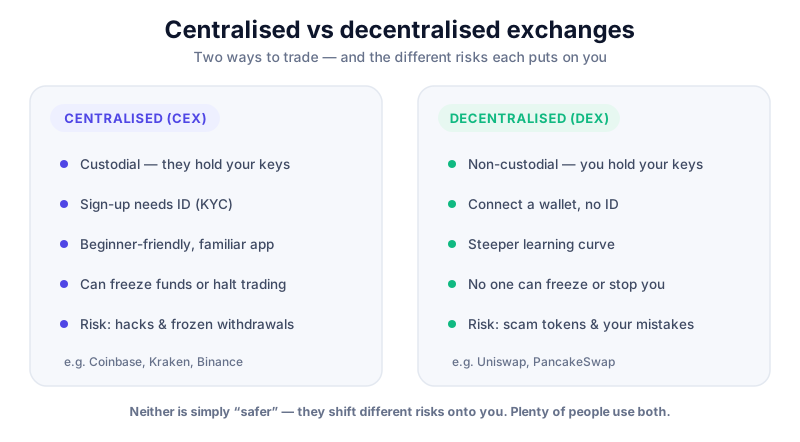
A CEX is a company that holds your funds and matches trades — easy to use, but you trust the company. A DEX is software running on a blockchain where you trade directly from your own wallet — you keep custody, but you take on all the responsibility (and the risk of mistakes). Most people use a CEX to get started and a DEX later for tokens or DeFi.
CEX vs DEX at a glance
| Feature | Centralised (CEX) | Decentralised (DEX) |
|---|---|---|
| Examples | Coinbase, Kraken, Binance | Uniswap, PancakeSwap |
| Who holds funds | The exchange | You (your wallet) |
| Sign-up / KYC | Account + ID required | Just connect a wallet |
| Ease of use | Beginner-friendly | Steeper learning curve |
| Fiat on-ramp | Yes (card, bank) | Usually no |
| Coin selection | Vetted, curated list | Vast, including unvetted |
| Customer support | Yes | None — you're on your own |
| Main risk | Exchange hack/freeze | User error, scam tokens |
| Reversibility | Sometimes (support) | Never — trades are final |
Neither model is universally 'safer'. A CEX concentrates risk in one company you must trust; a DEX removes that middleman but hands every responsibility — and every mistake — to you.
The case for a centralised exchange
A CEX is run by a company that holds customer funds, matches buyers and sellers, and provides an app, support and a way to convert traditional money into crypto. It's where almost everyone begins.
- Strengths: easy to use, fiat on-ramps, customer support, password resets, vetted coin lists.
- Trade-offs: you don't hold your own keys, the exchange can be hacked or freeze withdrawals, and sign-up requires identity verification.
The case for a decentralised exchange
A DEX is a set of smart contracts on a blockchain. You connect a self-custody wallet like MetaMask, trade directly, and the funds never leave your control until the swap executes. It's the gateway to most of DeFi.
- Strengths: you keep custody, no account needed, access to far more tokens, censorship-resistant.
- Trade-offs: no support or undo button, exposure to scam tokens and risky smart contracts, gas fees, and a real learning curve.
On a DEX, there is no safety net
Trades are final and irreversible, anyone can list a token (including scams), and approving a malicious contract can drain your wallet. Never share your seed phrase, double-check contract addresses, and learn how to avoid crypto scams first. Crypto is volatile — only risk what you can afford to lose. This is education, not financial advice.
So which should you use?
For most people the answer is 'both, in order'. Start on a reputable CEX to buy your first crypto with a card or bank transfer. Later, if you want to explore tokens or DeFi, move funds to a wallet and use a DEX — once you understand the risks. Whichever route you take, withdraw long-term holdings to cold storage you control. A hardware wallet that displays exactly what you're approving — like the Keystone — turns most signing mistakes into near-misses.
Key takeaways
- A CEX holds your funds and is beginner-friendly; a DEX lets you trade from your own wallet.
- CEX risk is concentrated in one company; DEX risk falls entirely on you.
- DEX trades are final, support-free, and exposed to scam tokens — proceed carefully.
- Most people start on a CEX and use a DEX later, once they understand the trade-offs.
Frequently asked questions
Is a DEX safer than a CEX?
Not automatically. A DEX removes the risk of an exchange being hacked or freezing your funds, but it shifts every responsibility to you — and there's no support to undo mistakes or recover from a scam token.
Can I buy crypto with a debit card on a DEX?
Usually not directly. DEXs swap one crypto for another. To turn traditional money into crypto you generally need a centralised exchange first, then move the funds to your wallet.
Do I need an account for a DEX?
No. You just connect a self-custody wallet such as MetaMask or Phantom. That also means there's no password reset or support line if something goes wrong — your wallet security is entirely up to you.
Keep reading
Coinbase vs Kraken (2026): Which Exchange Is Right for You?
A balanced Coinbase vs Kraken comparison: fees, security, ease of use, coin selection and support — so you can
Binance vs Bybit (2026): How the Two Exchanges Compare
A balanced Binance vs Bybit comparison covering fees, coin selection, features, security and regulation — to h
What Is DeFi? Decentralised Finance Explained
A beginner's guide to decentralised finance: what DeFi is, how lending, trading and yield work without a bank