Coinbase vs Kraken (2026): Which Exchange Is Right for You?
Coinbase and Kraken are two of the longest-running, most-regulated crypto exchanges in the English-speaking world. Both are reasonable on-ramps for beginners — but they pull in slightly different directions. This guide compares them on the things that actually matter so you can pick the one that fits how you plan to use it.
The short version
Coinbase wins on beginner-friendliness and a polished app. Kraken tends to be cheaper on its Pro/advanced interface and is popular with more hands-on traders. Both are well-established and regulated. Neither is 'better' for everyone — it depends on whether you value simplicity or lower fees.
Coinbase vs Kraken at a glance
| Feature | Coinbase | Kraken |
|---|---|---|
| Founded | 2012 (USA) | 2011 (USA) |
| Best for | Beginners | Hands-on traders |
| Beginner fees | Higher (simple buy) | Higher (instant buy) |
| Advanced fees | Lower (Advanced Trade) | Lower (Kraken Pro) |
| Coins listed | 200+ | 200+ |
| Staking | Yes (varies by region) | Yes (varies by region) |
| Mobile app | Excellent | Good |
| Regulation | Public, US-listed | Long compliance record |
| Self-custody | No (use a wallet) | No (use a wallet) |
Fees on both platforms vary by country, payment method and whether you use the simple or advanced interface, so always check the live fee schedule before you trade. The figures above describe the general pattern, not exact prices.
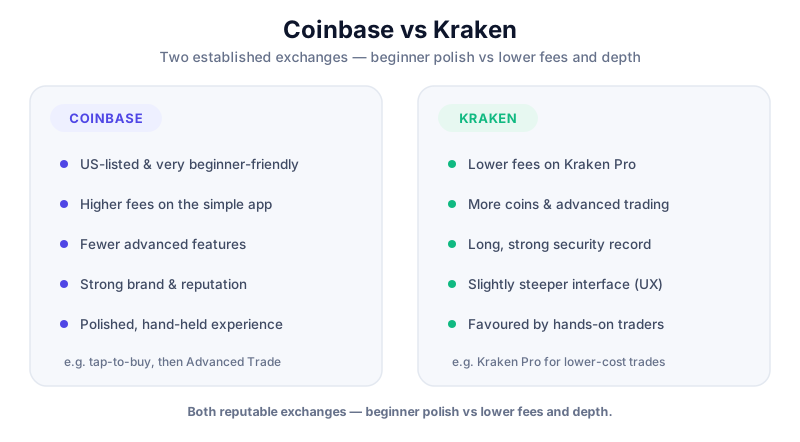
The case for Coinbase
Coinbase is the easiest place for most newcomers to make their first purchase. The interface is clean, identity verification is quick, and the Coinbase Wallet gives you a separate self-custody option when you're ready to move beyond the exchange.
- Strengths: intuitive app, strong educational content, US-listed public company with regular disclosures.
- Trade-offs: the one-tap 'simple buy' carries noticeably higher fees — switch to Advanced Trade to bring them down.
Verdict: a sensible default if you're new and value a smooth, hand-held experience and don't mind paying a little more for it.
The case for Kraken
Kraken has a long reputation for security and reliability and is a favourite among more active traders. Kraken Pro offers lower fees and deeper order types, while the standard app keeps things approachable for beginners.
- Strengths: competitive Pro fees, solid security track record, strong customer support reputation.
- Trade-offs: the instant-buy flow is pricier, and the Pro interface can feel busy if you're brand new.
Verdict: a strong choice if you're comfortable using a trading interface and want to keep costs down as your activity grows.
What matters more than the platform
Don't leave large amounts on any exchange
Whichever you choose, an exchange holds your keys for you — 'not your keys, not your coins'. For anything you'd be upset to lose, withdraw to a wallet you control. Crypto is volatile: only risk what you can afford to lose, and never borrow to buy. This is education, not financial advice.
Both exchanges are reasonable starting points. The bigger safety question is what you do *after* you buy — learn how to store Bitcoin safely and how to avoid crypto scams before you commit any real money.
Key takeaways
- Coinbase is the smoother on-ramp for beginners; Kraken rewards more hands-on traders.
- Both have lower fees on their advanced interfaces — avoid the 'simple buy' if cost matters.
- Fees vary by region and payment method, so always check the live schedule.
- Neither is true self-custody — move serious holdings to your own wallet.
Frequently asked questions
Which is cheaper, Coinbase or Kraken?
It depends on the interface. Both charge more for one-tap 'instant' buys and less on their advanced platforms (Coinbase Advanced Trade and Kraken Pro). Compare the live fee schedules for your country before deciding.
Are Coinbase and Kraken safe?
Both are long-established, regulated exchanges with solid security records. That said, no exchange is risk-free — keep only what you're actively using on the platform and move the rest to self-custody.
Can I use both?
Yes. Many people open accounts on more than one exchange to compare prices and fees. Just remember each account needs its own security setup, including two-factor authentication.
Keep reading
Binance vs Bybit (2026): How the Two Exchanges Compare
A balanced Binance vs Bybit comparison covering fees, coin selection, features, security and regulation — to h
CEX vs DEX (2026): Centralised vs Decentralised Exchanges
Centralised vs decentralised exchanges explained: custody, fees, security, ease of use and trade-offs — so you
How to Buy Bitcoin Safely (Step by Step)
A careful, beginner-friendly walk-through of buying Bitcoin on a regulated exchange — verifying your account,