Crypto Inheritance Planning: A Practical Guide
Self-custody means you, and only you, control your crypto. That's the whole point — but it creates a hard problem: if something happens to you, can the people you love actually reach it? A great deal of crypto has been lost simply because no one but the owner knew how to access it. This guide covers planning for that, calmly and without giving anyone a shortcut to your funds today.
The 20-second version
Make sure a trusted person can find and access your crypto if you can't — without handing them the keys while you're alive. Combine clear written instructions, secure key storage, and proper legal documents. Never put a live seed phrase in a will.
Why crypto needs a plan
There's no bank to call, no 'forgot password' link, and no customer-service team that can verify a death certificate and release funds. If your heirs don't know your wallet exists — or can't reach the seed phrase — the crypto is gone permanently.
The goal of inheritance planning is to solve that without weakening your security while you're alive. Those two needs pull in opposite directions, which is why it takes a little thought.
The balance to strike
Never put live keys in a will
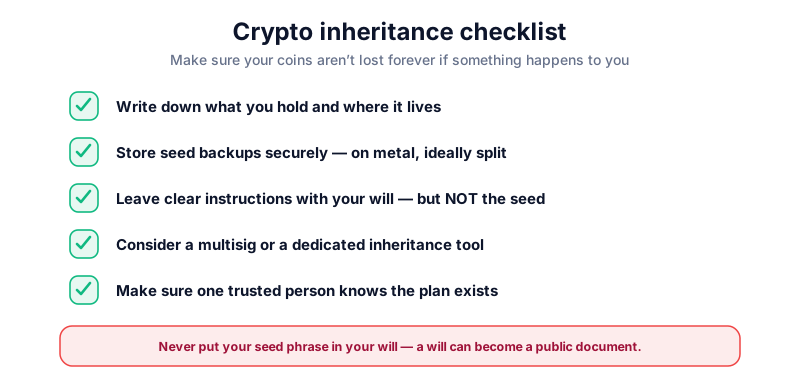
A will often becomes a public document after death. Never write your seed phrase, private keys, or passphrase into a will or anything that could be read by strangers. Reference where access instructions are kept instead — not the secrets themselves.
You want your heirs to be able to find and use your crypto after you're gone, while ensuring no single person can quietly take it before then. That usually means splitting knowledge and using time or trust as a safeguard. A seedless device like Cypherock, which splits your key across separate cards, can make that kind of shared-control setup simpler to reason about.
A practical plan
- Write a clear 'access letter': which wallets and exchanges you use, where backups are stored, and step-by-step instructions a non-technical person could follow.
- Store the access letter securely — a home safe, a bank safe-deposit box, or with a solicitor — separate from your seed-phrase backup.
- Consider splitting access so no one person holds everything alone. A multisig wallet, with a trusted party holding one key, fits this well.
- Name a technically-comfortable executor or guide who can help your heirs, and tell them the plan exists (not the secrets).
- Review the plan yearly and whenever your holdings, wallets, or relationships change.
Get proper legal advice
Crypto sits inside your wider estate, and rules differ by country. A solicitor experienced with digital assets can make sure your wishes are valid and tax-efficient. This guide is education, not legal advice.
Tools that help
- Multisig — distribute keys so an heir can combine with another trusted party only when needed.
- Sharded backups — split a seed phrase into parts (e.g. Shamir backup) held by different people, with a threshold to reconstruct.
- Dead-man's-switch services — release instructions after a period of inactivity. Useful, but vet any third party carefully and never give them live keys.
A hardware wallet is the most beginner-friendly way to truly own your crypto. Set it up once, write the seed phrase on paper, and your coins stay safe even if your laptop or phone is hacked. The Ledger Nano X adds Bluetooth and broad coin support.
Key takeaways
- Without a plan, self-custodied crypto can be lost forever when you die.
- Let heirs find and access funds later — without exposing keys today.
- Never write a live seed phrase or key into a will.
- Combine clear instructions, secure storage, and proper legal advice.
Frequently asked questions
Can't I just leave my seed phrase with a family member?
That gives them full access to your funds right now, not just after you're gone. Splitting access — for example via multisig — is safer for everyone.
Do exchanges help with inheritance?
Some custodial exchanges have a deceased-account process requiring legal documents. But anything in self-custody is up to you to plan for — the exchange can't help there.
How often should I update the plan?
Review it at least once a year and whenever your wallets, holdings, or trusted people change. An out-of-date plan can be as bad as none.
Keep reading
How to Use a Multisig Wallet (Beginner's Guide)
What a multisig wallet is, how it removes the single-point-of-failure of one seed phrase, and how to set one u
What Is a Seed Phrase? (And Why You Must Never Share It)
A plain-English guide to seed phrases: what they are, how they back up your crypto wallet, how to store one sa
How to Store Bitcoin Safely (Step by Step)
Keep your Bitcoin safe from hackers and mistakes: hot vs cold wallets, hardware wallets, seed-phrase backups,