How to Use a Multisig Wallet (Beginner's Guide)
Most crypto wallets have one fatal weakness: a single seed phrase. Lose it and your funds are gone; let someone steal it and they take everything. A multisignature ('multisig') wallet spreads control across several keys, so no single one can move funds — or lose them — on its own. Here's how it works and when it's worth the extra effort.
The 20-second version
A multisig wallet needs several keys to approve a transaction — for example, 2 of 3. No single key can spend or be lost catastrophically. It's a powerful setup for larger holdings, but adds complexity, so practice first with tiny amounts.
What 'multisig' means
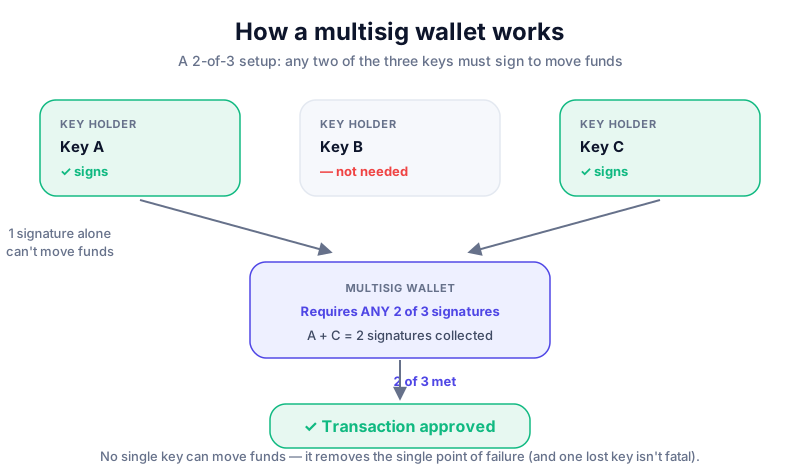
Multisig means a wallet is controlled by multiple keys, and a set number of them must sign off before any money moves. A common arrangement is '2-of-3': three keys exist, and any two together can authorise a transaction. Air-gapped devices like the Keystone are popular multisig signers because they never touch the internet.
Compare that to a standard wallet, where one seed phrase is the single point of failure. Multisig removes that single point — both for theft and for accidental loss.
Why use multisig
- No single point of failure — one lost or stolen key doesn't drain or lock your wallet.
- Shared control — useful for couples, businesses, or treasuries where more than one person should approve spends.
- Geographic spread — keys can live in different locations, so a fire or burglary in one place isn't fatal.
- Inheritance — fits naturally with estate planning, where a trusted party holds one key.
How to set one up
- Choose a reputable multisig coordinator app or wallet that supports your coin (Bitcoin and Ethereum have well-established options).
- Decide your scheme — 2-of-3 is a sensible starting point for individuals.
- Generate each key on a separate device, ideally separate hardware wallets, and back up each seed phrase independently and offline.
- Create the multisig wallet by combining the public keys, and save the wallet's configuration ('descriptor') — you need it to restore the wallet later.
- Send a small test amount, then practise a full spend so you know the signing flow before trusting it with real savings.
Back up the configuration too
With multisig you must back up not only each seed phrase but also the wallet's setup details. Without that configuration, the individual seeds alone may not be enough to recover your funds.
The trade-offs
Multisig is more secure but also more complex. There are more things to back up, transactions take more steps, and recovery requires understanding the setup. For small amounts, a single hardware wallet is usually simpler and sufficient.
Walk before you run
Set up a test multisig with trivial amounts and rehearse losing one key and recovering. Confidence with the process is what makes multisig safer rather than riskier.
The safest home for anything you’re not actively trading is a hardware wallet — your private keys stay offline, out of reach of hackers and exchange failures. The Ledger Nano S Plus is the value pick we’d hand a beginner.
Key takeaways
- Multisig requires several keys to move funds — no single point of failure.
- A 2-of-3 setup is a sensible starting scheme for individuals.
- Back up every seed phrase and the wallet configuration separately.
- It adds complexity; rehearse with tiny amounts before relying on it.
Frequently asked questions
Is multisig overkill for me?
For small or everyday amounts, usually yes — a single hardware wallet is simpler. Multisig shines for larger holdings or shared control.
Does multisig cost more?
You'll typically want more than one hardware device, and on some networks multisig transactions carry slightly higher fees. The security gain can justify it for larger sums.
What if I lose one key?
That's the point of multisig — in a 2-of-3, you can still spend and recover with the remaining keys, then rebuild the lost one. Just never lose the threshold number.
Keep reading
What Is a Seed Phrase? (And Why You Must Never Share It)
A plain-English guide to seed phrases: what they are, how they back up your crypto wallet, how to store one sa
How to Store Bitcoin Safely (Step by Step)
Keep your Bitcoin safe from hackers and mistakes: hot vs cold wallets, hardware wallets, seed-phrase backups,
What Is a Wallet Passphrase? (The 25th Word Explained)
A plain-English guide to the optional wallet passphrase — the '25th word' that adds a hidden layer to your see