How to Buy NEAR Protocol Safely (Step by Step)
Buying NEAR is straightforward once you know the steps — and where people go wrong. This guide walks through doing it safely: picking a reputable exchange, getting verified, placing a sensible order, and moving your NEAR somewhere you actually control.
The 20-second version
Open an account on a reputable exchange, verify your identity, deposit funds, and buy NEAR. For anything more than a small amount, withdraw it to a wallet where you hold the keys. Never invest money you can't afford to lose.
Before you buy
It helps to understand what you're buying first. If you haven't already, read what NEAR Protocol is so the token isn't an abstraction. Then set a budget you're genuinely comfortable losing — crypto prices swing hard in both directions.
Read this first
NEAR is highly volatile and its value can fall sharply. Only ever invest what you can afford to lose, and never borrow money or use funds you need for essentials. This is education, not financial advice — we're not telling you to buy NEAR.
How to buy NEAR, step by step
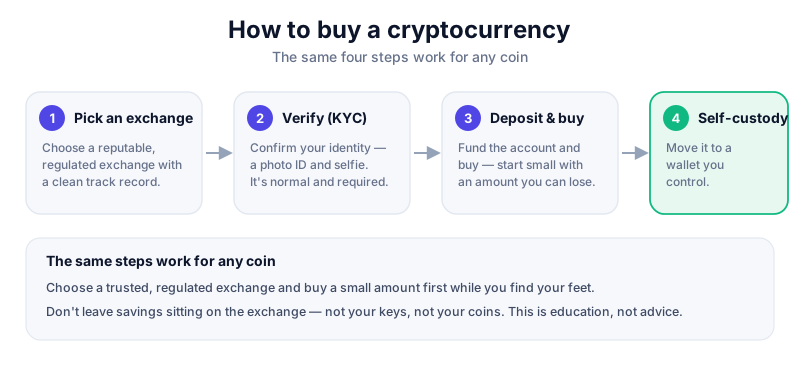
- Choose a reputable exchange that lists NEAR — for example Coinbase, Kraken or Binance. Favour well-known, regulated platforms over obscure ones.
- Create your account and complete identity verification (KYC). This is a legal requirement on legitimate exchanges, so expect to upload ID.
- Turn on two-factor authentication (2FA) using an authenticator app, not SMS, before you deposit anything.
- Deposit funds by bank transfer or card. Bank transfers are usually cheaper than card payments.
- Search for NEAR and place your order. A 'market' order buys at the current price; a 'limit' order lets you set the price you're willing to pay.
- Once you own NEAR, decide where to keep it — see storage below.
Coinbase is one of the more approachable regulated exchanges for first-time buyers. We may earn a commission if you sign up, at no extra cost to you — and it never changes our verdicts.
Move it somewhere safe
Leaving NEAR on an exchange is convenient for small amounts, but the exchange holds the keys — not you. For larger holdings, withdraw to a wallet you control. Our dedicated guide covers this in detail: how to store NEAR safely.
- Small amounts / active use: a reputable exchange or a phone wallet is fine.
- Serious savings: a hardware wallet that keeps your keys offline is the gold standard.
- Always: send a tiny test amount first to confirm the address works before moving the rest.
Watch for scams
No real exchange or 'support agent' will ever ask for your seed phrase or password. If someone pressures you to act fast or move funds to a 'safe' address, it's a scam. See how to avoid crypto scams.
Key takeaways
- Use a reputable, regulated exchange and turn on app-based 2FA before depositing.
- Bank transfers are usually cheaper than buying with a card.
- Move anything beyond pocket money to a wallet where you control the keys.
- NEAR is volatile — only invest what you can afford to lose, and never borrow to buy.
Frequently asked questions
How much NEAR do I need to start?
There's no minimum coin — NEAR is divisible, so you can buy a small fraction. Start with an amount you're comfortable losing while you learn.
Is it safer to leave NEAR on the exchange?
For small sums and active trading it's convenient, but the exchange controls the keys and could be hacked or freeze withdrawals. For larger amounts, self-custody in your own wallet is safer.
Which exchange is best for buying NEAR?
We don't crown a single 'best' — favour well-known, regulated exchanges that list NEAR, such as Coinbase, Kraken or Binance, and compare fees. See our reviews for more.
Keep reading
What Is NEAR Protocol? A Plain-English Guide
A beginner-friendly explanation of NEAR Protocol: what NEAR is, how its sharded blockchain works, what the NEA
How to Store NEAR Protocol Safely (Step by Step)
Keep your NEAR safe from hackers and mistakes: custodial vs self-custody wallets, hardware wallets, seed-phras
NEAR Staking Explained
How staking NEAR works in plain English: validators and delegation, rewards, the risks (slashing, lock-ups, vo