What Is NEAR Protocol? A Plain-English Guide
NEAR Protocol is a layer-1 blockchain built to be fast, cheap and genuinely easy to use — for both developers and ordinary people. This guide explains what NEAR is in plain English, how its sharded design works under the hood, what the NEAR token does, and how to think about it without the hype.
The 20-second version
NEAR is a smart-contract blockchain — a rival to Ethereum and Solana — that splits its workload across multiple 'shards' to stay fast and cheap as it grows. The NEAR token pays fees and secures the network through staking. Human-readable account names (like alice.near) make it friendlier than most chains.
What is NEAR Protocol?
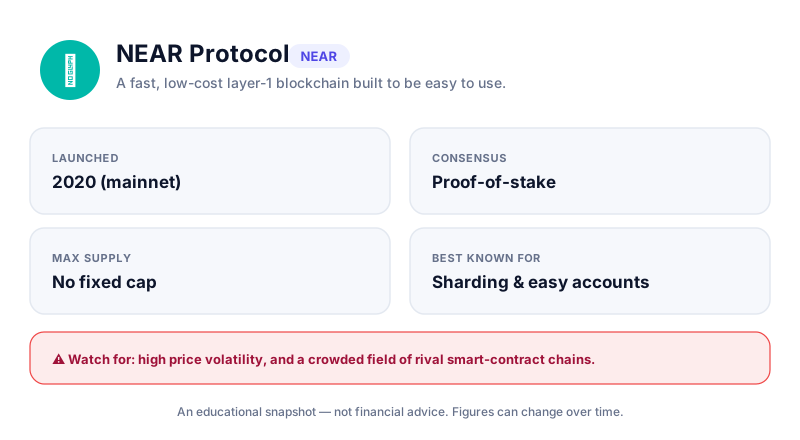
NEAR Protocol is a layer-1 blockchain: a base network, like Ethereum or Solana, that runs smart contracts and hosts apps. It launched its mainnet in 2020 and was built by the NEAR Foundation with a clear goal — make blockchain fast, low-cost and simple enough for mainstream users.
Two things set NEAR apart at a glance. First, it uses sharding to scale (more on that below). Second, it replaces the long, intimidating wallet addresses common in crypto with human-readable account names — so your account can be something like alice.near instead of a 42-character string.
How NEAR works: sharding and Nightshade
Most blockchains ask every computer in the network to process every transaction. That keeps things secure but creates a bottleneck — it's why fees can spike when a chain gets busy. NEAR tackles this with a sharding design called Nightshade.
- Shards split the network into parallel lanes, each handling a portion of transactions at the same time.
- Validators stake NEAR tokens to produce and verify blocks, keeping the network honest.
- Nightshade stitches the shards together so the whole thing still behaves like a single chain.
The practical upshot is that NEAR aims to keep transactions fast and fees tiny — typically a fraction of a cent — even as usage grows. NEAR uses a proof-of-stake system rather than energy-hungry mining, similar to Ethereum after its 2022 'Merge'.
A hardware wallet keeps your keys offline and away from hackers. The Ledger Nano X is our top pick for beginners — but read our full review before you buy.
What the NEAR token does
The native token, NEAR, has a few clear jobs on the network:
- Paying fees for transactions and running smart contracts.
- Staking — locking up NEAR to help secure the network and earn rewards, which you can learn about in NEAR staking explained.
- Governance and storage — accounts use NEAR to pay for the on-chain storage their data occupies.
Unlike Bitcoin's fixed 21-million cap, NEAR has an inflationary supply: new tokens are issued each year to reward validators, partly offset by fees being burned. That's a normal design choice for proof-of-stake chains, but worth understanding before you assume it behaves like 'digital gold'.
Why people pay attention to NEAR
NEAR is often grouped with the 'Ethereum alternative' chains that prioritise speed and low cost. It has pushed hard on usability — easy account names, the ability to onboard users without them first owning crypto, and tools aimed at making Web3 apps feel like normal apps. More recently the project has leaned into AI and 'chain abstraction' (letting apps work across multiple blockchains).
A fair warning
NEAR's price is highly volatile, and the 'Ethereum-alternative' space is crowded and competitive. Only ever risk what you can afford to lose, and never borrow to buy crypto. This guide is education, not financial advice — nothing here is a recommendation to buy NEAR.
Where to go next
Now you know what NEAR is, sensible next steps are seeing how NEAR compares to Ethereum, learning how to buy NEAR safely, and — most importantly — how to store it safely. If you want to put tokens to work, read NEAR staking explained.
Key takeaways
- NEAR is a proof-of-stake layer-1 blockchain — a fast, low-cost rival to Ethereum and Solana.
- It scales with 'Nightshade' sharding, splitting work across parallel lanes.
- Human-readable account names (like alice.near) make it unusually beginner-friendly.
- The NEAR token has an inflationary supply and is volatile — only risk what you can afford to lose.
Frequently asked questions
Is NEAR the same as Bitcoin?
No. Bitcoin is mainly digital money with a fixed 21-million supply. NEAR is a smart-contract platform for running apps, with an inflationary token used for fees and staking.
Why does NEAR use account names like alice.near?
Human-readable names make sending and receiving far less error-prone than copying long hexadecimal addresses. It's one of NEAR's deliberate usability choices.
What's the safest way to store NEAR?
For larger amounts, a hardware wallet that keeps your keys offline is the gold standard. Never share your seed phrase with anyone.
Keep reading
How to Buy NEAR Protocol Safely (Step by Step)
A safe, beginner-friendly walkthrough for buying NEAR Protocol: choosing a reputable exchange, verifying your
How to Store NEAR Protocol Safely (Step by Step)
Keep your NEAR safe from hackers and mistakes: custodial vs self-custody wallets, hardware wallets, seed-phras
NEAR vs Ethereum: A Fair Comparison
An even-handed comparison of NEAR Protocol and Ethereum — design, speed, fees, security, ecosystem and trade-o