How to Store Avalanche (AVAX) Safely
Buying AVAX, which we covered last lesson, is the easy part. Keeping it safe is where it actually counts — and, frankly, where most people slip up. This lesson walks through storing Avalanche properly, from your first small amount to serious long-term holdings, so the coins you bought are still yours next year and not sitting in some stranger's wallet. The good news: the rules are simple, and once you've learned them they apply to almost every crypto you'll ever touch.
The 20-second version
Small amounts can live on a reputable exchange or a phone wallet. For anything you'd be upset to lose, move AVAX to a hardware wallet and write your seed phrase on paper, stored offline. Use the C-Chain address for most AVAX, and never share that phrase with anyone.
It's all about the keys
Here's a mental model that fixes most of the confusion people have about storage: your AVAX never actually 'leaves' the blockchain. The coins aren't files sitting in an app on your phone the way a photo is. What you really store are the keys — the secret codes that prove the coins recorded on the blockchain are yours and that authorise you to move them. Whoever holds the keys controls the coins, full stop, no exceptions. That's why 'not your keys, not your coins' is the single most important phrase in all of crypto, and it's worth tattooing on your brain before you store anything you'd miss.
Think of it like a safety deposit box in a giant glass public vault. The box (your balance) is visible to absolutely everyone walking past, but only the key opens it. Lose the key and the box is sealed forever — the contents are right there, taunting you, and utterly out of reach. Let someone copy the key and they can stroll in and empty it. A crypto wallet, then, isn't really a container for coins at all. It's a tool for keeping those keys safe and using them when you want to spend. Get the keys right and everything else follows.
Never share your seed phrase
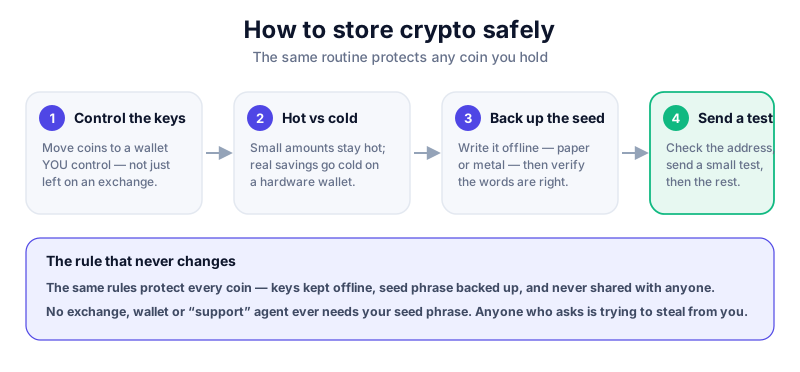
Your seed phrase — usually 12 to 24 words — is the master key that can restore your entire wallet on any device, anywhere in the world. No exchange, wallet, or support agent will ever, under any circumstances, ask you for it. Anyone who does is trying to steal everything you have. There are no exceptions to this rule.
Know your Avalanche addresses
Remember the three chains from how Avalanche works? They matter here, because they affect how you send and receive coins. Most wallets and exchanges use the C-Chain for AVAX, which uses Ethereum-style addresses starting with '0x'. The X-Chain and P-Chain use a different address format entirely, so an address from one won't work for the other. It sounds fiddly written down, but in practice you'll almost always be on the C-Chain — the real skill is simply remembering to check rather than assume.
- C-Chain — the default for most AVAX, DeFi and tokens, using 0x… addresses. This is the one you'll use roughly 95% of the time, including most exchange withdrawals.
- X-Chain / P-Chain — used for some asset transfers and certain staking operations, each with their own distinct address formats that look nothing like a 0x address.
- Sending to the wrong chain or the wrong address format can lose your coins for good, so always match exactly what your wallet and your exchange both expect before you hit send.
Test first, always
Before moving a meaningful amount, send a tiny test transaction and wait until you've actually confirmed it arrived. A few pennies of network fees is the cheapest insurance you'll ever buy against an irreversible, gut-wrenching mistake. Make it a habit, not an afterthought.
Hot wallets vs cold wallets
Wallets split into two broad types, and for most people the smart move is to use both — exactly the same way you keep a bit of cash in your pocket for the day but the bulk of your money in the bank. A hot wallet is for spending and everyday use; a cold wallet is for savings you rarely touch. Matching the wallet to the job is the whole trick. For the cold side, a hardware wallet like the Keystone keeps your AVAX keys offline.
- Hot wallets are connected to the internet — a phone or browser app such as MetaMask, which supports Avalanche's C-Chain out of the box. They're convenient and free, ideal for small amounts you're actively using, but being permanently online means they're more exposed to hacks, malware, and dodgy websites that trick you into approving the wrong thing.
- Cold wallets keep your keys completely offline, on a dedicated hardware device that only connects briefly when you want to sign a transaction. Less convenient for quick spending, but by far the safest home for larger holdings — a hacker on the other side of the world simply can't reach keys that never touch the internet in the first place.
If the distinction is new to you, hot vs cold wallets breaks it down in more depth. The headline is straightforward: convenience and security pull against each other, like a seesaw, and matching the wallet to the amount is how you get the best of both without obsessing over either. Pocket money goes hot; serious savings go cold.
How to set up safe storage
- Decide how much you're protecting. Pocket money can sit on a reputable exchange or a phone wallet; serious savings should move to a hardware wallet — be honest about which bucket yours really falls into rather than telling yourself you'll 'sort it later'.
- Buy a hardware wallet directly from the manufacturer's own website — never second-hand and never from a random marketplace seller, where a tampered device with a pre-set seed phrase could be quietly waiting to drain you.
- Set the device up yourself and let it generate a brand-new seed phrase. Write that phrase on paper by hand, slowly, double-checking each word and its spelling as you go.
- Store the paper offline somewhere safe — ideally two copies in two separate locations in case of fire or flood. Never photograph it, never type it into a computer or phone, and never store it in the cloud. The moment it touches the internet, it's at risk.
- Add Avalanche (C-Chain) support to the wallet, send a small test amount, confirm it arrives, then move the rest across in one go.
The Ledger Nano X keeps your keys on a secure chip and supports Avalanche alongside thousands of other coins. We may earn a commission at no cost to you — it never changes our verdicts. Read our full review first.
Common mistakes to avoid
Here's the reassuring truth: almost nobody loses crypto to clever, movie-style hacking with hooded figures and cascading green code. They lose it to a handful of ordinary, painfully avoidable slip-ups. Steer clear of these four and you've already dodged the large majority of the danger:
- Storing your seed phrase as a photo, screenshot, or note on your phone — the very first place malware and opportunistic thieves go looking.
- Keeping large amounts parked on an exchange for the long term, where they're only ever as safe as the company holding them on your behalf.
- Sending AVAX to the wrong network or address format without sending a small test transaction first to check the path works.
- Connecting your wallet to unknown apps and blindly approving transactions you don't actually understand — one careless click can authorise a drain of your whole balance.
If you ever feel rushed
Scammers manufacture urgency on purpose, because panic makes people skip their safety checks. Any message pushing you to 'verify your wallet', claim an airdrop, or move funds 'right now or lose them' is a giant red flag. Slow down and check independently — see how to avoid crypto scams for the common tricks.
Key takeaways
- You're really storing keys, not coins — protect the keys.
- Most AVAX uses the C-Chain (0x… addresses); always match networks when sending.
- Use a hot wallet for spending and a hardware wallet for savings.
- Never share, photograph, or type your seed phrase anywhere.
Frequently asked questions
Do I really need a hardware wallet for AVAX?
For small amounts, no — a reputable app like MetaMask is perfectly fine. For anything you'd be genuinely upset to lose, a hardware wallet is well worth the modest cost. It's the difference between a coat pocket and a safe.
Which network should I withdraw AVAX to?
Usually the C-Chain, which uses Ethereum-style 0x addresses. Confirm your wallet and your exchange both agree on the network, and always send a small test amount first before the full sum.
What if I lose my hardware wallet?
Your funds are safe as long as you still have your seed phrase. Buy a new device, restore from the phrase, and your AVAX reappears — which is precisely why that phrase matters so much, and why protecting it matters more than protecting the device itself.
Keep reading
What Is Avalanche (AVAX)? A Plain-English Guide
A beginner-friendly explanation of Avalanche and its AVAX token: what it is, how it's structured, what it's us
How Avalanche Works: Three Chains, Subnets & Consensus
A clear look under the hood of Avalanche: the X, C and P chains, what subnets are, and how Avalanche consensus
What Is a Seed Phrase? (And Why You Must Never Share It)
A plain-English guide to seed phrases: what they are, how they back up your crypto wallet, how to store one sa