What Is an Airdrop? Free Tokens and the Scams Behind Them
An airdrop is when a project distributes free tokens to people's wallets, usually to spread awareness or reward early users. This guide explains how they work — and why most 'free crypto' offers are traps.
The 20-second version
An airdrop sends tokens to wallets for free, often to reward early users or bootstrap a community. Real airdrops exist, but the word is also a magnet for scams. A genuine airdrop never needs your seed phrase or an upfront payment.
What an airdrop is
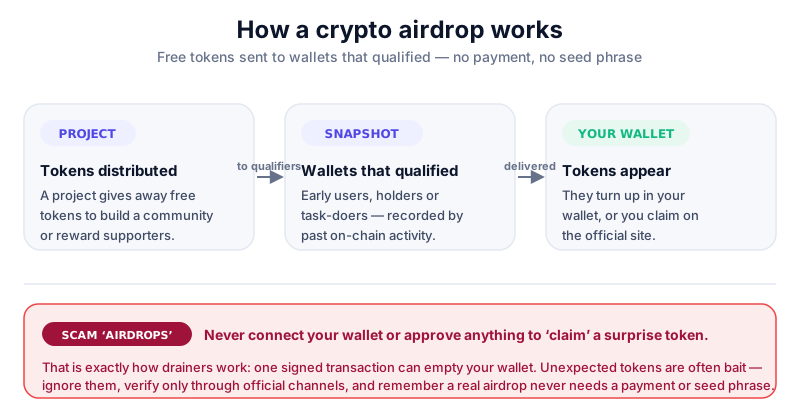
An airdrop is a distribution of free tokens to a set of wallet addresses. Projects use them to reward early supporters, decentralise ownership, or get attention for a new token. Sometimes they're a thank-you to people who used an app before it launched a coin.
Airdrops often appear after events like a blockchain fork or a new project launch on networks like Ethereum or Solana. When they're legitimate, the tokens simply turn up in your wallet, or you claim them through an official channel.
How real airdrops work
Genuine airdrops usually follow a recognisable pattern, and understanding it helps you spot the fakes. And however you weigh the trade-offs, keep meaningful holdings in cold storage — a Trezor Safe 5 — rather than on an exchange.
- A snapshot records which wallets qualify, often based on past activity.
- Eligibility is announced through the project's official, verifiable channels.
- Claiming (if needed) happens on the project's official site — never by sharing secrets.
- No payment is required to receive a real airdrop, and certainly no seed phrase.
Free isn't always valuable
Even legitimate airdropped tokens are frequently worth little or nothing, and many can't be sold easily. Receiving tokens is not a windfall, and in some countries it may have tax implications — see crypto taxes UK or crypto taxes US.
Airdrop scams: the big warning
'Free crypto' is one of the most effective scam hooks there is. The vast majority of airdrop messages you'll see unsolicited are designed to steal from you, not give to you.
How airdrop scams steal your funds
Scam 'airdrops' trick you into connecting your wallet to a fake site, signing a malicious transaction, paying a 'gas fee' to claim, or — worst of all — entering your seed phrase. Any of these can drain your wallet instantly. No legitimate airdrop ever asks for your seed phrase or an upfront payment. This is education, not financial advice.
- Unexpected tokens appearing in your wallet may be bait — interacting with them can trigger a malicious contract. Often it's safest to ignore them.
- 'Claim your reward' links in DMs, emails or comments are classic phishing.
- Urgency ('claim in the next hour or lose it') is a manufactured pressure tactic.
- Requests to 'verify' your wallet by signing or connecting on an unknown site.
Staying safe around airdrops
Treat every airdrop as guilty until proven innocent. Verify announcements only through a project's official, well-established channels, never click 'claim' links from strangers, and consider using a separate empty wallet for anything experimental. Read how to avoid crypto scams for the full playbook.
Key takeaways
- An airdrop distributes free tokens, often to reward early users or build a community.
- Real airdrops never need your seed phrase or an upfront payment.
- 'Free crypto' is a top scam hook — most unsolicited airdrops are traps.
- Verify through official channels only, and treat 'claim' links from strangers as phishing.
Frequently asked questions
Are airdrops free money?
Rarely, in practice. Genuine airdrops exist, but the tokens are often worth little, and the word is heavily used by scammers. Treat any 'free crypto' offer with strong suspicion.
Is it safe to claim an airdrop?
Only if you've independently verified it's official and you're on the genuine site. Claiming via links from strangers, paying a fee, or entering your seed phrase are all classic ways to get your wallet drained.
Random tokens appeared in my wallet — what do I do?
Be cautious. Unsolicited tokens can be bait, and interacting with them may trigger a malicious contract. Often the safest move is to leave them alone and not connect to any site they point to.
Keep reading
How to Avoid Crypto Scams: The Cornerstone Safety Guide
The common crypto scams — fake support, phishing, giveaways, romance and rug pulls — and the simple habits tha
What Is a Seed Phrase? (And Why You Must Never Share It)
A plain-English guide to seed phrases: what they are, how they back up your crypto wallet, how to store one sa
What Is a Blockchain Fork? Hard Forks and Soft Forks Explained
What a blockchain fork is, the difference between hard and soft forks, why they happen, and what they mean for