How to Store Chainlink (LINK) Safely
Buying LINK is the easy part. Keeping it safe is where it really counts — and where many people slip up. This guide explains how to store Chainlink properly, from a first small amount to serious long-term holdings.
The 20-second version
LINK is an Ethereum-based token, so any reputable Ethereum-compatible wallet holds it. Small amounts can live in a phone or browser wallet; for serious holdings, use a hardware wallet and keep your seed phrase on paper, offline. Never share that phrase.
It's all about the keys
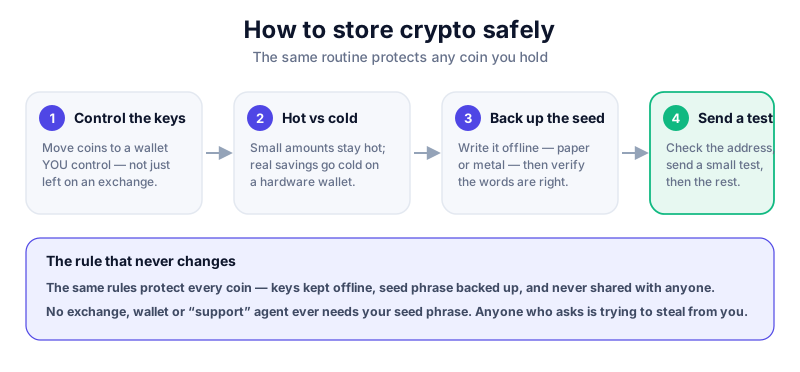
Your LINK never really leaves the blockchain. What you actually store are the keys that prove the coins are yours. Whoever controls the keys controls the coins — which is why 'not your keys, not your coins' is the most important phrase in crypto. Because LINK runs on Ethereum, any wallet that supports Ethereum and its tokens can hold it.
Never share your seed phrase
Your seed phrase (12–24 words) can restore your whole wallet. No exchange, wallet, or support agent will ever ask for it. Anyone who does is trying to steal from you.
Hot wallets vs cold wallets
Wallets come in two broad types, and many people use both — a hot wallet for small, active amounts and a cold wallet for savings. For the cold side, an EVM-friendly hardware wallet like OneKey keeps your LINK offline. See hot vs cold wallets for the full picture.
- Hot wallets like MetaMask or Trust Wallet are connected to the internet — handy for small amounts, more exposed to hacks.
- Cold wallets such as a hardware device keep keys offline — the safest home for larger holdings.
How to set up safe LINK storage
- Decide how much you're protecting. Pocket money can stay in a reputable app; serious savings should move to a hardware wallet.
- Buy a hardware wallet directly from the manufacturer — never second-hand or from a marketplace, which risks tampering.
- Set it up yourself and let the device generate a brand-new seed phrase. Write it down by hand on paper.
- Store the paper offline in a safe place, ideally two copies in two locations. Never photograph it or type it into any device.
- Add the Ethereum account in your wallet, send a small test amount of LINK first, confirm it arrives, then move the rest.
The Ledger Nano X holds LINK alongside thousands of other coins and keeps your keys on a secure chip. Read our full review before you buy — and only ever buy from the manufacturer.
Common mistakes to avoid
- Storing your seed phrase as a photo, screenshot, or note on your phone.
- Keeping large amounts on an exchange long-term.
- Buying a 'pre-configured' wallet that arrived with a seed phrase already written down — a classic scam.
- Approving wallet pop-ups you don't understand; malicious sites can drain tokens this way.
If you ever feel rushed
Scammers create urgency. Any message pushing you to 'verify your wallet' or move funds 'right now' is a red flag. Slow down and check independently — see how to avoid crypto scams.
Key takeaways
- You're storing keys, not coins — protect the keys above all.
- LINK is an Ethereum token, so any reputable Ethereum-compatible wallet works.
- Use a hot wallet for spending, a cold wallet for savings.
- Never share, photograph, or type your seed phrase anywhere.
Frequently asked questions
Can I store LINK on a Bitcoin-only wallet?
No. LINK is an Ethereum-based token, so you need a wallet that supports Ethereum and ERC-20 tokens, such as MetaMask, Trust Wallet, or a hardware wallet like Ledger.
Do I really need a hardware wallet for LINK?
For small amounts, a reputable app is fine. For anything you'd be genuinely upset to lose, a hardware wallet is well worth the cost.
What if I lose my hardware wallet?
Your LINK is safe as long as you have your seed phrase. Buy a new device and restore from the phrase — which is exactly why protecting that phrase matters so much.
Keep reading
What Is Chainlink (LINK)? A Plain-English Guide
A beginner-friendly explanation of Chainlink and the LINK token: what it does, how its oracle network works, a
How to Buy Chainlink (LINK) Safely: Step by Step
A safe, beginner-friendly walkthrough for buying Chainlink (LINK): choosing an exchange, verifying your accoun
What Is a Seed Phrase? (And Why You Must Never Share It)
A plain-English guide to seed phrases: what they are, how they back up your crypto wallet, how to store one sa