What Is Chainlink (LINK)? A Plain-English Guide
Chainlink is a network that lets blockchains talk to the outside world — feeding smart contracts real-world data like prices, weather, or sports results that they can't fetch on their own. This guide explains what Chainlink is in plain English, what the LINK token does, and how to think about it without the hype.
The 20-second version
Blockchains can't see outside their own network. Chainlink is a 'decentralised oracle' service that delivers trustworthy outside data to smart contracts. LINK is the token used to pay the operators who run it.
What is Chainlink?
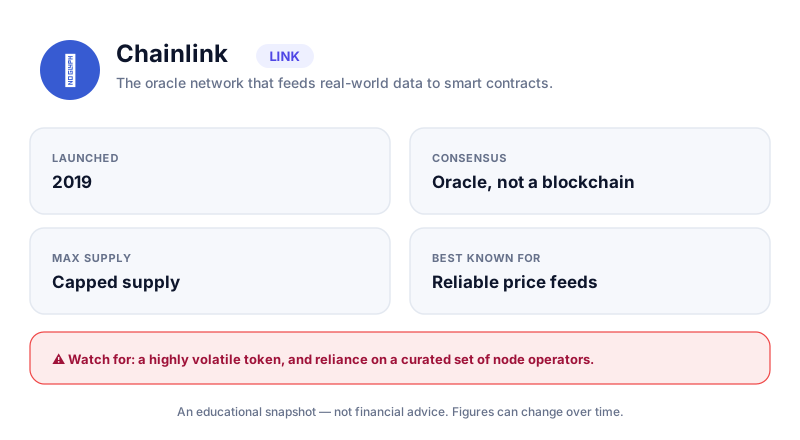
Chainlink is a decentralised oracle network. That's a mouthful, so here's the plain version: smart contracts on networks like Ethereum are brilliant at following rules, but they're sealed off from the real world. They can't check today's gold price, the result of a football match, or whether a parcel was delivered. Chainlink is the bridge that brings that outside information in.
Launched in 2019 by Sergey Nazarov and Steve Ellis, Chainlink has become the most widely used oracle service in crypto. If a DeFi app needs to know the price of an asset to work, there's a good chance Chainlink is supplying that number behind the scenes.
The problem it solves
A smart contract is just code that runs automatically when conditions are met — for example, 'pay out this insurance if the flight is delayed'. But the contract can't look up flight data by itself. Feeding it that data is the job of an oracle, and doing so safely is harder than it sounds.
If one company supplied all the data, that company could lie, make a mistake, or get hacked — and millions could be lost. Chainlink spreads the job across many independent operators who each report the data and agree on an answer. We cover this fully in what are blockchain oracles.
- Many sources mean no single point of failure.
- Reputation scores let users pick reliable operators.
- On-chain payment in LINK rewards honest reporting.
What the LINK token does
LINK is the network's native token, and it has a practical job rather than just being something to trade. Apps that need data pay LINK to the node operators who fetch and deliver it. Operators can also be required to lock up LINK as a deposit, which they lose if they behave dishonestly — a system explored in Chainlink staking explained.
So LINK is best understood as fuel for the oracle network: the more the network is used, the more LINK changes hands paying for that work. Whether that translates into price is a separate, uncertain question.
A fair warning
LINK's price is highly volatile and a useful network does not guarantee a rising token. Only ever risk what you can afford to lose, never borrow to buy crypto, and treat this as education, not financial advice.
What Chainlink is used for
Most of Chainlink's real-world use today is price feeds — the reliable price data that lending apps, stablecoins, and trading platforms depend on. But the network has expanded well beyond that.
- Price feeds powering DeFi lending and stablecoins.
- Verifiable randomness (VRF) for fair lotteries and NFT mints.
- Automation that triggers contracts when conditions are met.
- Cross-chain messaging (CCIP) to move data and value between blockchains.
Risks and criticisms
Chainlink is widely used, but it's not without debate. Critics note that a large share of the LINK supply was held by the founding team and ecosystem at launch, and that the network still relies on a curated set of node operators for some services rather than being fully permissionless. Oracle systems have also been targeted in exploits elsewhere in DeFi, which keeps data quality a serious, ongoing concern.
None of this makes Chainlink good or bad as an investment — that's not a call we make. It simply means you should understand what you're looking at before going further.
Where to go next
Now you know what Chainlink is, the natural next steps are understanding what blockchain oracles are, then — if you choose to — how to buy LINK safely and how to store it safely. Whichever way you lean, the storage rule doesn't change: serious amounts belong offline, on a hardware wallet like the OneKey.
Key takeaways
- Chainlink is a decentralised oracle network that feeds real-world data to smart contracts.
- LINK is the token used to pay the operators who run that network.
- Its biggest real use today is reliable price feeds for DeFi.
- It's volatile — a useful network is not a promise of a rising price; only risk what you can afford to lose.
Frequently asked questions
Is Chainlink a blockchain?
No. Chainlink is a service that runs on top of blockchains like Ethereum, supplying them with outside data. It isn't a standalone chain of its own.
What is the difference between Chainlink and LINK?
Chainlink is the oracle network; LINK is the token used to pay for its services. People often use 'Chainlink' to mean both.
Do I need to understand oracles to use DeFi?
Not to use it, but it helps. Many DeFi apps rely on Chainlink price feeds, so understanding oracles explains how those apps know what things are worth.
Keep reading
What Are Blockchain Oracles? The Problem Chainlink Solves
A plain-English explanation of blockchain oracles: why smart contracts can't see the outside world, how oracle
How to Buy Chainlink (LINK) Safely: Step by Step
A safe, beginner-friendly walkthrough for buying Chainlink (LINK): choosing an exchange, verifying your accoun
How to Store Chainlink (LINK) Safely
Keep your LINK safe: hot vs cold wallets, hardware wallets, seed-phrase backups, and the simple rules that pro