What Is a Wallet Passphrase? (The 25th Word Explained)
Beyond your normal 12-to-24-word seed phrase, most hardware wallets offer an optional extra: a passphrase, sometimes called the '25th word'. Used well, it adds a powerful hidden layer of protection that even a thief holding your written backup can't get past. Used carelessly, it's one of the fastest ways to permanently lose your crypto. Here's how it actually works, and how to decide whether you need one.
The 20-second version
A passphrase is an extra secret you add on top of your seed phrase. It creates a separate 'hidden' wallet that's invisible without it. There is no reset and no recovery — forget the passphrase and those funds are gone for good.
What a passphrase actually does
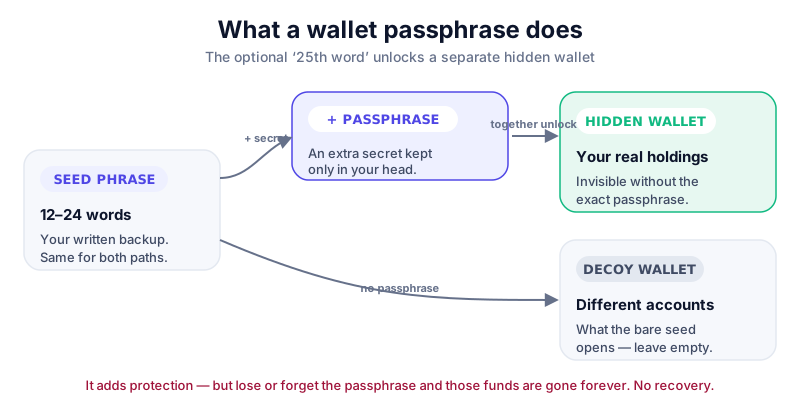
Your seed phrase alone unlocks one set of wallets. Add a passphrase — any word, sentence, or string of characters you choose — and the wallet uses it to derive a completely different set of accounts. The two are combined mathematically, so the seed and the passphrase together point to a wallet that neither could reach on its own.
The detail that trips people up is how sensitive this is. There's no 'correct' passphrase the device checks against — every possible passphrase opens *some* valid wallet, just an empty one if no funds were ever sent there. Type 'sunflower' and you get one wallet; type 'Sunflower' with a capital S, or 'sunflower ' with a trailing space, and you get an entirely different, separate wallet. The device won't warn you, because as far as it's concerned you simply asked for a different account.
The big upside: because the passphrase is never stored on the device or written into the seed phrase, someone who finds your written-down seed words still can't reach your passphrase-protected funds. All they'd see is the 'decoy' accounts the bare seed unlocks — which you can leave empty or holding a small amount.
Why people use one
A passphrase exists to defend against a specific, scary scenario: what happens if someone physically gets hold of your seed-phrase backup? On its own, that backup is the keys to the kingdom. A passphrase changes the maths so that it isn't.
- Defence in depth — even a stolen or photographed seed-phrase backup doesn't expose your real holdings, because the thief is missing the one piece you kept only in your head.
- Plausible deniability — the bare seed can hold a small 'decoy' amount, while the bulk of your funds sit safely behind the passphrase, invisible to anyone who doesn't know it exists.
- Protection against physical coercion — if you're ever forced to unlock a wallet under duress (the so-called '£5 wrench attack'), you can hand over the decoy without revealing the rest.
The serious risks
Everything that makes a passphrase strong also makes it dangerous. There is no safety net behind it whatsoever — and that catches a lot of well-meaning people out.
There is no recovery
A passphrase is not a password you can reset. If you forget it, mistype it, or lose your record of it, the funds in that hidden wallet are gone — even with your full seed phrase in hand. No company, no support agent and no clever software can recover them. Many people have lost real money this way.
- A single typo, capital letter or extra space sends you to a *different* empty wallet — which feels exactly like 'my funds disappeared', triggering panic when nothing is actually lost except the right input.
- Backing up the passphrase in the same place as your seed phrase quietly defeats the entire point — now a single discovery exposes everything.
- It adds real complexity that's easy to get wrong under stress, and beginners genuinely don't need it. Most people are far more likely to lose funds to their own passphrase than to a seed-phrase thief.
Should you use one?
Honestly, for most people the answer is 'not yet'. A passphrase is a tool for those who already have the basics nailed: a proper hardware wallet, a securely stored offline seed-phrase backup, and a clear understanding of self-custody. If any of that isn't solid yet, you'll get far more safety from shoring those up than from adding a layer you might lock yourself out of.
There's no shame in skipping it. A hardware wallet plus a well-protected seed phrase already puts you ahead of the vast majority of crypto holders. The passphrase is the advanced option you graduate to once you're confident, not a box every beginner needs to tick.
If you do use one
Pick something long and memorable to you but not guessable — avoid obvious quotes or single dictionary words. Store your record of it separately from your seed phrase, so no single discovery exposes both. And always test recovery with a tiny amount before trusting it with real savings.
Pocket money can sit on an app; serious holdings should move to a device you control. A Ledger keeps your keys offline and signs every transaction on the device itself, so a compromised computer can’t touch your funds.
Key takeaways
- A passphrase is an optional secret added on top of your seed phrase.
- It creates a hidden wallet that's invisible without the exact, character-perfect passphrase.
- There is no reset — forgetting or mistyping it means permanent loss, even with the full seed.
- It's an advanced tool; master the basics before adding it, and most beginners don't need it.
Frequently asked questions
Is a passphrase the same as a PIN?
No, and confusing the two is risky. A device PIN just unlocks the hardware in your hand and can be reset by wiping and restoring from your seed. A passphrase changes which wallet the seed actually derives — it's a far deeper, completely unrecoverable layer.
Do I have to use a passphrase?
Not at all. It's optional and switched off by default. Most people are very well protected by a hardware wallet and a safely stored seed phrase alone, and adding a passphrase you might forget can do more harm than good.
Can I add a passphrase later?
Yes — enabling one simply opens a new hidden wallet, and you then move funds into it yourself. Always test it with a small amount first to confirm you can reliably reproduce the exact passphrase and recover the funds before committing real savings.
Keep reading
What Is a Seed Phrase? (And Why You Must Never Share It)
A plain-English guide to seed phrases: what they are, how they back up your crypto wallet, how to store one sa
How to Store Bitcoin Safely (Step by Step)
Keep your Bitcoin safe from hackers and mistakes: hot vs cold wallets, hardware wallets, seed-phrase backups,
How to Use a Multisig Wallet (Beginner's Guide)
What a multisig wallet is, how it removes the single-point-of-failure of one seed phrase, and how to set one u