KYC vs No-KYC Explained
When you sign up to most crypto exchanges, you're asked to prove who you are — that's KYC. Some platforms skip it. This guide explains what KYC is, why it exists, and the genuine trade-offs of each approach.
The 20-second version
KYC ('Know Your Customer') means verifying your identity, usually with ID and a selfie. Regulated exchanges require it by law. No-KYC platforms offer more privacy but come with bigger legal, security and trust risks.
What KYC means
KYC stands for 'Know Your Customer'. It's the identity check a regulated exchange runs when you join — typically uploading a photo ID and a selfie. Banks and brokers have done this for years; crypto platforms in most countries are now legally required to as well, to combat fraud and money laundering.
Completing KYC is a normal, expected step when you buy crypto on a mainstream platform. It's not a red flag — in fact, the absence of it can be.
The honest trade-offs
Some platforms advertise 'no KYC' as a privacy benefit. There's a real appeal to that, but the trade-offs are significant and worth understanding clearly. If privacy is your real goal, a VPN like NordVPN hides your IP address — which does more for everyday privacy than skipping identity checks.
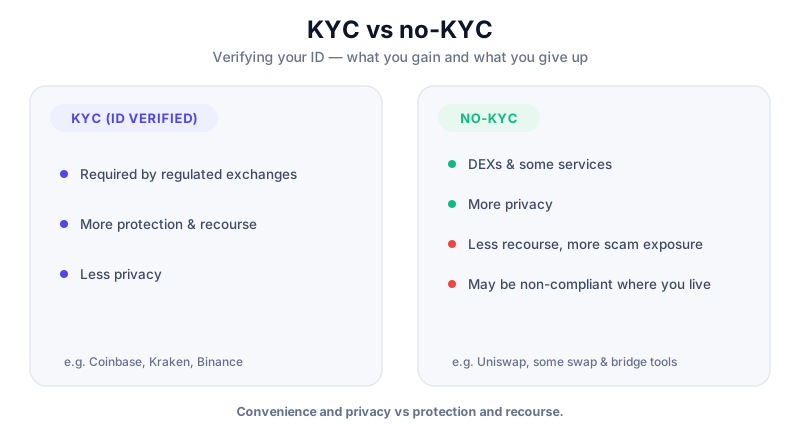
- KYC platforms are regulated, more accountable, and easier to recover an account with — but you share personal data, which could be exposed in a breach.
- No-KYC platforms offer more privacy, but tend to be less regulated, harder to trust, and may operate outside the law where you live.
- Legal risk: in many countries, regulated exchanges are required by law. Using a non-compliant service can create problems for you, not just the platform.
- Recourse: if something goes wrong on an unregulated platform, you typically have little protection and no one to appeal to.
Staying safe either way
Whichever route you take, the same fundamentals protect you: stick to platforms with a genuine track record, never reuse passwords, and turn on two-factor authentication. And remember that no exchange — KYC or not — should ever ask for your seed phrase.
Know the rules where you live
Crypto regulation varies by country and changes often. This is general education, not legal or financial advice — check the laws in your jurisdiction, and don't use a service that isn't permitted where you are.
A VPN encrypts your traffic and hides your IP — sensible on public Wi-Fi and before logging into any exchange. NordVPN also blocks known phishing and malware sites. It's privacy, not anonymity — it won't undo on-chain traceability.
Key takeaways
- KYC means verifying your identity, usually with ID and a selfie.
- Regulated exchanges require it by law to fight fraud and money laundering.
- No-KYC offers more privacy but carries bigger legal and trust risks.
- Whatever you use, enable 2FA and never share your seed phrase.
Frequently asked questions
Why do exchanges ask for my ID?
Regulated exchanges are legally required to verify customers to prevent fraud and money laundering, just like banks. It's a standard, expected step rather than a warning sign.
Are no-KYC exchanges illegal?
The platform's legality and your own depend on where you live. In many countries, using a non-compliant exchange can break local rules. Always check the regulations in your jurisdiction.
Is my data safe after KYC?
Reputable platforms protect it, but any database can be breached, so your details could be exposed. Weigh that privacy cost against the accountability and protection a regulated, identity-verified platform provides.
Keep reading
How to Buy Bitcoin Safely (Step by Step)
A careful, beginner-friendly walk-through of buying Bitcoin on a regulated exchange — verifying your account,
How to Buy Crypto With a Debit Card (Step by Step)
A plain-English walkthrough of buying crypto with a debit card: how it works, the fees to expect, the safety c
How to Buy Crypto With a Bank Transfer
How to fund a crypto exchange by bank transfer: the steps, the fees, how long it takes, and why it's often the