Pig Butchering Scams: The Long Con That Targets Trust
Pig butchering is one of the cruellest scams in crypto because it steals trust before it steals money. A stranger builds a friendship or romance over weeks, then introduces a 'can't-lose' crypto investment. The name comes from the chilling logic of 'fattening up' a victim before the slaughter. This guide explains how the long con unfolds and how to recognise it early.
The 20-second version
Pig butchering combines a fake relationship with a fake investment platform. A wrong-number text or dating-app match becomes a friend who shows you 'amazing returns', lets you withdraw a little to build trust, then takes everything. If someone you met online steers you toward a crypto platform, stop.
How pig butchering works
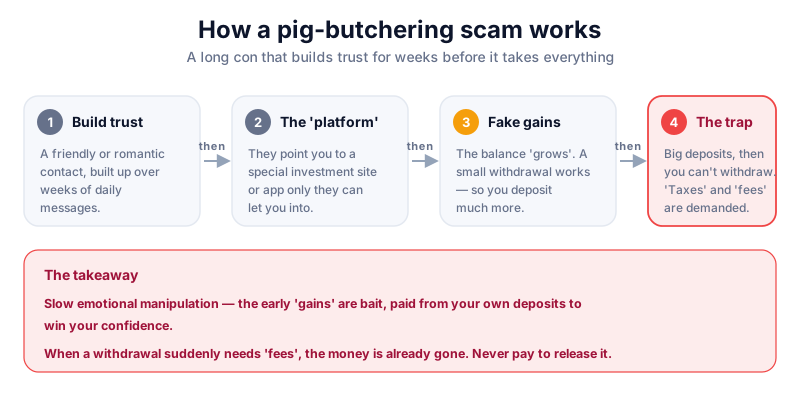
The scam starts with a seemingly innocent contact: a 'wrong number' text, a friendly message on social media, or a match on a dating app. There's no mention of crypto at first. Over days or weeks the scammer builds genuine-feeling rapport — sharing photos, daily messages, plans for the future — until you trust them.
Only then does crypto appear, framed as a personal secret to success: a special trading platform, an exclusive pool, or a relative who works in finance. The platform looks professional and shows your balance growing fast. To cement trust, they let you withdraw a small profit early. Convinced, you invest more — savings, loans, sometimes everything — and when you try a large withdrawal, you're hit with 'taxes' or 'fees' you must pay first. Then the platform and the person vanish.
- The approach — an unsolicited but friendly message that isn't about money.
- The grooming — weeks of relationship-building to earn deep trust.
- The pitch — a private, lucrative crypto platform only they can let you into.
- The hook — a small successful withdrawal that makes it feel real.
- The slaughter — large deposits, then 'fees' to withdraw, then silence.
Warning signs
Pig butchering can be hard to spot because the relationship feels real. These patterns are the warning signs that matter most.
- Someone you've never met in person introduces you to a crypto investment.
- A platform you can only access through a link or app they gave you.
- Returns that are steady, high, and 'guaranteed' — real markets never are.
- Pressure to invest more, or to keep the 'opportunity' secret.
- Fees or taxes demanded before you can withdraw your own money.
Education, not financial advice
No legitimate investment is guaranteed, and crypto is highly volatile. Only ever risk what you can afford to lose, and never borrow money to invest. A platform that promises guaranteed profits is a scam, not an opportunity.
How to protect yourself
- Never take investment advice from someone you've only met online, no matter how close you feel.
- Use only well-known, independently reviewed exchanges — never a platform a contact insists you join.
- Treat any guaranteed or unusually high return as a red flag, full stop.
- Never pay a 'fee' or 'tax' to release a withdrawal — that's how the scam ends.
- Talk to a trusted friend or family member before sending money. Scammers rely on isolation and secrecy.
Money you hold in your own hardware wallet can't be funnelled into a fake platform without you actively moving it. The Ledger Nano X is our top pick — read the review and buy only from the manufacturer.
If it's happening to you or someone you know
There's no shame in being targeted — these scams are professional operations designed to exploit trust. Stop sending money immediately, even if you've been told 'just one more fee' will unlock your balance; it never does. Save all messages and transaction records, report it to your local police and national fraud authority, and be very wary of 'recovery agents' who appear afterwards promising to get your funds back — they are almost always a second scam. For the broader picture, see how to avoid crypto scams.
Key takeaways
- Pig butchering builds a fake relationship before introducing a fake investment.
- A small early 'withdrawal' is bait to make you invest far more.
- Guaranteed returns and withdrawal 'fees' are the clearest warning signs.
- Never invest through a platform someone you met online steers you toward.
Frequently asked questions
Why is it called 'pig butchering'?
It's a translation of a phrase used by the criminal groups behind it, comparing victims to pigs being fattened up before slaughter. The scammer spends weeks 'fattening' your trust and investment before taking everything at once.
The platform shows my balance growing — isn't my money really there?
No. The dashboard is fake software the scammers fully control, and the numbers are invented to keep you investing. The small 'profit' they let you withdraw early is paid from your own deposits to build false confidence.
They're asking for a tax payment to release my withdrawal. Should I pay it?
No. Legitimate platforms deduct any fees from your balance — they never demand a separate upfront payment to release your own funds. This 'fee' is the final stage of the scam; paying it only loses you more money.
Keep reading
How to Avoid Crypto Scams: The Cornerstone Safety Guide
The common crypto scams — fake support, phishing, giveaways, romance and rug pulls — and the simple habits tha
Fake Exchange Scams: Spotting a Counterfeit Trading Site
Fake crypto exchanges look real but exist only to take your deposits. Learn how counterfeit trading sites oper
Crypto Giveaway Scams: Why 'Send 1, Get 2 Back' Is a Trap
Fake giveaways and 'double your crypto' offers use famous names and fake live streams to steal funds. Here's h