Polkadot Staking Explained (Plain English)
Staking is how Polkadot stays secure — and a way DOT holders can earn rewards for helping. This guide explains how DOT staking works in plain English, what the risks are, and how to do it without handing over control of your coins. If staking is brand new to you, start with what staking is.
The 20-second version
Polkadot is secured by validators who stake DOT. Most people don't run a validator — they nominate trustworthy ones and share the rewards. Rewards come with real risks: lock-up periods, an unbonding wait, and 'slashing' if a validator misbehaves.
How Polkadot staking works
Polkadot uses a system called Nominated Proof of Stake. Instead of energy-hungry mining, the network is secured by people who lock up (stake) DOT. There are two main roles:
- Validators run the infrastructure that confirms transactions and secures the Relay Chain. Running one well takes technical skill and reliable hardware.
- Nominators are everyday holders who back validators they trust with their DOT. They share in the rewards — and the risks — without running anything themselves.
Most people stake as nominators. You choose a set of validators, your DOT helps back them, and you earn a share of the rewards they generate.
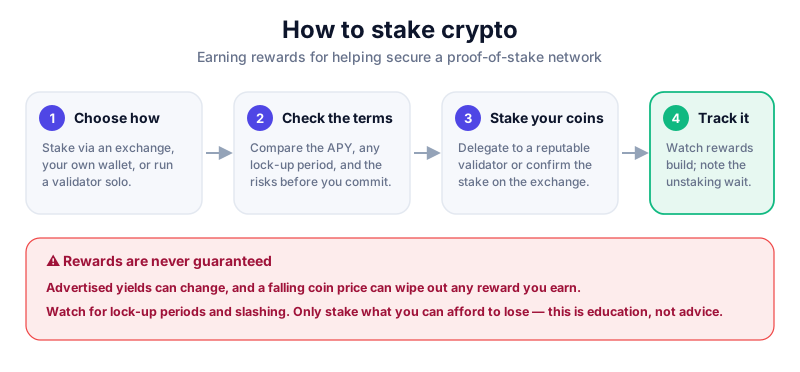
Rewards, lock-up and unbonding
Staking rewards are paid in DOT and depend on network conditions, how much total DOT is staked, and the validators you back. A few practical points matter more than the headline rate:
- Rewards vary — they are not fixed or guaranteed, and change as network participation changes.
- Your DOT is bonded — it's locked while staked, so you can't instantly spend or sell it.
- Unbonding takes time — when you stop staking, there's a waiting period (historically around 28 days) before your DOT is free to move again. Plan for that delay.
Many Polkadot interfaces let you nominate validators while your keys stay on a hardware wallet like the Ledger Nano X. Read our full review before buying — and only from the manufacturer.
The risks: slashing and more
Staking is not free money. Understanding the downsides is essential before you commit any DOT.
- Slashing — if a validator you back behaves badly (for example, goes offline at the wrong time or tries to cheat), a portion of the staked DOT can be lost. This is why choosing reliable validators matters.
- Price risk — your DOT is still exposed to the market while staked, and its value can fall further than any rewards you earn.
- Liquidity risk — the unbonding wait means you can't react instantly if the market moves.
- Scam risk — fake 'staking' sites and DMs are common. Only stake through official, well-known interfaces, and never share your seed phrase.
Rewards don't cancel out risk
Staking rewards can be wiped out by a falling DOT price or by slashing. Never stake money you can't afford to lock up or lose, and never borrow to do it. This is education, not financial advice.
How to stake safely
If you do choose to stake, a few habits keep you safer:
- Use a hardware wallet so your keys never leave the device, even while staking.
- Stake only through official Polkadot tools or reputable, well-reviewed services.
- Spread your nomination across several reliable validators rather than one.
- Double-check every address and approval — and ignore anyone offering 'guaranteed' or unusually high returns.
Key takeaways
- Polkadot is secured by validators; most people stake by nominating them.
- Rewards are variable, and your DOT is locked with an unbonding wait to exit.
- Slashing means staked DOT can be lost if a validator misbehaves.
- Stake only through official tools, keep keys on a hardware wallet, and never risk more than you can afford to lose.
Frequently asked questions
Do I need to run a validator to earn rewards?
No. Most people stake as nominators — you back validators you trust with your DOT and share the rewards, without running any infrastructure yourself.
Can I unstake my DOT whenever I want?
You can start unstaking at any time, but there's an unbonding waiting period (historically around 28 days) before the DOT is free to move. Always check the current period first.
Is staking DOT safe?
Staking has real risks — slashing, price falls, lock-ups and scams. It can be done relatively safely with a hardware wallet and official tools, but it is never risk-free. This is education, not financial advice.
Keep reading
What Is Polkadot (DOT)? A Plain-English Guide
A beginner-friendly explanation of what Polkadot (DOT) is, how its multi-chain design works, what the DOT toke
Polkadot Parachains Explained (Plain English)
What parachains are, how they connect to the Polkadot Relay Chain, why shared security matters, and how chains
How to Store Polkadot (DOT) Safely (Step by Step)
Keep your Polkadot (DOT) safe from hackers and mistakes: hot vs cold wallets, hardware wallets, seed-phrase ba