Stellar vs Ripple (XLM vs XRP): What's the Difference?
Stellar (XLM) and Ripple (XRP) are often mentioned in the same breath — they share a co-founder, similar technology, and a focus on payments. But they were built for different audiences and run very differently. This balanced guide explains how they compare, without picking a 'winner'.
The 20-second version
Both move money fast and cheaply across borders. Ripple (XRP) is run by a private company and aimed at banks and financial institutions. Stellar (XLM) is run by a non-profit foundation and aimed at open, individual access. Neither is 'better' — they target different problems.
Their shared origins
Stellar was created in 2014 by Jed McCaleb, who had earlier co-founded Ripple. Because of that shared history, the two networks started from similar ideas: settle cross-border payments in seconds, for tiny fees, without the delays of the traditional banking system. Over time they diverged into quite different projects.
Who each is built for
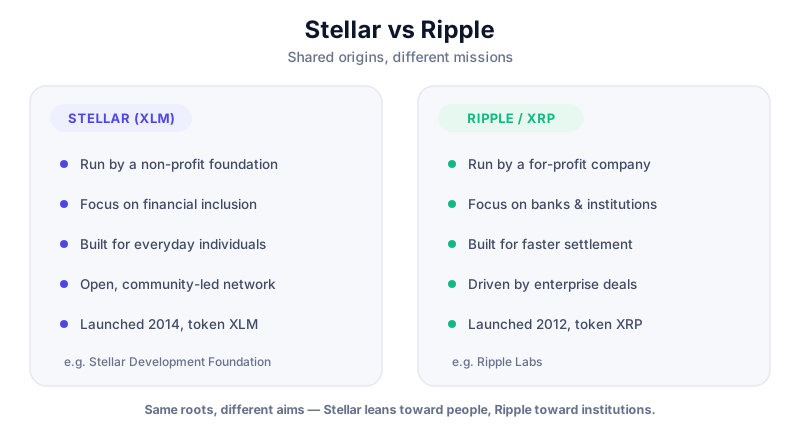
This is the biggest difference. Ripple's XRP and its associated technology are marketed primarily to banks and large financial institutions that want faster settlement. Stellar leans toward individuals, smaller businesses and non-profits, with a focus on financial inclusion and issuing digital versions of currencies.
- Ripple (XRP) — enterprise-focused, driven by Ripple Labs, a for-profit company.
- Stellar (XLM) — open-access focused, supported by the non-profit Stellar Development Foundation.
Side-by-side comparison
| Feature | Stellar (XLM) | Ripple (XRP) |
|---|---|---|
| Launched | 2014 | 2012 |
| Native token | XLM (Lumens) | XRP |
| Run by | Stellar Development Foundation (non-profit) | Ripple Labs (for-profit) |
| Main audience | Individuals, non-profits, smaller businesses | Banks and financial institutions |
| Consensus | Stellar Consensus Protocol (SCP) | XRP Ledger Consensus Protocol |
| Typical settlement | 3–5 seconds | 3–5 seconds |
| Open source | Yes | Yes |
| Code base | Forked from Ripple, then rebuilt | Original XRP Ledger |
Governance and supply
Governance is a key contrast. Ripple Labs holds a large share of XRP and releases it on a schedule, which critics argue gives one company significant influence. Stellar is steered by a non-profit foundation; in 2019 it burned roughly half of all XLM and set a fixed issuance policy. Both projects have faced criticism over how concentrated their token holdings are.
Regulation matters here
Ripple has been the subject of a high-profile, multi-year legal case with the US SEC over whether XRP is a security. Rules differ by country and continue to evolve. Always check the regulatory status where you live before buying either asset.
Which should you care about?
There's no universal answer, and you don't have to choose. They solve overlapping but different problems, and many people in the space follow both. What matters far more than 'which coin' is understanding what you're buying, using a reputable exchange, and storing it safely afterwards. Whichever way you lean, the storage rule doesn't change: serious amounts belong offline, on a hardware wallet like the Ledger Nano X.
A fair warning
Both XLM and XRP are highly volatile. Only ever risk what you can afford to lose, and never borrow to buy crypto. This guide is education, not financial advice — and nothing here is a prediction about future prices.
Key takeaways
- Stellar and Ripple share a co-founder and similar payment goals.
- Ripple targets banks; Stellar targets open, individual access.
- Stellar is run by a non-profit; Ripple by a for-profit company.
- Both are volatile and face evolving regulation — research before buying.
Frequently asked questions
Are Stellar and Ripple competitors?
To some extent, since both focus on cross-border payments — but they aim at different users. Ripple courts banks, while Stellar focuses on open access for individuals and smaller organisations.
Is one more decentralised than the other?
Both have faced criticism over concentrated token holdings and influence from their founding organisations. Neither is as decentralised as Bitcoin, and 'more decentralised' depends on which factors you weigh.
Can I hold both XLM and XRP in the same wallet?
Often yes — many multi-coin hardware wallets, including the Ledger Nano X, support both. Always confirm support before sending funds, and remember some deposits need a memo or tag.
Keep reading
What Is Stellar (XLM)? A Plain-English Guide
A beginner-friendly explanation of Stellar and its XLM token: what the network is for, how it works, who built
How to Buy Stellar (XLM): A Step-by-Step Guide
A clear, beginner-friendly walkthrough of how to buy Stellar's XLM safely: choosing an exchange, paying, and m
How to Store Stellar (XLM) Safely
Keep your XLM safe from hackers and mistakes: hot vs cold wallets, hardware wallets, the Stellar minimum reser