Understanding Crypto Volatility
Crypto can rise or fall double-digit percentages in a single day — something that would be front-page news in traditional markets. Understanding why volatility happens, and what it does to people's decisions, is one of the most important survival skills in this space.
The 20-second version
Volatility is how sharply and quickly a price moves. Crypto is more volatile than stocks because markets are younger, smaller, trade 24/7 and run heavily on sentiment. Big swings are normal here — plan for them.
What volatility means
Volatility describes the size and speed of price movements. A highly volatile asset can jump or drop a lot in a short time. It isn't the same as risk, but in practice the two travel together: big swings make it easy to buy high in excitement and sell low in panic.
Why crypto swings so hard
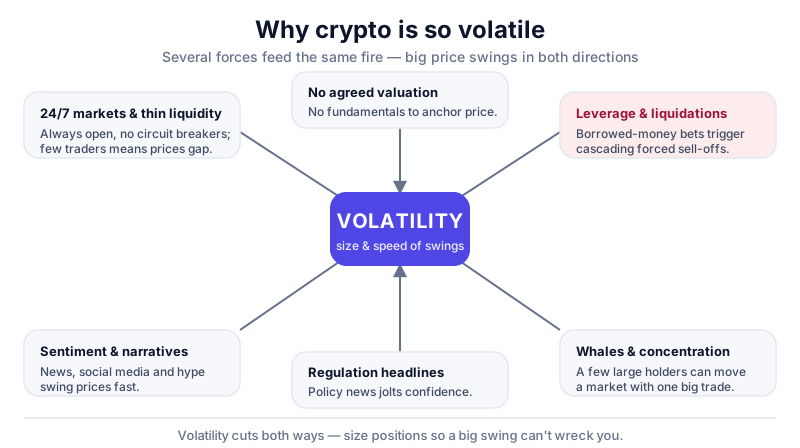
- Young, smaller markets — even large coins are tiny next to global stocks or gold, so big trades move prices more.
- Always open — crypto trades 24/7 with no circuit breakers to pause a sell-off.
- Sentiment-driven — news, social media and hype can swing prices fast, especially for smaller-cap coins.
- Leverage — borrowed-money trading can trigger cascading liquidations that amplify moves.
- Thin liquidity — when few buyers and sellers are active, prices gap more easily.
Keeping a level head
You can't remove volatility, but you can reduce how much it controls you. A clear plan made in calm conditions beats decisions made in the heat of a crash or a rally. Many people find that simply checking prices less often helps.
Volatility cuts both ways
The same swings that excite people on the way up can wipe out a position on the way down. Only ever risk what you can afford to lose, never borrow to buy crypto, and avoid leverage if you're new. This is education, not financial advice.
Key takeaways
- Volatility is the size and speed of price moves, and crypto has a lot of it.
- Young markets, 24/7 trading, sentiment and leverage all amplify swings.
- Smaller-cap coins tend to be more volatile than large caps.
- A plan made calmly beats decisions made in panic or euphoria.
Frequently asked questions
Is volatility always a bad thing?
Not inherently — it's just movement. But it raises the odds of emotional mistakes and can be devastating if you've taken on more risk than you can handle.
Are some coins less volatile than others?
Generally, large, established coins move less violently than tiny ones, and stablecoins aim to hold a steady value. Nothing in crypto is truly low-risk, though.
Keep reading
What Is Market Cap in Crypto?
Market capitalisation explained in plain English: how it's calculated, why it matters more than price, and the
Bull vs Bear Markets Explained
What bull and bear markets mean in crypto, where the terms come from, and how market cycles tend to behave — w
What Is a Stablecoin? How the Peg Works (and Fails)
A clear guide to stablecoins: how they aim to hold a steady value, the different types, and the very real peg