USDT vs USDC: Comparing the Big Stablecoins
USDT (Tether) and USDC (USD Coin) are the two biggest stablecoins — crypto tokens designed to hold a steady value of roughly one US dollar. They aim for the same thing but differ in backing, transparency and reach. This guide compares them plainly.
The 20-second version
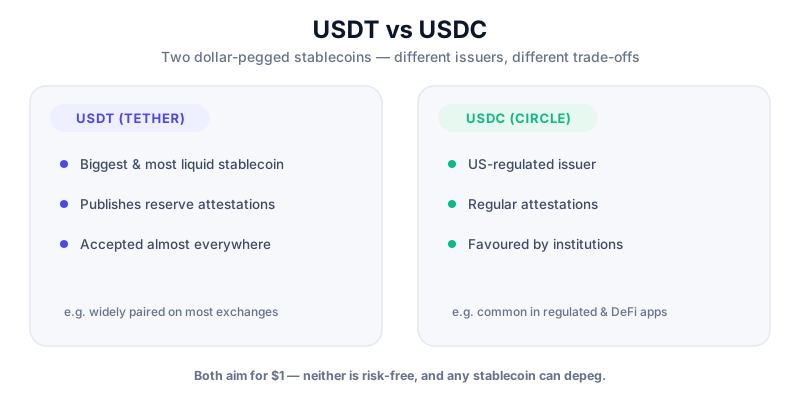
Both USDT and USDC try to stay worth about $1, each backed by reserves. USDT is the largest and most widely traded; USDC is generally seen as more transparent about its reserves. Both carry the risk that a stablecoin can lose its peg.
What USDT and USDC are
A stablecoin is a crypto token that aims to track the value of a real-world asset — here, the US dollar. The issuer holds reserves and promises each token can be redeemed for roughly $1.
- USDT (Tether) launched in 2014 and is the largest stablecoin by far, with the deepest trading liquidity across exchanges.
- USDC (USD Coin) launched in 2018, issued by Circle, and is widely regarded as more transparent about its reserves and regulatory posture.
USDT vs USDC at a glance
| Feature | USDT (Tether) | USDC (USD Coin) |
|---|---|---|
| Launched | 2014 | 2018 |
| Issuer | Tether | Circle |
| Peg target | ~$1 | ~$1 |
| Size | Largest stablecoin | Second largest |
| Reserve transparency | Attestations published | Attestations, often seen as clearer |
| Liquidity | Very high, widely listed | High, widely listed |
Both publish reserve attestations rather than full real-time audits, and the details of what backs each have evolved over time.
Risks that apply to both
A stablecoin is not risk-free
'Stable' refers to the price target, not a guarantee. Stablecoins can — and occasionally do — temporarily lose their peg. USDC briefly slipped below $1 during a 2023 banking scare before recovering. Never assume a stablecoin is the same as cash in a bank.
- Reserve risk — the peg depends on the issuer actually holding sufficient, liquid reserves.
- Counterparty risk — you're trusting a single company to honour redemptions.
- Regulatory risk — rules around stablecoins are still developing in many regions, which can affect availability.
The balanced verdict
USDT wins on sheer size and liquidity; USDC is often preferred by those who prioritise transparency. Neither is objectively 'better', and neither is a substitute for a bank deposit. Which you encounter often depends simply on which exchange or app you're using.
If you hold either, remember the storage rules are the same as any crypto: keep them in a wallet you control where possible, and protect your seed phrase. Learn more in how to store crypto safely. Whichever way you lean, the storage rule doesn't change: serious amounts belong offline, on a hardware wallet like the Ledger Nano X.
Key takeaways
- Both USDT and USDC aim to stay worth about $1, backed by reserves.
- USDT is the largest and most liquid; USDC is often seen as more transparent.
- 'Stable' is a target, not a guarantee — pegs can break.
- Both carry reserve, counterparty and regulatory risk; neither equals bank cash.
Frequently asked questions
Is USDC safer than USDT?
USDC is often viewed as more transparent about its reserves, but 'safer' isn't something anyone can promise. Both depend on their issuer holding adequate reserves, and both can temporarily lose their peg.
Can a stablecoin lose its value?
Yes. A stablecoin can 'de-peg' and trade below its $1 target, sometimes sharply. It has happened to major stablecoins before, so never treat one as identical to money in a bank.
Why would I use a stablecoin at all?
People use them to move value between crypto platforms, to sit out volatility without cashing out, or to trade. Understanding the risks first is essential — see what is a stablecoin.
Keep reading
What Is a Stablecoin? How the Peg Works (and Fails)
A clear guide to stablecoins: how they aim to hold a steady value, the different types, and the very real peg
What Is DeFi? Decentralised Finance Explained
A beginner's guide to decentralised finance: what DeFi is, how lending, trading and yield work without a bank
Staking vs Crypto Lending: What's the Difference?
A balanced comparison of staking and crypto lending — two ways people earn yield on crypto, how each works, an