What Is a Stablecoin? How the Peg Works (and Fails)
A stablecoin is a crypto token designed to hold a steady value — usually one US dollar — so it doesn't swing wildly like Bitcoin. This guide explains how that peg works, why stablecoins are everywhere in crypto, and how the peg can break.
The 20-second version
A stablecoin tries to stay worth a fixed amount, typically $1, by being backed by reserves or managed by code. It makes crypto easier to use as money — but 'stable' is a goal, not a guarantee. Pegs can and do break, sometimes overnight, and most stablecoins carry no insurance.
What a stablecoin is for
Most cryptocurrencies are volatile — Bitcoin can move 10% in a single day, which is thrilling if you're speculating and a nightmare if you're trying to use it as money. Imagine pricing a sandwich in Bitcoin and having to re-sticker it three times before lunch. That volatility makes ordinary crypto awkward for everyday payments, and awkward for parking value between trades without watching it lurch around. A stablecoin aims to fix exactly that, by pegging its value to something steady — almost always the US dollar.
If regular crypto is the weather, a stablecoin is meant to be the indoors: a calm, predictable place to stand while the storm carries on outside. That's why stablecoins have become the plumbing of crypto. People use them to trade in and out of volatile coins, to move funds between exchanges quickly and cheaply, and across DeFi as a steadier unit of account — the closest thing the crypto world has to cash. When you see a price quoted in 'dollars' on a crypto app, a stablecoin is very often what's actually moving.
But hold on to one word in all of this: 'aims'. A stablecoin tries to stay worth a dollar. Whether it succeeds depends entirely on how it's built and what stands behind it — and that's where the differences start to matter enormously.
The main types of stablecoin
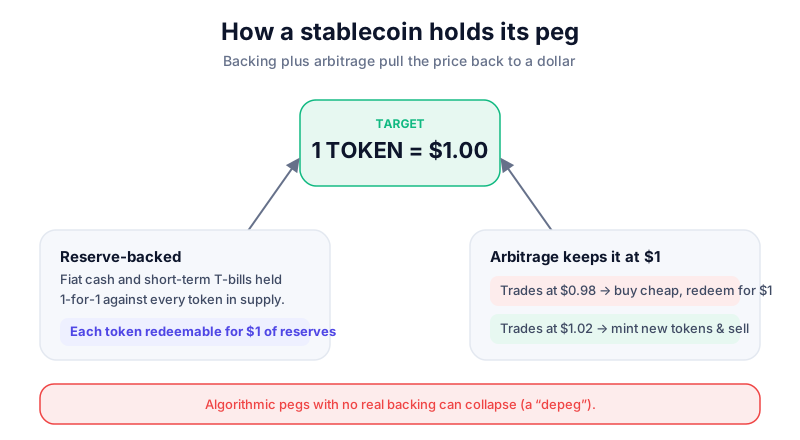
Not all stablecoins hold their peg the same way, and the method matters far more than the marketing. Two coins can both promise '$1' while being as different underneath as a savings bond and a chain letter. Broadly, they fall into three camps:
| Type | How it stays pegged | Key risk |
|---|---|---|
| Fiat-backed | Held 1:1 in cash and bonds by a company | You must trust the issuer's reserves are real and accessible |
| Crypto-backed | Over-collateralised with other crypto via smart contracts | Collateral can crash faster than the system can react |
| Algorithmic | Code adjusts supply to chase the peg, with little or no backing | Historically fragile — several have collapsed to zero |
The simplest to understand is fiat-backed: for every coin issued, a company claims to hold a real dollar (or a dollar's worth of safe bonds) in a bank. It's like a cloakroom ticket — your token is a claim on a real dollar sitting in storage, and the whole thing works only if the dollars are genuinely there. The largest, most widely used stablecoins work this way.
Crypto-backed coins are clever but more fragile: they're propped up by a surplus of other crypto locked in smart contracts, so if those assets crash quickly, the cushion can vanish. Algorithmic stablecoins are the most dangerous of all — they try to hold the peg with code and incentives rather than real backing, and they're the source of some of crypto's most spectacular and painful collapses. As a beginner, that last category is the one to treat with the most suspicion.
How a peg breaks (depegging)
When a stablecoin trades away from its target — say $0.95 instead of $1.00 — it has depegged. A few cents may not sound dramatic, but for something whose entire job is to be worth exactly a dollar, even a small slip can trigger panic, and panic moves fast. Depegs can unfold in hours, sometimes minutes. The usual causes:
- Reserve doubts — if people start to fear a fiat-backed coin isn't fully backed, they rush to cash out before everyone else does, and the price slips under the weight of the rush.
- A bank run — too many holders trying to sell or redeem at once overwhelms the available liquidity, just as a bank can't hand cash to every customer on the same morning.
- Design failure — algorithmic coins can enter a 'death spiral', where a falling price destroys confidence, which drives more selling, which pushes the price down further, round and round until there's nothing left.
- Frozen redemptions — if the issuer pauses redemptions, holders can no longer reliably swap the coin for a real dollar, and the market price drifts away from $1.
Stable is not the same as safe
In 2022, a major algorithmic stablecoin collapsed from $1 to near zero in a matter of days, wiping out billions and a lot of ordinary people's savings. Even large, reputable fiat-backed coins have briefly lost their peg during moments of market stress. A stablecoin is only ever as sound as its reserves and its design — the word 'stable' is a promise the issuer is trying to keep, not a law of nature. This is education, not financial advice.
What to look at before trusting one
If you ever hold a stablecoin — even just to move money between platforms — it pays to know what actually stands behind it. You don't need to be an accountant; you just need to ask the same handful of questions a sensible person asks before handing over their money to anyone. The answers aren't always easy to find, and that difficulty is itself a clue. And however you weigh the trade-offs, keep meaningful holdings in cold storage — a Keystone 3 Pro — rather than on an exchange.
- Is it fully backed? Look for regular, independent attestations of reserves from a real auditor — not vague blog posts or promises that 'everything is fine'.
- What's it backed by? Cash and short-term government bonds are far safer backing than risky loans, obscure assets, or holdings the issuer won't fully disclose.
- Can you actually redeem it? A peg means little if only a handful of big institutions can swap the coin for real dollars while everyone else is stuck.
- Who issues it, and where are they regulated? Oversight varies hugely by issuer and country, and a regulated issuer in a serious jurisdiction is generally a better bet than an anonymous one in none.
Where to go next
Stablecoins sit right at the centre of how crypto moves, so it helps to see the wider picture. Read what DeFi is to understand where stablecoins get used and the extra risks that come with it, centralised vs decentralised exchanges for where you'll first run into them, and how to avoid crypto scams to keep yourself out of trouble. A stablecoin can be a genuinely useful tool — a calm harbour in a choppy market — as long as you remember it's a tool with a failure mode, not a guarantee. That honest framing is the whole reason the Latest Crypto team exists.
Key takeaways
- A stablecoin aims to hold a fixed value, usually one US dollar.
- Types range from fiat-backed and crypto-backed to riskier algorithmic designs.
- Pegs can break — through reserve doubts, bank runs or design failure.
- 'Stable' is a goal, not a guarantee; a coin is only as sound as its backing.
Frequently asked questions
Is a stablecoin guaranteed to be worth a dollar?
No. It's designed to be, but that depends on real reserves or a sound mechanism behind it. Several stablecoins have lost their peg, and one major algorithmic coin collapsed entirely. There's no guarantee, and anyone who tells you otherwise is overselling it.
Are stablecoins insured like a bank deposit?
Generally not. Most stablecoins carry no deposit insurance, so if the issuer fails or reserves fall short, there may be no protection and no one to make you whole. Always check the specifics before relying on one.
Which type of stablecoin is safest?
Fully fiat-backed coins with frequent, independent reserve attestations are generally considered the lowest-risk. Algorithmic stablecoins have by far the worst track record. We don't endorse any specific coin — do your own checking using the questions above.
Keep reading
What Is DeFi? Decentralised Finance Explained
A beginner's guide to decentralised finance: what DeFi is, how lending, trading and yield work without a bank
What Is Bitcoin? A Plain-English Guide
A beginner-friendly explanation of what Bitcoin is, how it works, and how to think about it — with no hype and
Centralised vs Decentralised Exchanges (CEX vs DEX)
What's the difference between a centralised exchange and a decentralised one? How custody, fees, safety and ea