What Is a Stablecoin Depeg?
A stablecoin is supposed to be the boring, dependable part of crypto — a token designed to always be worth about one dollar. A 'depeg' is what happens when that promise breaks and the price drifts away from its target. Sometimes it's a brief wobble; sometimes it's a catastrophe. This guide explains why depegs happen and how to spot the warning signs.
The 20-second version
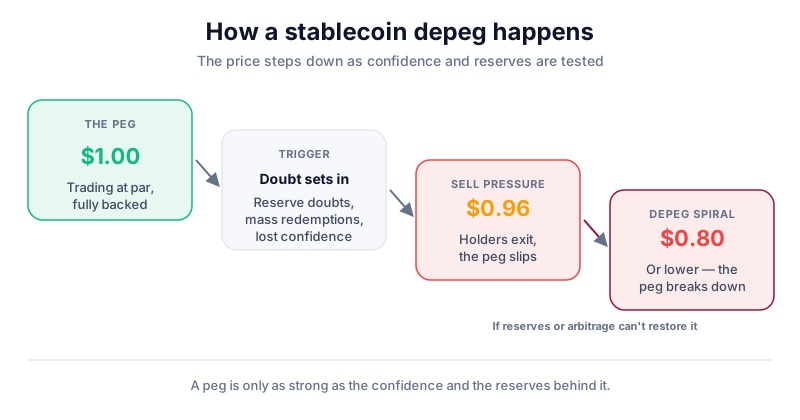
A depeg is when a stablecoin loses its intended value — for example, a dollar-pegged coin trading at 95 cents or less. Small, brief depegs are common and often recover. Large or lasting ones can wipe out value entirely, as the 2022 Terra collapse showed.
What is a depeg?
A stablecoin aims to track a stable reference, usually the US dollar, so that one token is always worth about one dollar. A depeg is when the market price slips meaningfully away from that target — trading at, say, 97 cents instead of a dollar.
Tiny deviations of a fraction of a cent happen all the time and are normal. The ones that matter are larger gaps that persist, because they signal the market has lost confidence that the peg will hold.
Why depegs happen
The cause depends on how the stablecoin is backed. The main types behave very differently under stress:
- Fiat-backed coins hold cash and bonds in reserve. They can depeg if people doubt the reserves are real, sufficient, or accessible.
- Crypto-backed coins are over-collateralised with other crypto. A sharp crash in that collateral can threaten the peg.
- Algorithmic coins rely on code and incentives rather than hard reserves. These have proven the most fragile and prone to total collapse.
Depegs are often triggered by a rush of people trying to redeem or sell at once — a classic loss of confidence that feeds on itself.
Famous depegs
In May 2022, the algorithmic stablecoin TerraUSD (UST) lost its dollar peg and spiralled to near zero within days, vaporising tens of billions of dollars and dragging its sister token LUNA down with it. It remains the textbook example of how badly an algorithmic design can fail.
Even reserve-backed coins aren't immune. In March 2023, USDC briefly fell to around 87 cents after some of its cash reserves were caught up in a US bank failure. It recovered its peg within days once those funds were confirmed safe — a reminder that even 'safer' stablecoins can wobble.
Warning signs to watch
Treat 'high yield' stablecoins with suspicion
If a stablecoin offers unusually high, guaranteed-sounding returns, ask where that yield comes from. Terra's collapse was fuelled by an unsustainable ~20% yield. Returns that look too good to be true usually are.
- Reserves that aren't transparently audited or clearly explained.
- Purely algorithmic designs with little or no hard backing.
- Yields far above what the rest of the market offers.
- Heavy reliance on a single exchange, partner or market maker for liquidity.
How to protect yourself
Stick to well-established, transparently backed stablecoins, spread risk rather than concentrating in one, and never assume 'stable' means risk-free. Understanding the tokenomics and backing of a coin before you hold it is the best defence. And however you weigh the trade-offs, keep meaningful holdings in cold storage — a Trezor Safe 5 — rather than on an exchange.
A fair warning
No stablecoin is guaranteed to hold its peg, and some have gone to zero. Never put money you can't afford to lose into any single coin, stable or not. This guide is education, not financial advice.
Key takeaways
- A depeg is when a stablecoin loses its intended value, like a dollar coin trading below a dollar.
- Backing matters: algorithmic designs have failed worst; even reserve-backed coins can wobble.
- The 2022 Terra/UST collapse is the clearest warning of algorithmic fragility.
- Transparent reserves and realistic yields are the signs to look for; sky-high yields are a red flag.
Frequently asked questions
Can a depegged stablecoin recover?
Sometimes. Well-backed coins like USDC have recovered short depegs once confidence returned. But algorithmic coins like TerraUSD have gone to near zero and never recovered. There's no guarantee either way.
Are all stablecoins risky?
All carry some risk, but not equally. Transparently audited, fully reserved coins are generally lower risk than algorithmic ones. None should be treated as completely risk-free.
Should I sell a stablecoin if it depegs slightly?
We can't give financial advice. What helps is understanding why it depegged and how it's backed. Tiny, brief deviations are common; large or lasting gaps signal deeper problems worth taking seriously.
Keep reading
What Is a Stablecoin? How the Peg Works (and Fails)
A clear guide to stablecoins: how they aim to hold a steady value, the different types, and the very real peg
What Is a Crypto Market Maker?
Market makers explained: how they provide liquidity, the difference between traditional and automated market m
What Is Tokenomics? How Crypto Supply and Incentives Work
Tokenomics explained in plain English: supply, distribution, emissions, utility and incentives — and how to re