What Is an NFT Floor Price?
If you spend any time around NFT collections, you'll hear about the 'floor price'. It's the headline number most people glance at first — and it's also one of the most misunderstood. This guide explains what the floor actually tells you, and what it doesn't.
The 20-second version
The floor price is the lowest price anyone is currently asking for an item in an NFT collection — the cheapest way in. It's a quick popularity gauge, but it can be thin, manipulated, and very different from what you'd actually get if you tried to sell.
What is the floor price?
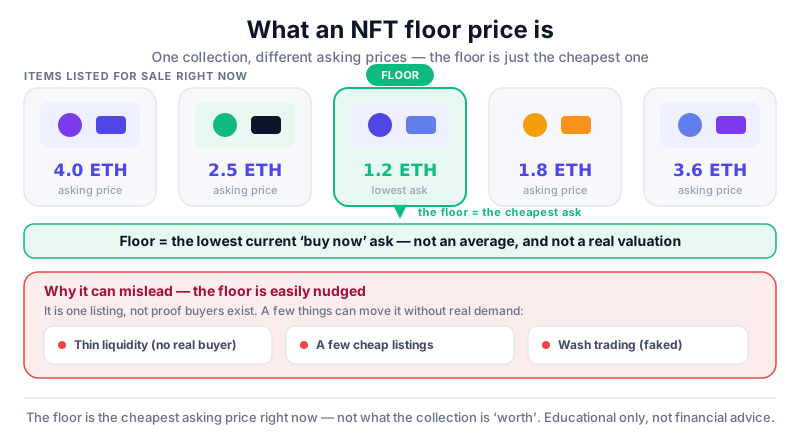
The floor price is simply the lowest current 'asking' price across all items listed for sale in a collection. If the cheapest listed item is 1.2 ETH, the floor is 1.2 ETH. It represents the least you'd have to pay to own any piece from that collection right now.
Because it's a single, easy number, people use it as shorthand for how a collection is doing. Up means demand looks strong; down means it's cooling.
Why the floor moves
- Demand: more buyers chasing items pushes the floor up.
- Listings: if many holders list at once, the floor can drop fast.
- News and hype: a big announcement — or a utility launch — can swing it quickly.
- Overall market: crypto-wide moves in Ethereum and sentiment drag NFT floors along too.
Why the floor can mislead
The floor is only one listing. It says nothing about how many buyers actually exist at that price. A collection can show a healthy floor while being almost impossible to sell into — that's low liquidity. And treat valuable NFTs like any other asset: they can sit behind a hardware wallet like the OneKey, safely offline.
- Thin order books: the floor might be one optimistic listing with no real buyer behind it.
- Wash trading: people trading with themselves to fake activity and prop up a floor.
- 'Floor sweeps': coordinated buying to spike the floor temporarily, often to attract attention.
- Rarity ignored: the floor reflects the cheapest item, not the rare ones that trade far higher.
A floor price is not a guaranteed sale price
The 'floor' is what someone is asking, not what a buyer will pay. NFTs are highly volatile and often illiquid — you may not be able to sell at the floor, or at all. Never assume you can exit at the headline number. This is education, not financial advice.
Reading the floor sensibly
- Look at real sales, not just listings — actual trades tell you more than the lowest ask.
- Check volume and number of owners to gauge whether there's genuine activity.
- Be sceptical of sudden spikes, which can be coordinated or wash-traded.
- Remember rarity: 'floor market cap' (floor × supply) is a rough estimate, not money that exists.
Verify before you trade
Fake collections copy art and names to lure buyers at a tempting 'floor'. Confirm the official contract address, and connect only a low-value wallet to marketplaces. See how to avoid crypto scams.
Key takeaways
- The floor price is the lowest current asking price in a collection.
- It's a quick popularity gauge but reflects one listing, not real demand.
- Wash trading, thin liquidity and floor sweeps can make it misleading.
- You can't assume you'll actually sell at the floor — or sell at all.
Frequently asked questions
Is a higher floor price always better?
Not necessarily. A high floor can be propped up by few listings, wash trading or hype, and a low floor doesn't mean a project is bad. Real sales, volume and owner count tell you more.
What is floor market cap?
It's the floor price multiplied by the total supply — a rough estimate of a collection's value. It's not money that actually exists, because you could never sell every item at the floor at once.
Can I always sell at the floor price?
No. The floor is what sellers are asking, not a guaranteed buyer. Many collections are illiquid, so you may have to drop your price significantly — or find no buyer at all.
Keep reading
What Is an NFT Collection?
A plain-English guide to NFT collections: what they are, how minting and supply work, what gives them value, a
What Is an NFT? A Clear Beginner's Guide
What NFTs actually are, how they work as proof of ownership on a blockchain, what they're used for, and the ri
NFT Utility Explained
What 'NFT utility' really means: access, membership, gaming, ticketing and rewards — plus how to tell genuine