What Is Crypto Custody?
Custody is one of the most important ideas in crypto, and one of the most misunderstood. It boils down to a single question: who actually holds the keys to your coins — you, or someone else?
The 20-second version
Custodial means a third party (like an exchange) holds your keys for you. Self-custody means you hold them yourself in your own wallet. Each has trade-offs: convenience and recovery versus full control and responsibility.
Two ways to hold crypto
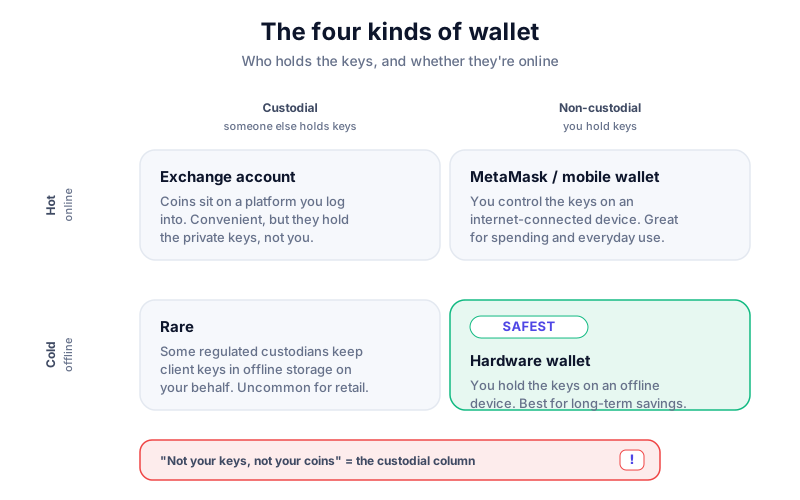
Owning crypto really means controlling the private keys that authorise transactions. There are two ways that can work.
- Custodial — an exchange or app holds the keys on your behalf. You log in with a password, much like online banking. Easy to use, with password recovery if you forget your login.
- Self-custody — you hold the keys in your own wallet, backed up by a seed phrase. Total control, total responsibility: lose the phrase and no one can recover your funds.
The trade-offs
The crypto phrase 'not your keys, not your coins' captures the core risk of custody: if a third party holds your keys, you're trusting them not to get hacked, freeze withdrawals, or go bust. History has examples of all three.
Self-custody removes that counterparty risk, but shifts the burden of security entirely to you. Many people sensibly use both: a custodial account for trading small amounts, and self-custody (often a hardware wallet) for long-term savings. A Ledger is the most common starting point.
Staying safe either way
Never share your seed phrase
If you self-custody, your seed phrase restores your whole wallet. No wallet, exchange or support agent will ever ask for it — anyone who does is trying to steal from you. Write it on paper, store it offline, and never type or photograph it.
If you use a custodial service, pick a reputable one, enable two-factor authentication, and remember that leaving large sums on any platform long-term carries risk. Learn how to avoid scams whichever route you choose.
Pocket money can sit on an app; serious holdings should move to a device you control. A Ledger keeps your keys offline and signs every transaction on the device itself, so a compromised computer can’t touch your funds.
Key takeaways
- Custody is about who holds the private keys to your coins.
- Custodial services are convenient but mean trusting a third party.
- Self-custody gives full control but full responsibility — no recovery if you lose your seed phrase.
- Many people use custodial for trading and self-custody for savings.
Frequently asked questions
Is an exchange account self-custody?
No. When your crypto sits on an exchange, the exchange holds the keys. It's custodial — convenient, but you're trusting the platform with your funds.
Which is safer, custodial or self-custody?
Neither is automatically safer. Custodial risks the platform failing or being hacked; self-custody risks you losing your keys or seed phrase. The right choice depends on the amount and your comfort with managing security.
Keep reading
What Is a Seed Phrase? (And Why You Must Never Share It)
A plain-English guide to seed phrases: what they are, how they back up your crypto wallet, how to store one sa
Hot vs Cold Wallets: What's the Difference?
A plain-English hot vs cold wallets comparison — how each works, the security trade-offs, and how to combine b
Bitcoin Wallets Explained
What a Bitcoin wallet really is, the difference between custodial and self-custody, hot vs cold, and how to ch