What Is Crypto Lending? How It Works and the Risks
Crypto lending lets people earn interest by lending out their coins, and lets borrowers take a loan against crypto they don't want to sell. It powers a big chunk of DeFi — but it's also where several of the most painful collapses happened. This guide explains how lending works on both DeFi protocols and centralised platforms, and the risks that brought lenders like Celsius down.
The 20-second version
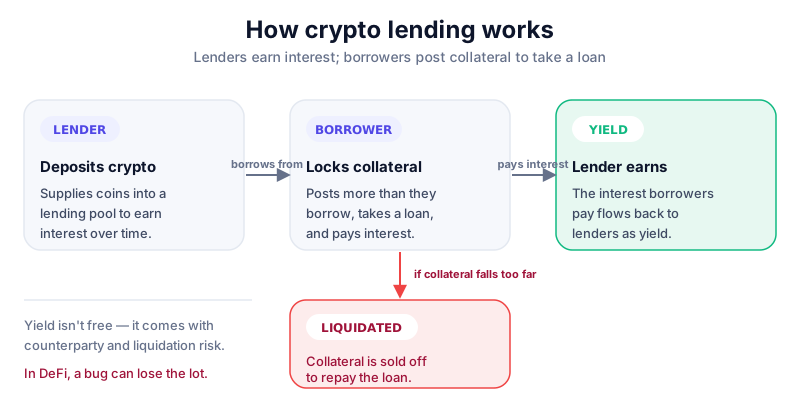
Lenders deposit crypto to earn interest; borrowers post collateral to take a loan. In DeFi this runs on smart contracts; on centralised platforms a company holds your coins. Both can fail — through liquidations, exploits, or a lender going bust — so the interest is never risk-free.
Read this first
Interest is never risk-free
Several large crypto lenders — Celsius, BlockFi, Voyager — froze withdrawals and collapsed in 2022, and many customers lost money. 'Earn' products are not savings accounts and are not protected like bank deposits. This guide is education, not financial advice. Never lend or borrow more than you can afford to lose, and never borrow to buy more crypto.
How crypto lending works
There are two sides to every loan. Lenders deposit crypto into a pool and earn interest. Borrowers take crypto out, but must lock up collateral worth more than they borrow — a setup called over-collateralisation. If you want to borrow £1,000, you might need to post £1,500 of another coin.
Why borrow against your own crypto instead of selling? Often to get cash without triggering a taxable sale, or to keep exposure to a coin you believe in while freeing up funds. The interest rate floats with supply and demand for each asset.
DeFi lending vs centralised lenders
- DeFi lending (e.g. Aave, Compound) runs entirely on smart contracts. You keep custody, rules are transparent, but code bugs are a real risk.
- Centralised lenders (the now-collapsed Celsius and BlockFi were examples) take custody of your coins and lend them out behind the scenes — adding the risk that the company itself fails.
- Transparency: DeFi protocols are auditable on-chain; centralised lenders often weren't, which hid how risky they really were.
Liquidation: the key danger for borrowers
Because crypto is volatile, the collateral you post can fall in value. If it drops below a required threshold, the protocol automatically sells (liquidates) your collateral to repay the loan — often with a penalty. In a sharp market drop, liquidations can cascade across the whole system.
Keep a buffer
Borrowing right up to the limit is how people get liquidated. Experienced users keep their loan well below the maximum so a normal price wobble doesn't wipe out their collateral.
Where to go next
Lending sits alongside other DeFi income strategies — compare it with what is yield farming and what is staking. New to the space? Start with what is DeFi and what is a stablecoin, which most lending markets are priced in. And however you weigh the trade-offs, keep meaningful holdings in cold storage — a SafePal S1 — rather than on an exchange.
Key takeaways
- Crypto lending pairs lenders earning interest with borrowers posting collateral.
- Loans are usually over-collateralised — you lock up more than you borrow.
- DeFi lending runs on smart contracts; centralised lenders hold your coins and can fail.
- Liquidation can sell your collateral in a downturn — keep a safety buffer and never borrow to buy more crypto.
Frequently asked questions
Is crypto lending like a savings account?
No. It can pay interest, but it carries real risk and has none of the deposit protection a bank account has. The 2022 lender collapses showed how badly it can go wrong.
What is over-collateralisation?
It means borrowers must lock up collateral worth more than the loan — for example, £150 of crypto to borrow £100 — so the protocol stays protected if prices fall.
What happens if my collateral drops in value?
If it falls below the required level, the protocol liquidates it automatically to repay your loan, often with a penalty. That's why borrowers keep a buffer.
Keep reading
What Is Yield Farming? Rewards and Risks Explained
Yield farming explained for beginners: how DeFi reward programmes work, what APR and APY really mean, and why
What Is Staking? How It Works and What It Costs
A plain-English guide to crypto staking: how it secures proof-of-stake networks, how rewards work, and the loc
What Is DeFi? Decentralised Finance Explained
A beginner's guide to decentralised finance: what DeFi is, how lending, trading and yield work without a bank