What Is Sui (SUI)? A Plain-English Guide
Sui is a newer layer-1 blockchain built by Mysten Labs, a team of ex-Meta engineers from the abandoned Diem project. Like its cousin Aptos, it uses the Move language — but it organises data in an unusual 'object' model that lets simple transactions settle very quickly. This guide explains what Sui is in plain English and how to think about it without hype.
The 20-second version
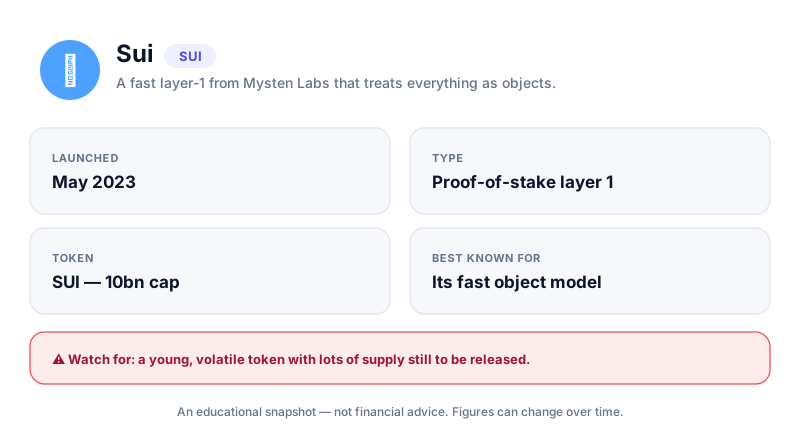
Sui is a fast layer-1 blockchain that launched in May 2023. Its token, SUI, pays fees and is used for staking and governance. It is built on the Move language but treats everything as 'objects', which can speed up simple transfers. It is young and volatile.
What is Sui?
Sui (pronounced 'swee') is a layer-1 blockchain — a base network in the same family as Bitcoin and Ethereum, but much newer. Its main network launched in May 2023. It is built by Mysten Labs, a company founded by engineers who worked on Meta's abandoned Diem (Libra) project.
That shared heritage is why Sui and Aptos are often mentioned together: both came out of the Diem team and both use the Move language. But they made different design choices, so they are cousins, not copies.
How Sui works
Sui is a proof-of-stake network, so validators lock up SUI to confirm transactions and earn rewards. Its most distinctive idea is the object model.
- Everything is an object. Instead of tracking the world as one big shared ledger of account balances, Sui treats each coin, token or item as a separate object with its own owner.
- Simple transfers skip the queue. When a transaction only touches objects you alone own — like sending a coin — Sui can finalise it very fast without needing the whole network to agree on ordering. More complex, shared transactions go through fuller consensus.
- Move under the hood. Sui apps are written in its own version of Move, designed to handle these objects safely.
The goal is low latency and high throughput for everyday actions. As always, headline 'transactions per second' figures are best-case lab numbers; real usage is lower.
What is the SUI token for?
SUI is the native token of the network, with three main roles:
- Paying fees — transactions and data storage on Sui are paid for in SUI.
- Staking — holders can stake or delegate SUI to validators to help secure the network and earn rewards. See what is staking.
- Governance — SUI is used to vote on network decisions.
SUI has a capped maximum supply of 10 billion tokens, though a large portion was not yet in circulation at launch and is released gradually over time.
Sui vs Aptos: the short version
Because they share roots, people constantly compare the two. The simplest distinction: Aptos keeps a more traditional account-and-ledger structure and leans on parallel execution; Sui rebuilds around independent objects so that simple, single-owner transactions can settle almost instantly. Both are fast, both are young, and both depend on attracting real, lasting usage to matter.
A fair warning
SUI is a young, highly volatile asset and can fall sharply. Newer layer-1 tokens often have large amounts of supply still locked up and released over time, which can affect price. Only ever risk what you can afford to lose, never borrow to buy crypto, and treat this guide as education, not financial advice.
Where to go next
To go deeper, read about the Move programming language, compare Sui with Aptos, or learn the practical steps in how to buy Aptos (the same approach applies to SUI) and how to store coins safely. And however you weigh the trade-offs, keep meaningful holdings in cold storage — a Ledger Nano X — rather than on an exchange.
Key takeaways
- Sui is a fast, proof-of-stake layer-1 blockchain launched in May 2023 by Mysten Labs.
- Its object model lets simple, single-owner transfers settle very quickly.
- SUI pays fees and is used for staking and governance, with a 10 billion cap.
- Like its cousin Aptos, it is young and volatile — only risk what you can afford to lose.
Frequently asked questions
How is Sui different from Aptos?
Both came from ex-Diem engineers and use Move, but Sui rebuilds around independent 'objects' so simple transfers settle very fast, while Aptos keeps a more traditional ledger and parallel execution. See our Aptos guide.
Does SUI have a supply limit?
Yes — SUI has a maximum supply of 10 billion tokens, released gradually over time, with a large share locked up at launch.
Is Sui a good investment?
We don't give buy, sell or hold advice. Sui is a young, volatile asset; learn how it works, understand the risks, and only ever risk what you can afford to lose.
Keep reading
What Is Aptos (APT)? A Plain-English Guide
A beginner-friendly explanation of Aptos: where it came from, how its Move-based design and parallel execution
The Move Programming Language, Explained Simply
What is Move? A plain-English look at the smart-contract language behind Aptos and Sui — why it was created, h
How to Buy Aptos (APT) Safely: Step by Step
A clear, beginner-friendly walkthrough of how to buy Aptos (APT) on a reputable exchange, the fees and risks t