What Is Tron (TRX)? A Plain-English Guide
Tron is a blockchain best known for one thing: it moves enormous amounts of stablecoins cheaply. Its native token, TRX, pays for transactions on the network. This guide explains what Tron is in plain English, how it works, why so much USDT lives on it, and the fair criticisms worth knowing — with no hype.
The 20-second version
Tron is a fast, low-fee blockchain whose token is TRX. It's hugely popular for sending USDT stablecoins because transfers are cheap. It's more centralised than networks like Bitcoin, and its founder is a controversial figure.
What is Tron?
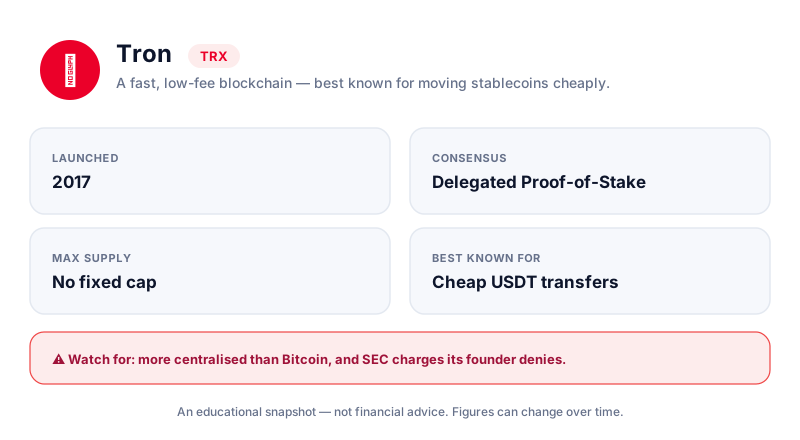
Tron is a public blockchain launched in 2017 by Justin Sun. Like Ethereum, it can run smart contracts and host tokens, but it was built with a focus on high throughput and very low fees. Its native cryptocurrency is TRX, which you use to pay for activity on the network.
In everyday use, most people encounter Tron not because they want TRX itself, but because they're sending or receiving a stablecoin — usually USDT — and Tron happens to be the cheapest, fastest rail for doing so.
How Tron works
Tron secures its network with a system called Delegated Proof of Stake (DPoS). Instead of thousands of miners, a small set of 27 elected validators — called Super Representatives — produce blocks. TRX holders vote for these representatives.
- TRX is the native token used to pay fees and to vote.
- Super Representatives are the 27 validators that confirm transactions.
- Energy and Bandwidth are resources that let you transact, which you get by 'freezing' (staking) TRX — a quirk that can make Tron transfers feel near-free.
This design makes Tron fast and cheap, but also more centralised than networks like Bitcoin or Ethereum: far fewer parties are involved in producing blocks.
Why Tron and stablecoins go together
Tron's standout role is moving stablecoins. A huge share of all USDT (Tether) in circulation runs on Tron, because sending it costs a fraction of what the same transfer costs on Ethereum. For people moving money across borders or between exchanges, that fee difference adds up fast.
We dig into the details — and the trade-offs — in Tron and USDT: why so much runs on it.
The criticisms to know
Tron is widely used, but it's fair to be clear-eyed about it. In 2023, the US Securities and Exchange Commission (SEC) charged founder Justin Sun and three Tron-related entities with offering unregistered securities and with market manipulation; Sun denied the allegations. Critics also point to Tron's centralisation and to the volume of illicit activity that has flowed through cheap stablecoin rails.
A fair warning
TRX, like all crypto, is volatile, and Tron carries extra controversy around its founder and centralisation. Only ever risk what you can afford to lose, never borrow to buy crypto, and treat this as education — not financial advice.
Where to go next
If you understand the basics, the natural next steps are how to buy Tron safely, how to store Tron safely, and understanding Tron staking. To compare it with other networks, start with what is Ethereum. And however you weigh the trade-offs, keep meaningful holdings in cold storage — a SafePal S1 — rather than on an exchange.
Key takeaways
- Tron is a fast, low-fee blockchain; its token is TRX.
- It's the most popular network for sending USDT stablecoins cheaply.
- It uses 27 elected validators, making it more centralised than Bitcoin.
- Its founder faces SEC charges he denies — TRX is volatile, so only risk what you can afford to lose.
Frequently asked questions
Is Tron the same as TRX?
Tron is the blockchain network; TRX is its native token. People often use 'Tron' to mean both, but technically TRX is the coin that powers the Tron network.
Why do people use Tron instead of Ethereum?
Mainly for cost. Sending stablecoins like USDT on Tron is far cheaper than on Ethereum, which is why so much stablecoin volume moved to it.
Is Tron safe to use?
The network itself processes transactions reliably, but it's more centralised than Bitcoin and its founder faces regulatory charges. As always, learn how to store crypto safely and never share your seed phrase.
Keep reading
How to Buy Tron (TRX) Safely (Step by Step)
A safe, beginner-friendly walkthrough of buying Tron (TRX): choosing an exchange, verifying your account, plac
How to Store Tron (TRX) Safely (Step by Step)
Keep your Tron (TRX) and TRC-20 tokens safe: choosing a wallet, using a hardware wallet, backing up your seed
Tron and USDT: Why So Much Stablecoin Runs on It
Why a huge share of USDT runs on Tron, how TRC-20 transfers stay cheap, and the trade-offs — centralisation, r