The Best Crypto Wallets for Beginners
A crypto wallet doesn't really hold your coins — it holds the keys that let you spend them. Choosing your first one feels daunting because there are dozens of apps and devices, all promising to be the safest. The honest truth is simpler than the marketing: most beginners need just one good free app to start, and a small hardware device once they're holding amounts they'd hate to lose.
The 20-second version
Start with a reputable free software wallet to learn the ropes, and move to a hardware wallet once you're holding more than pocket money. The wallet you can actually use safely beats the 'best' one you find confusing.
What a wallet actually does
Before you pick one, it helps to understand what a wallet really is. Your coins live on the blockchain, not inside any app. What a wallet stores is your private key — the secret that proves the coins are yours and lets you move them. Lose that key, or let someone else copy it, and the coins are gone. We explain this in plain terms in public and private keys and bitcoin wallets explained.
Almost every modern wallet boils your key down to a seed phrase: 12 or 24 ordinary words you write on paper and keep offline. That phrase is the master backup to your whole wallet. Anyone who has it controls your money, so it should never be typed into a website, photographed, or stored in the cloud. If you only remember one thing from this guide, make it that. We go deeper in what is a seed phrase.
No one ever needs your seed phrase
Not support staff, not an 'exchange', not a giveaway. Anyone who asks for your 12 or 24 words is trying to rob you. Genuine wallet companies will never request them.
Hot vs cold: the one distinction that matters
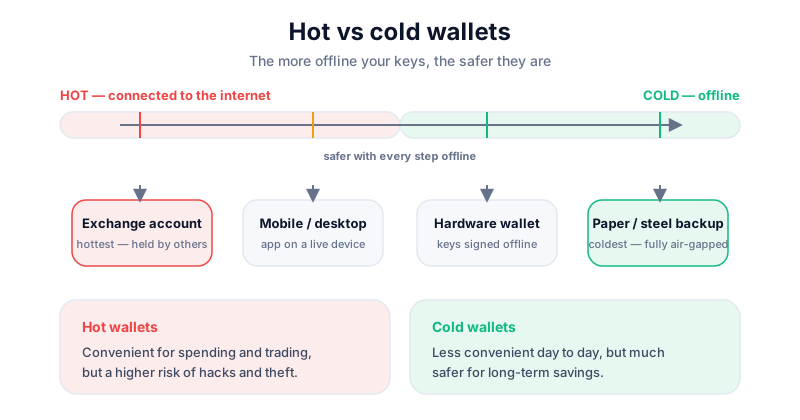
The single most useful way to sort wallets is whether they're connected to the internet. A hot wallet is software — an app on your phone or a browser extension — that keeps your keys on a device that's online. A cold wallet keeps your keys on a dedicated offline device, so the secret never touches an internet-connected machine. We cover the trade-offs fully in hot vs cold wallets and hardware vs software wallets.
| Hot wallet (software) | Cold wallet (hardware) | |
|---|---|---|
| Cost | Free | Around £50–£150 |
| Convenience | Very high — always to hand | A few extra steps to sign |
| Security | Good if you're careful | Much stronger — keys stay offline |
| Best for | Learning, small amounts, day-to-day | Savings you'd hate to lose |
Neither is 'the right answer' on its own. The grown-up setup is to use both: a hot wallet for small, active amounts and a hardware wallet for the bulk you're holding longer-term. Think of it like a current account and a safe.
Where most beginners should actually start
If you're brand new, a free software wallet is the sensible place to learn. It costs nothing, takes minutes to set up, and teaches you the rhythm of sending, receiving and checking addresses without risking a hardware purchase before you know you'll stick with it. Stick to well-known, widely reviewed apps rather than whatever shows up first in an app-store search — fake wallet apps are a real problem, which is why we always say to verify a crypto app before installing.
- MetaMask or Phantom — the standard browser and mobile wallets for Ethereum and Solana respectively; good for exploring apps and tokens.
- Coinbase Wallet or Trust Wallet — friendly mobile-first options that support a wide range of coins.
- Whatever you choose, set it up yourself, write the seed phrase on paper, and confirm you can restore it before putting in real money.
Do a test transaction first
Send a tiny amount, confirm it arrives, then send the rest. This five-minute habit catches typos and wrong-network mistakes before they cost you. See how to do a test transaction.
When to move up to a hardware wallet
There's no magic number, but a good rule of thumb is this: once you're holding more crypto than you'd be comfortable losing to a single piece of malware or a moment's inattention, it's time for a hardware wallet. These small devices keep your private key sealed inside a chip that never connects to the internet, so even a fully compromised computer can't extract it. You confirm each payment by pressing a button on the device itself.
For most beginners, two devices dominate the shortlist, and we've reviewed both in full. They cover the same job — keys offline, you approve transactions on a screen — and differ mainly in form factor and philosophy.
The Ledger Nano X is our top pick for most beginners: pocket-sized, Bluetooth-enabled, and supporting thousands of coins through one tidy app. Read our full Ledger Nano X review first, and only ever buy direct from the manufacturer — never second-hand.

The Trezor Safe 5 pairs a colour touchscreen with fully open-source firmware you can inspect, which appeals if transparency matters to you. See our Trezor Safe 5 review for the detail — and, again, buy only from the manufacturer.
Both are excellent. If you want the broadest coin support and a Bluetooth option, lean Ledger; if open-source firmware is a priority, lean Trezor. Whichever you pick, the security gain comes from keeping the seed phrase offline and buying the device new from the maker.
Mistakes that cost beginners money
- Leaving everything on an exchange. An exchange holds your keys for you, so if it's hacked or fails, you're a creditor, not an owner. Learn how to store Bitcoin safely and move long-term holdings off.
- Storing the seed phrase digitally. A photo, a notes app or a cloud document is exactly what malware hunts for. Paper, kept private, offline.
- Buying hardware second-hand. A tampered device can be pre-loaded with a known seed. Always buy new, direct from the manufacturer.
- Skipping the recovery test. Wipe a fresh device and restore from your written phrase before funding it, so you know the backup works.
The bottom line
The best beginner wallet isn't a single product — it's a sensible progression. Start free, learn the habits, and graduate to a hardware wallet once the amounts justify it. Get comfortable with the difference between hot and cold storage, respect your seed phrase above all else, and buy any hardware new and direct. Do that and you'll have sidestepped the great majority of ways people lose crypto.
Crypto is volatile and largely unregulated, and you can lose money — both to market swings and to your own security mistakes. A good wallet protects against the second kind, not the first. — the Latest Crypto team
Key takeaways
- A wallet stores your keys, not your coins — and your seed phrase is the master backup.
- The key distinction is hot (online software) vs cold (offline hardware).
- Start with a reputable free software wallet, then add a hardware wallet for larger holdings.
- Never store your seed phrase digitally, and only buy hardware wallets new from the manufacturer.
Frequently asked questions
Do I really need a hardware wallet as a beginner?
Not on day one. A reputable free software wallet is fine for learning and small amounts. Once you're holding more than you'd be comfortable losing to malware, a hardware wallet becomes well worth the £50–£150.
Is keeping my crypto on an exchange a wallet?
Sort of, but the exchange holds the keys, not you. That's convenient for trading but means you're trusting the exchange to stay solvent and unhacked. For anything you're holding long-term, move it to a wallet you control.
Ledger or Trezor for a first hardware wallet?
Both are excellent and do the same core job. Choose the Ledger Nano X for the widest coin support and a Bluetooth option, or the Trezor Safe 5 if open-source firmware and a touchscreen appeal. Read our reviews of each before deciding.
Keep reading
Hot vs Cold Wallets: What's the Difference?
A plain-English hot vs cold wallets comparison — how each works, the security trade-offs, and how to combine b
Hardware vs Software Wallets (2026): Which Should You Use?
Hardware vs software wallets compared: security, convenience, cost and the right use for each — so you can pro
Bitcoin Wallets Explained
What a Bitcoin wallet really is, the difference between custodial and self-custody, hot vs cold, and how to ch