Bitcoin Ordinals Explained: NFTs on Bitcoin?
In early 2023, a system called Ordinals introduced a way to attach data — images, text, even tokens — directly to individual units of Bitcoin. Some call them 'Bitcoin NFTs'; others call them spam. This guide explains how Ordinals work, what inscriptions and BRC-20 tokens are, and the genuine controversy around them.
The 20-second version
Ordinals number each tiny unit of Bitcoin (a satoshi) so individual sats can be tracked and made unique. 'Inscriptions' attach data like images to a specific sat, creating Bitcoin-native collectibles. The system divides opinion: some see innovation, others see clutter and higher fees.
What are Ordinals?
A single bitcoin divides into 100 million tiny units called satoshis (or 'sats'). The Ordinals system, launched in January 2023, gives every satoshi a sequential number based on the order it was mined — that numbering is what 'ordinal' refers to.
Because each sat can now be individually identified, people can treat specific sats as unique and collectible — something Bitcoin wasn't originally designed to do.
Inscriptions: data on a satoshi
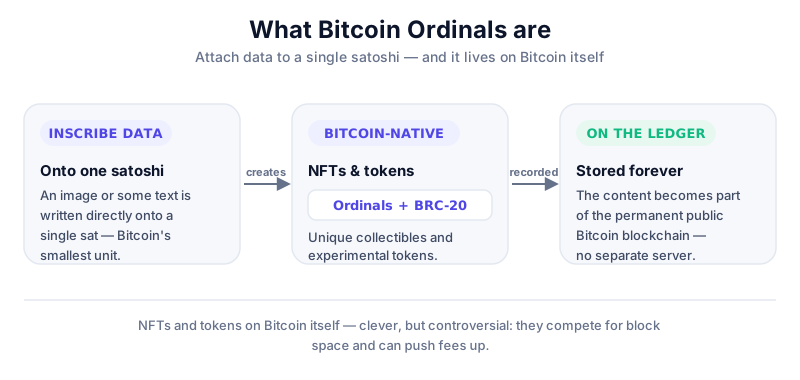
An inscription attaches content — an image, some text, or other data — to a particular satoshi, storing it directly on the Bitcoin blockchain. This is why people compare them to NFTs: each inscription is a unique, on-chain item.
- Unlike many NFTs, the data lives on Bitcoin itself, not on a separate server.
- Inscriptions were made practical by the Taproot upgrade, which changed how data can be stored.
- Once inscribed, the content is part of the permanent public ledger.
BRC-20 tokens
Shortly after Ordinals appeared, an experimental standard called BRC-20 used inscriptions to create fungible tokens on Bitcoin — loosely inspired by Ethereum's token model. Many of these became meme tokens.
Tread very carefully
BRC-20 tokens are highly experimental and extremely volatile, and many have collapsed to near-zero. They are not endorsed by Bitcoin's developers. Only ever risk what you can afford to lose, and watch for scams. This guide is education, not financial advice.
The controversy
Ordinals split the Bitcoin community. The debate is worth understanding from both sides:
- Supporters say inscriptions add fee revenue for miners and showcase Bitcoin's flexibility.
- Critics argue they bloat the blockchain with non-financial data, push up fees for ordinary payments, and stray from Bitcoin's purpose as money.
- The neutral view: they're a real use of the network, and the market — through fees — decides how much demand they get.
Where to go next
Ordinals build on the Taproot upgrade, so that's a useful companion read. To compare with the more established model, see what an NFT is, and ground yourself with what Bitcoin is. And however you weigh the trade-offs, keep meaningful holdings in cold storage — a BitBox02 — rather than on an exchange.
Key takeaways
- Ordinals number individual satoshis so they can be tracked and made unique.
- Inscriptions store data like images directly on the Bitcoin blockchain.
- BRC-20 tokens are an experimental, highly volatile use of inscriptions.
- Ordinals are genuinely controversial — they add fees but also blockchain clutter.
Frequently asked questions
Are Bitcoin Ordinals the same as NFTs?
They're similar in spirit — unique digital items — but Ordinals store data on Bitcoin itself, while many NFTs only point to data stored elsewhere. The technology underneath is quite different.
Do Ordinals affect my regular Bitcoin?
Your bitcoin works as normal. However, heavy Ordinals activity can raise network fees for everyone, which may make ordinary transactions more expensive at busy times.
Should I buy BRC-20 tokens?
This guide can't tell you what to buy. BRC-20 tokens are experimental and extremely risky, with many losing nearly all value. If you explore them at all, only use money you can afford to lose entirely.
Keep reading
What Is Bitcoin? A Plain-English Guide
A beginner-friendly explanation of what Bitcoin is, how it works, and how to think about it — with no hype and
What Is Taproot? Bitcoin's 2021 Privacy and Efficiency Upgrade
A beginner-friendly explanation of Taproot, Bitcoin's 2021 upgrade: what it changed, how it improves privacy a
What Is an NFT? A Clear Beginner's Guide
What NFTs actually are, how they work as proof of ownership on a blockchain, what they're used for, and the ri