Bitcoin Security and Scams: How to Stay Safe
You can now buy Bitcoin, store it, and pick the right wallet. This lesson covers the threat all those skills are really up against. Bitcoin itself is extremely hard to attack — but the people holding it are targeted relentlessly, and the crypto internet is unusually full of predators. Here's the reassuring truth, though: almost every loss comes down to a small, repeatable set of tricks. Learn them once, while you're calm, and you'll spot them every time. This is the lesson that quietly protects everything you've built across the course so far.
The 20-second version
Scammers rarely break Bitcoin — they trick you into handing over access. Never share your seed phrase, never trust 'guaranteed returns' or giveaways, verify every link and app, and use app-based 2FA. If something creates urgency, slow down and check independently. Urgency is almost always the tell.
Why people get scammed, not hacked
Films love the image of a hooded hacker 'breaking into Bitcoin'. In reality the Bitcoin network has never been hacked that way — the maths holds, and breaking it would cost more than any reward. So attackers don't bother attacking the code; they go after the weakest link, which is almost always a human being having a busy day. And crypto makes a tempting target because transactions are irreversible and often hard to trace: once your coins are gone, there's no chargeback, no fraud department, and no friendly bank to claw them back. The genuinely good news is that the scammers' playbook is small, old, and predictable — the same cons in fresh packaging.
The one rule that prevents most losses
Never share your seed phrase or private keys with anyone, and never type them into a website. No exchange, wallet, or 'support agent' will ever need them. This single rule blocks a huge share of all crypto theft — internalise it and you've won half the battle before it starts.
The most common Bitcoin scams
Here are the ones you'll actually run into. Read them now, while you're calm and nothing's at stake, so you recognise them later — when a message is trying very hard to make you panic or feel lucky. Familiarity is most of the defence.
- Fake giveaways — 'Send 0.1 BTC and we'll send 0.2 back', usually using a celebrity's name or a hijacked account. The return never comes; that's the entire scam, and it has never once been real.
- Phishing sites — lookalike exchange or wallet pages that steal your login or seed phrase the instant you type it. Often reached via a search ad or an emailed 'security alert' designed to rush you.
- Fake support — someone posing as customer service in a DM, forum reply, or search ad, who 'helps' by asking for your seed phrase or remote access to your computer.
- Investment / 'pig butchering' schemes — a friendly stranger builds trust over weeks, then steers you onto a fake platform that shows fake profits until you try to withdraw and discover it was all a screen.
- Romance scams — a warm online relationship that conveniently pivots to a can't-miss crypto opportunity run by their 'uncle' or 'mentor'.
- Fake apps — malicious clones of real wallets in app stores, built purely to harvest your seed phrase. See fake wallet apps for how to spot them.
Notice the pattern running through all of them: they rely on trust, urgency, or greed — never on any flaw in Bitcoin itself. Spot the emotional hook and you've spotted the scam, every single time. If a message makes your heart race, that's your cue to slow down, not speed up.
Technical attacks worth knowing
A few attacks are more technical than a simple con, but each has a clear, practical defence you can put in place today. You don't need to be an expert — you just need to know they exist and what stops them.
- SIM-swap — an attacker convinces your phone carrier to move your number to their SIM, then intercepts your SMS login codes. Defence: use an authenticator app or hardware security key for 2FA, never SMS.
- Clipboard malware — software that silently swaps a wallet address you've copied for the attacker's own. Defence: always check the first and last few characters of any address after pasting, and send a small test amount first.
- Malicious browser extensions — fake or compromised add-ons that quietly drain wallets in the background. Defence: install only what you genuinely need from official sources, and review the permissions it asks for.
- 'Approval' draining — being tricked into signing a transaction that grants ongoing access to your funds. Defence: read what you're actually signing, and periodically revoke approvals you no longer use. Wallet drainer scams explains this trap in detail.
Your practical defence checklist
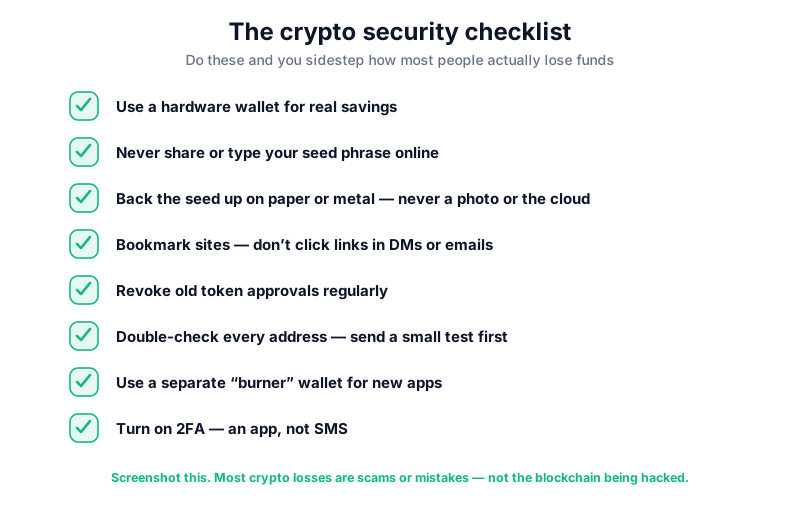
Pull it all together into habits. None of these are hard, and together they put you far ahead of the people scammers find easy. Treat them as a routine, not a one-off — security is a habit, not a setting.
- Use a hardware wallet for meaningful amounts so your keys stay offline and out of malware's reach.
- Turn on app-based two-factor authentication everywhere — and avoid SMS-based 2FA wherever you can.
- Bookmark official sites and never click a login link from an email, DM, or search ad.
- Verify wallet addresses character-by-character and always send a small test transaction first.
- Keep your seed phrase on paper, offline, and never photograph, screenshot, or type it anywhere.
- Treat any urgency — 'act now', 'verify immediately', 'your account is at risk' — as a red flag and stop.
A hardware wallet like the Ledger Nano X signs transactions on a secure chip, so even a fully compromised computer can't steal your keys. We may earn a commission at no cost to you, and it never changes our verdicts — buy direct from the manufacturer.
If you think you've been targeted
If you've shared a seed phrase or signed something suspicious, act fast and calmly — panic helps no one now. Move any remaining funds to a brand-new wallet with a freshly generated seed phrase, revoke any token approvals you've granted, and change your exchange passwords and 2FA. Sadly, on-chain transfers can't be reversed, so you may not recover what's already gone — but quick action can stop further loss, and that's the only goal that matters in the moment. There's a fuller playbook in how to recover a hacked wallet.
Report it — and beware the second scam
Report scams to your exchange and your national fraud authority. It rarely recovers funds, but it helps platforms shut down fraudulent accounts and warn others. And be on guard: anyone who messages offering to 'recover' your lost crypto for a fee is almost always a follow-up scam preying on your distress.
Where to go next
That's your security grounding done — you can now recognise the common cons, harden your accounts, and react sensibly if something slips through. With those defences in place, you're ready for the final lesson, advanced self-custody, which covers multisig, passphrases and inheritance for protecting larger holdings over the long term. If any earlier idea felt shaky, it's always worth revisiting storing Bitcoin safely and wallets explained first — there's no prize for rushing.
Key takeaways
- Most losses are social engineering, not hacks — the human is the target, not the network.
- Never share your seed phrase, and never type it into a website.
- Use app-based 2FA, verify links and addresses, and send a test amount first.
- Urgency is the universal red flag — slow down and verify independently.
Frequently asked questions
Can stolen Bitcoin be recovered?
Almost never. Transactions are irreversible, so anyone offering a paid 'recovery service' is usually running a second scam on top of the first. Focus your energy on prevention, because it's the only protection that genuinely works.
Is it safe to keep my Bitcoin on an exchange?
For small or actively traded amounts it can be reasonable, but the exchange holds the keys and can be hacked or freeze withdrawals. For larger holdings, self-custody with your own hardware wallet is safer and puts you in control.
Someone messaged offering to help recover my funds — should I trust them?
No. Unsolicited 'recovery experts', especially the ones who appear in your DMs right after a loss, are a well-known follow-up scam. Never pay an upfront fee and never share your seed phrase with them.
Keep reading
How to Store Bitcoin Safely (Step by Step)
Keep your Bitcoin safe from hackers and mistakes: hot vs cold wallets, hardware wallets, seed-phrase backups,
Fake Wallet Apps: How Counterfeit Wallets Steal Keys
Fake crypto wallet apps mimic real ones to steal your seed phrase the moment you set up. Learn how they spread
Wallet Drainer Scams Explained
How wallet-drainer scams trick you into signing a malicious transaction that empties your wallet in seconds —