Coin vs Token: What's the Difference?
People use 'coin' and 'token' as if they mean the same thing, but in crypto they describe two different things. Understanding the distinction helps you read a project correctly and spot where the real value — and the real risk — sits.
The 20-second version
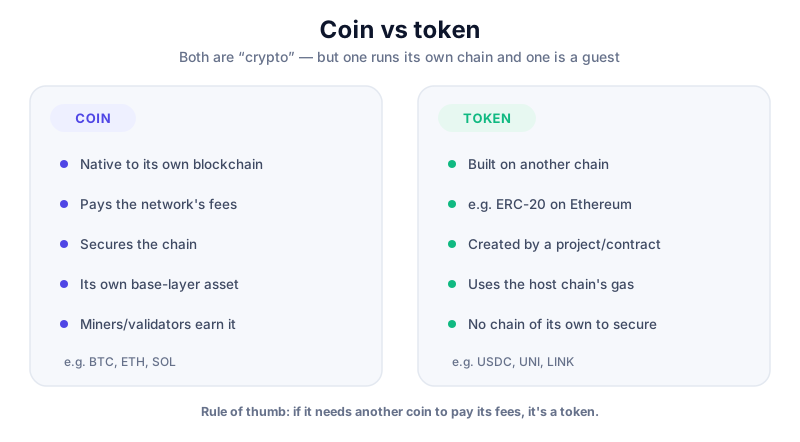
A coin is the native currency of its own blockchain (like Bitcoin on the Bitcoin network or ETH on Ethereum). A token is built on top of an existing blockchain using smart contracts. Coins pay the network's fees; tokens ride on a network someone else secures.
What is a coin?
A coin is the native asset of its own blockchain. Bitcoin is the coin of the Bitcoin network; ETH is the coin of Ethereum; SOL is the coin of Solana. The blockchain and the coin are built together — you can't have one without the other.
Because a coin is native to its chain, it's what you pay transaction fees in. You need ETH to use Ethereum and SOL to use Solana, no matter what else you're doing on those networks.
What is a token?
A token is created on top of an existing blockchain using a smart contract — a small program that defines the token's rules. The token doesn't have its own network; it borrows the security of the chain it lives on.
- Ethereum tokens usually follow the ERC-20 standard (for currencies) or ERC-721 (for NFTs).
- Stablecoins like USDC and USDT are tokens, not coins — most run on several chains at once.
- Thousands of tokens can exist on a single blockchain.
Why the difference matters
The distinction is practical. To move a token, you still need the chain's coin to pay the fee — sending a token on Ethereum costs ETH, even if you hold no ETH-denominated balance otherwise. Run out of the coin and you can't transact your tokens at all. And however you weigh the trade-offs, keep meaningful holdings in cold storage — a SafePal S1 — rather than on an exchange.
Tokens can carry extra risk
Anyone can create a token in minutes, including scammers who copy famous names. The fact that something is 'on Ethereum' says nothing about whether the project behind it is trustworthy. Research the project, not just the chain. This is education, not financial advice — crypto is volatile, so only risk what you can afford to lose.
Key takeaways
- A coin is native to its own blockchain; a token is built on top of one.
- Coins pay the network's transaction fees — you always need some.
- Stablecoins and most project tokens are tokens, not coins.
- A token being 'on Ethereum' says nothing about whether the project is safe.
Frequently asked questions
Is Bitcoin a coin or a token?
Bitcoin is a coin — it's the native asset of the Bitcoin blockchain, which exists specifically to run it.
Why do I need ETH to send a token?
Tokens live on Ethereum but the network charges fees in ETH. Without a little ETH for gas, you can't move your tokens.
Are stablecoins coins or tokens?
Tokens. A stablecoin like USDC is a smart contract on one or more existing blockchains, not its own network.
Keep reading
What Is Bitcoin? A Plain-English Guide
A beginner-friendly explanation of what Bitcoin is, how it works, and how to think about it — with no hype and
What Is Ethereum? A Plain-English Guide
A beginner-friendly explanation of Ethereum: what it is, how it differs from Bitcoin, what smart contracts do,
Gas Fees for Beginners
Why crypto charges 'gas' fees, what makes them go up and down, and simple ways to avoid overpaying — explained