Crypto Bridge Hacks Explained (Why They Keep Happening)
Cross-chain bridges let you move assets from one blockchain to another — and they have been hacked for some of the largest sums in crypto history. This guide explains what a bridge is, why bridges are such an irresistible target, and the practical steps that reduce your risk when you have to use one.
The 20-second version
A bridge moves value between blockchains by locking your asset on one chain and issuing a stand-in token on another. That pool of locked funds is a huge honeypot, and a single flaw in the bridge's code or key control can drain it all at once. Bridge only when you must, in small amounts, using established bridges.
What is a cross-chain bridge?
Blockchains like Bitcoin, Ethereum and Solana are separate networks that can't natively talk to each other. A bridge is the workaround: it lets an asset on one chain be represented and used on another.
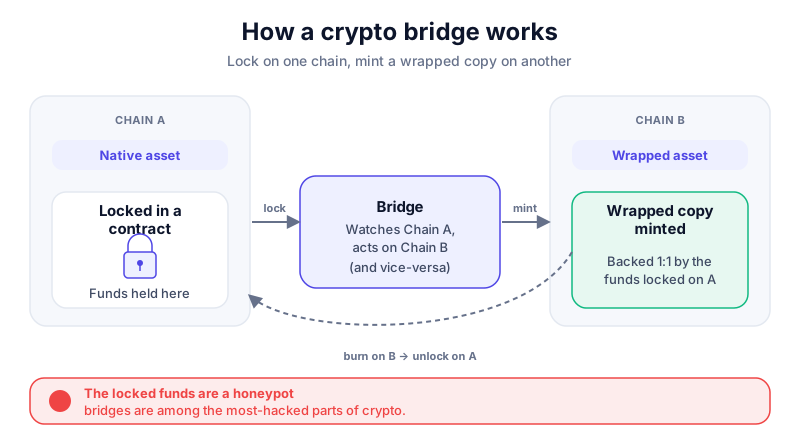
The usual mechanism is 'lock and mint'. You deposit a token on Chain A, the bridge locks it in a smart contract, and it mints an equivalent 'wrapped' token on Chain B. To come back, you burn the wrapped token and the original is released.
Wrapped tokens are IOUs
A wrapped token is only as trustworthy as the bridge backing it. It's a claim on the real asset locked elsewhere — if that locked pool is drained, the wrapped token can lose its backing.
Why bridges are such a big target
Bridges combine three things attackers love: enormous concentrated funds, complex code, and control points that can be compromised.
- Honeypot of locked funds. All the assets users have bridged sit in one place. Breaking the bridge once can mean draining hundreds of millions at a stroke.
- Complex, custom code. Bridges are intricate smart contracts spanning multiple chains. More complexity means more places for a bug to hide.
- Trusted validators or keys. Many bridges rely on a small set of validators or multisig signers. Compromise enough of those keys — often via phishing — and you can authorise fake withdrawals.
- Fake-deposit flaws. Some hacks tricked a bridge into believing a deposit happened that never did, then minting tokens out of thin air.
Several of the biggest crypto thefts on record have been bridge exploits, driven by exactly these weaknesses.
How bridge hacks typically unfold
- Code exploit — an attacker finds a flaw in the bridge contract that lets them withdraw locked funds or mint unbacked wrapped tokens.
- Key compromise — attackers phish or otherwise steal the validator or signer keys that approve withdrawals, then sign their own.
- Forged proofs — the bridge accepts a faked 'proof' of a deposit and releases or mints assets against it.
- Cascade — once drained, the wrapped tokens on the other chain lose backing, hitting anyone holding them and the protocols that used them.
Many of these overlap with the broader patterns in common DeFi exploits explained.
How to reduce your exposure
You can't audit a bridge yourself, but you can make sensible choices about whether, when, and how much you bridge. The lasting lesson is the oldest one in crypto: coins on someone else's platform are an IOU. Long-term holdings belong offline, on a hardware wallet like the BitBox02.
- Ask whether you need to bridge at all. Sometimes buying the asset natively on the destination chain via an exchange is simpler and safer.
- Prefer well-established bridges with a long track record and a history of responsible security practices over new, unproven ones.
- Don't leave assets sitting in wrapped form longer than necessary — bridge, use, and unwrap rather than parking funds in a bridge ecosystem.
- Move in smaller amounts rather than bridging your entire holdings in one transaction.
- Keep long-term savings in cold storage on their native chain, away from bridges entirely.
Only risk what you can afford to lose
Bridges are among the riskiest places to hold value in crypto. Treat any funds you bridge as exposed, and never bridge more than you could afford to lose. This is education, not financial advice.
Key takeaways
- A bridge moves assets between chains by locking the original and issuing a wrapped stand-in.
- The pool of locked funds is a honeypot, making bridges a top target for hackers.
- Hacks come from code bugs, stolen validator keys, and forged deposit proofs.
- Bridge only when needed, in smaller amounts, via established bridges — and keep savings in cold storage.
Frequently asked questions
Are crypto bridges safe to use?
Bridges are among the higher-risk tools in crypto and have suffered some of the largest hacks on record. Established bridges with strong track records are safer, but none is risk-free. Bridge only what you need and don't leave funds parked there.
What is a wrapped token?
A wrapped token is a stand-in issued on one chain to represent an asset locked on another by a bridge. It's effectively an IOU — its value depends entirely on the bridge holding the real asset in reserve.
Why do bridges get hacked so often?
They concentrate large amounts of locked funds, run complex multi-chain code, and often depend on a small set of validator keys. That combination of high reward and many attack surfaces makes them a favourite target. See smart contract risk explained.
Keep reading
Smart Contract Risk Explained (Plain English)
Smart contracts are the code that runs DeFi, NFTs and DEXs — and their bugs can cost users real money. Here's
Common DeFi Exploits Explained (And How to Stay Safe)
Flash loan attacks, rug pulls, oracle manipulation, and malicious approvals — the most common ways DeFi users
What Is DeFi? Decentralised Finance Explained
A beginner's guide to decentralised finance: what DeFi is, how lending, trading and yield work without a bank