Crypto Taxes in Australia: A Plain-English Guide
In Australia, the tax office treats most crypto as property, not currency — which means selling, swapping or spending it can trigger capital gains tax. This guide explains the general rules in plain English so you know what to track and what to ask an accountant. It's education, not tax advice.
The 60-second version
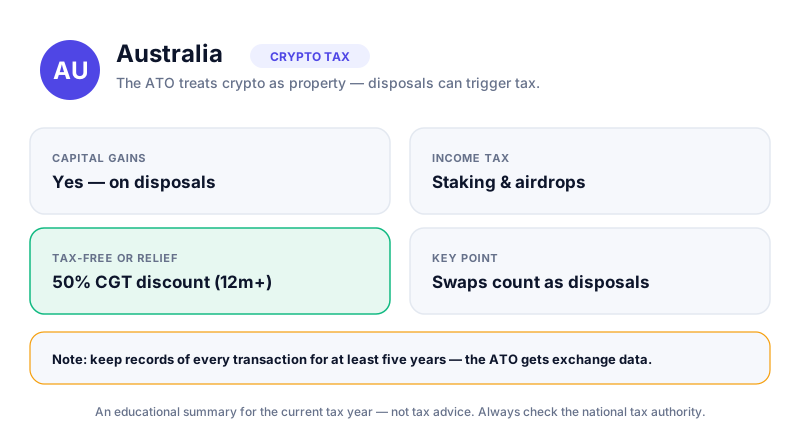
The ATO generally treats crypto as a CGT asset. Selling, swapping or spending it is a 'disposal' that can create a capital gain or loss. Holding an asset for more than 12 months may qualify a personal investor for the 50% CGT discount. Staking rewards and airdrops are usually taxed as ordinary income when received. Keep records of every transaction.
How Australia taxes crypto
The Australian Taxation Office (ATO) generally treats cryptocurrency as a CGT asset rather than money. For most people who buy and hold, that means capital gains tax applies when you 'dispose' of crypto — and a disposal is broader than just cashing out to Australian dollars.
- Selling crypto for AUD.
- Swapping one crypto for another (for example, Bitcoin for Ethereum).
- Spending crypto on goods or services.
- Gifting crypto to someone else.
Each disposal compares your sale value to your cost base (what you paid plus certain fees). The difference is a capital gain or a capital loss.
The 50% CGT discount
If you're an individual holding crypto as an investment and you've owned it for more than 12 months before disposing of it, you may be entitled to the 50% CGT discount — meaning only half the gain is added to your assessable income. Eligibility depends on your circumstances, so confirm it with the ATO or an accountant.
Capital losses can generally be used to offset capital gains in the same year, or carried forward to future years. They can't usually be offset against your salary or wages.
When crypto is taxed as income
Not everything is a capital gain. Some crypto activity is treated as ordinary income, taxed at your marginal rate in the year you receive it.
- Staking rewards are generally income at their AUD value when received. Learn the basics in what is staking.
- Airdrops of established tokens are typically income on receipt.
- Being paid in crypto for work or business is income.
- Trading as a business can move you from CGT rules into trading-stock and ordinary-income rules — a very different regime.
Investor vs trader matters
Whether the ATO sees you as an investor or as carrying on a trading business changes how you're taxed. The line isn't always obvious — if you trade frequently or at scale, get professional advice.
Records and reporting
Australians are expected to keep crypto records for at least five years. The ATO also receives data directly from Australian exchanges, so unreported activity can be flagged. Tax software like Koinly can import your exchange and wallet history and calculate what you owe.
- Dates and AUD values of every buy, sell and swap.
- What the transaction was for and the other party where relevant.
- Fees, and records of staking, airdrops and rewards.
- Wallet addresses and exchange statements.
This is general information, not tax advice
Crypto tax rules change and depend on your personal situation. Always check current guidance at ato.gov.au or speak to a registered tax agent before filing.
Reconciling a year of trades by hand is miserable. Koinly connects your exchanges and wallets, applies the rules the taxman expects, and produces a ready-to-file report — free to preview, you only pay to download it.
Key takeaways
- The ATO generally treats crypto as a CGT asset, so disposals can trigger tax.
- Swapping or spending crypto counts as a disposal, not just cashing out.
- Holding 12+ months may qualify individuals for the 50% CGT discount.
- Staking and airdrops are usually income; keep records for at least five years.
Frequently asked questions
Do I pay tax if I just buy and hold crypto?
Simply buying and holding doesn't normally trigger CGT — tax usually arises when you dispose of it by selling, swapping, spending or gifting. Always confirm with current ATO guidance.
Is swapping one coin for another taxable in Australia?
Generally yes. The ATO treats a crypto-to-crypto swap as a disposal of the first asset, which can create a capital gain or loss even though you never touched AUD.
How are staking rewards taxed?
Staking rewards are usually treated as ordinary income at their AUD value when you receive them, and may later create a separate capital gain or loss when you dispose of them.
Keep reading
Crypto Taxes in Canada: A Plain-English Guide
How crypto is taxed in Canada: capital gains vs business income, the 50% inclusion rate, staking and airdrops,
Crypto Taxes in Singapore: A Plain-English Guide
How crypto is taxed in Singapore: no general capital gains tax, when trading becomes taxable income, GST treat
What Is Staking? How It Works and What It Costs
A plain-English guide to crypto staking: how it secures proof-of-stake networks, how rewards work, and the loc