Crypto Taxes in Canada: A Plain-English Guide
Canada doesn't treat crypto as legal-tender money for tax purposes — the CRA views it as a commodity. That means most transactions are either a capital gain or business income. This guide explains the general rules in plain English. It's education, not tax advice.
The 60-second version
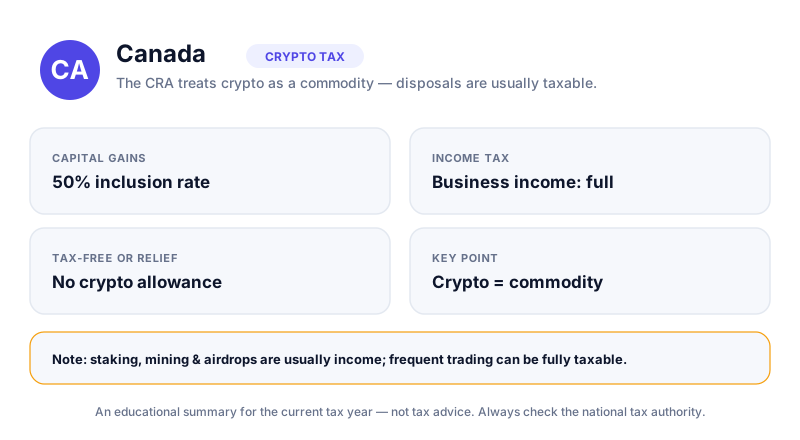
The CRA treats crypto as a commodity. Disposing of it (selling, swapping, spending or gifting) can create a capital gain — and historically half of a capital gain is taxable. If your activity looks like a business, profits may be fully taxable as business income instead. Staking and mining rewards are usually income. Keep detailed records.
How Canada taxes crypto
The Canada Revenue Agency (CRA) treats cryptocurrency as a commodity, not as money. When you dispose of crypto, the result is usually either a capital gain/loss or business income, depending on the nature of your activity. A disposal includes more than cashing out.
- Selling crypto for Canadian dollars.
- Trading one crypto for another.
- Using crypto to pay for goods or services.
- Gifting crypto to someone else.
Capital gain or business income?
This distinction is the heart of Canadian crypto tax. For a typical investor, gains are treated as capital gains, and historically only 50% of a capital gain has been included in taxable income (the 'inclusion rate'). If your trading is frequent, organised and commercial in nature, the CRA may treat profits as business income, which is fully taxable.
Factors the CRA weighs
Frequency of trades, time spent, intention to profit short-term, and how 'business-like' your activity looks all influence whether you're an investor or a trader. There's no single bright line, so get advice if you trade actively.
Staking, mining and airdrops
Rewards you earn are often treated differently from simple buy-and-hold gains.
- Mining as a business is generally taxed as business income; hobby mining is treated differently.
- Staking rewards are commonly treated as income when received — see what is staking.
- Airdrops and rewards may be income depending on the circumstances.
- Getting paid in crypto is income at its fair market value in Canadian dollars.
Records and reporting
The CRA expects you to keep thorough records, and exchanges operating in Canada may report user data. Good records also make it far easier to claim losses correctly. CoinLedger can pull your transactions together and generate a report automatically.

- Dates, amounts and CAD values of every transaction.
- The type of transaction and the addresses involved.
- Exchange records, fees, and receipts for any crypto spent.
- Records of staking, mining and airdrop income.
This is general information, not tax advice
Canadian crypto tax rules and inclusion rates can change and depend on your situation. Check current guidance at canada.ca or speak with a Canadian accountant before filing.
Reconciling a year of trades by hand is miserable. Koinly connects your exchanges and wallets, applies the rules the taxman expects, and produces a ready-to-file report — free to preview, you only pay to download it.
Key takeaways
- The CRA treats crypto as a commodity, not currency.
- Most investors report capital gains; only part of the gain is typically taxable.
- Frequent, commercial trading can be taxed as fully taxable business income.
- Mining and staking rewards are often income; keep detailed records.
Frequently asked questions
Is crypto tax-free in Canada if I don't cash out to dollars?
No. Trading one crypto for another or spending crypto is a disposal and can be taxable, even if you never convert to Canadian dollars. Always check current CRA guidance.
How much of my crypto gain is taxable?
For capital gains, historically only half the gain has been included in taxable income. Inclusion rules can change, so confirm the current rate with the CRA or an accountant.
When is crypto taxed as business income instead of a capital gain?
When your activity is frequent, organised and commercial — essentially looking like a trading business. In that case profits can be fully taxable, so professional advice is wise.
Keep reading
Crypto Taxes in Australia: A Plain-English Guide
How crypto is taxed in Australia: capital gains tax, the CGT discount, income from staking and airdrops, recor
Crypto Taxes in Germany: A Plain-English Guide
How crypto is taxed in Germany: the one-year holding rule, private sales transactions, the tax-free allowance,
What Is Staking? How It Works and What It Costs
A plain-English guide to crypto staking: how it secures proof-of-stake networks, how rewards work, and the loc