Crypto Taxes in Germany: A Plain-English Guide
Germany has one of the more distinctive crypto tax regimes: hold for long enough and gains on a private sale can be tax-free. But the details matter, and shorter-term gains and rewards are treated differently. This guide explains the general rules in plain English. It's education, not tax advice.
The 60-second version
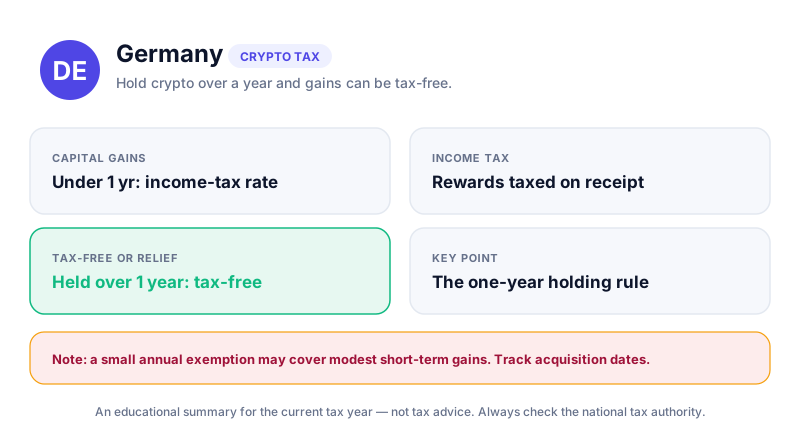
Germany generally treats crypto held by individuals as a private asset. Gains from selling crypto held for more than one year have historically been tax-free for private investors. Gains on crypto sold within a year are taxed as a private sale transaction, with a small annual exemption threshold. Staking and other rewards have their own rules. Confirm everything against current guidance.
How Germany taxes crypto
For private individuals, German tax authorities have generally treated crypto disposals as private sale transactions (private Veräußerungsgeschäfte) rather than capital-markets gains. The key question is how long you held the asset before selling, swapping or spending it.
- Selling crypto for euros.
- Swapping one crypto for another.
- Spending crypto on goods or services.
The one-year holding rule
This is what makes Germany unusual. If a private individual holds crypto for more than one year before disposing of it, the gain has historically been tax-free. Sell within a year and the gain is generally taxable as a private sale transaction at your personal income tax rate.
There's an annual exemption too
Short-term private-sale gains below a small annual threshold have typically been tax-free. The exact figure can change year to year, so check the current allowance — and note it can cover several types of private sales combined.
Staking, lending and rewards
Earning crypto is treated differently from simply holding and selling it. Rewards are often taxed as other income when received, valued in euros.
- Staking rewards are generally taxable income on receipt — see what is staking.
- Lending and similar yield can be taxable income.
- Being paid in crypto is income at its euro value.
- Holding periods for assets you actively used to earn rewards have been the subject of changing guidance — check the latest rules.
Records and reporting
Because the holding period is decisive, careful records of acquisition dates are essential in Germany. You'll typically declare relevant gains and income in your annual tax return. Tax software like Koinly can track acquisition dates and holding periods for you.
- Acquisition and disposal dates for every position.
- Euro values, amounts and fees.
- Records of staking, lending and other rewards.
- Exchange statements and wallet records.
This is general information, not tax advice
German crypto tax treatment has evolved and depends on your circumstances. Check current guidance from the Bundesfinanzministerium (BMF) or consult a German Steuerberater before filing.
Reconciling a year of trades by hand is miserable. Koinly connects your exchanges and wallets, applies the rules the taxman expects, and produces a ready-to-file report — free to preview, you only pay to download it.
Key takeaways
- Germany generally treats individual crypto disposals as private sale transactions.
- Gains on crypto held over a year have historically been tax-free for private investors.
- Short-term gains are taxable, but a small annual exemption may apply.
- Staking and other rewards are usually taxed as income; track acquisition dates closely.
Frequently asked questions
Is crypto really tax-free in Germany after one year?
For private individuals, gains on crypto held more than a year have historically been tax-free. Rules can change and exceptions exist, so confirm against current BMF guidance or a tax adviser.
What happens if I sell within a year?
Short-term gains are generally taxed as a private sale transaction at your personal income tax rate, though a small annual exemption threshold may keep modest gains tax-free.
Are staking rewards taxed in Germany?
Staking rewards are generally treated as taxable income at their euro value when received, separate from the one-year rule for disposals. Check the latest guidance.
Keep reading
Crypto Taxes in Ireland: A Plain-English Guide
How crypto is taxed in Ireland: capital gains tax, the annual CGT exemption, income tax on staking and airdrop
Crypto Taxes in Canada: A Plain-English Guide
How crypto is taxed in Canada: capital gains vs business income, the 50% inclusion rate, staking and airdrops,
What Is Staking? How It Works and What It Costs
A plain-English guide to crypto staking: how it secures proof-of-stake networks, how rewards work, and the loc