Crypto Taxes in Ireland: A Plain-English Guide
In Ireland, crypto profits usually fall under capital gains tax, and the rate is one of the higher ones in Europe. Earnings like staking can be treated as income instead. This guide explains the general rules in plain English so you know what to track. It's education, not tax advice.
The 60-second version
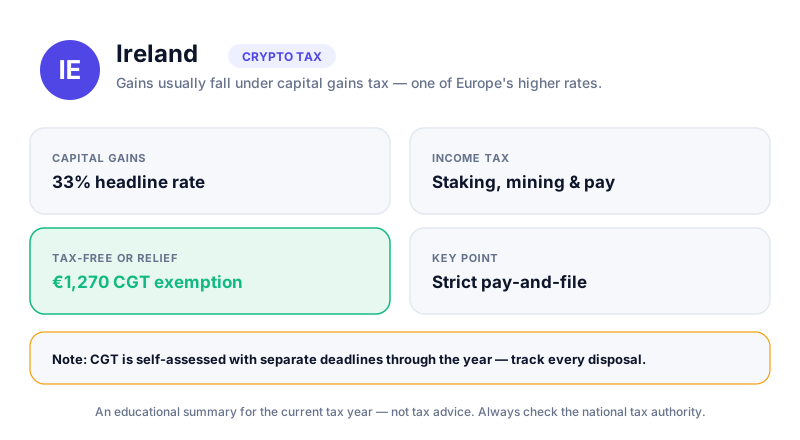
Irish Revenue generally taxes crypto gains under capital gains tax (CGT), with a single headline rate of 33%. A modest annual exemption shelters the first part of your gains each year. Income from activities like staking, mining or being paid in crypto can fall under income tax instead. CGT is often self-assessed and paid on a strict schedule. Keep records.
How Ireland taxes crypto
Ireland's Revenue Commissioners generally apply ordinary tax principles to crypto. For most investors, disposing of crypto is a capital gains tax event. The standard CGT rate has been 33%, which is relatively high, so the numbers add up quickly.
- Selling crypto for euros.
- Swapping one crypto for another.
- Spending crypto on goods or services.
- Gifting crypto (which can also raise separate gift-tax questions).
The annual CGT exemption
Each individual has a small annual CGT exemption — historically the first €1,270 of net gains in a year is tax-free. Gains above that are taxed at the standard rate. Losses can generally be set against gains, which is why tracking both matters.
Mind the payment deadlines
Irish CGT runs on a strict pay-and-file schedule, with different deadlines for gains made earlier and later in the year. Missing them can mean interest and penalties, so diarise the dates or ask an accountant.
When crypto is income, not a gain
Some activity is taxed as income (income tax, plus USC and PRSI where relevant) rather than as a capital gain.
- Staking rewards can be treated as income — see what is staking.
- Mining income, depending on whether it's a trade or hobby.
- Being paid in crypto for work, valued in euros.
- Frequent, business-like trading, which may be assessed as a trade rather than as CGT.
Records and reporting
Most Irish crypto investors self-assess, so accurate records are essential to file correctly and on time. Koinly can import your history and produce a gains report you can file from.
- Dates and euro values of every acquisition and disposal.
- Fees and the nature of each transaction.
- Records of staking, mining and other income.
- Exchange statements and wallet addresses.
This is general information, not tax advice
Irish tax rates, exemptions and deadlines can change and depend on your situation. Check current guidance at revenue.ie or speak to an Irish accountant before filing.
Reconciling a year of trades by hand is miserable. Koinly connects your exchanges and wallets, applies the rules the taxman expects, and produces a ready-to-file report — free to preview, you only pay to download it.
Key takeaways
- Most crypto gains in Ireland fall under capital gains tax at a 33% headline rate.
- A small annual CGT exemption shelters the first slice of net gains.
- Staking, mining and crypto pay can be taxed as income instead.
- CGT is self-assessed on a strict pay-and-file schedule — track everything.
Frequently asked questions
What is the crypto tax rate in Ireland?
Crypto gains generally fall under capital gains tax, which has had a headline rate of 33%. Income-type activity is taxed under income tax instead. Confirm current rates with Revenue.
Is there a tax-free amount for crypto gains in Ireland?
Yes — individuals have a small annual CGT exemption (historically €1,270 of net gains). Gains above that are taxable. The figure can change, so check the current allowance.
When do I have to pay crypto CGT in Ireland?
Irish CGT uses a pay-and-file system with separate deadlines for gains made earlier and later in the year. Missing them can trigger interest, so note the dates or ask an accountant.
Keep reading
Crypto Taxes in Germany: A Plain-English Guide
How crypto is taxed in Germany: the one-year holding rule, private sales transactions, the tax-free allowance,
Crypto Taxes in Australia: A Plain-English Guide
How crypto is taxed in Australia: capital gains tax, the CGT discount, income from staking and airdrops, recor
What Is Staking? How It Works and What It Costs
A plain-English guide to crypto staking: how it secures proof-of-stake networks, how rewards work, and the loc