Crypto Taxes in India: A Plain-English Guide
India has one of the strictest crypto tax regimes in the world: a flat 30% tax on gains, a 1% tax deducted at source, and no offsetting of losses. This guide explains the general rules in plain English so you understand the headline numbers. It's education, not tax advice.
The 60-second version
India taxes income from 'virtual digital assets' (VDAs) at a flat 30%, plus applicable surcharge and cess. You generally can't deduct expenses beyond the cost of acquisition, and you can't offset crypto losses against gains or other income. A 1% tax deducted at source (TDS) applies to most transfers above a threshold. Confirm details with current guidance.
How India taxes crypto
Indian law taxes income from the transfer of virtual digital assets (VDAs) — which includes most cryptocurrencies and NFTs — at a flat 30% rate, plus any applicable surcharge and cess. Unlike many countries, the rate doesn't depend on your income bracket or how long you held the asset.
- Selling crypto for rupees.
- Swapping one crypto for another.
- Spending crypto on goods or services.
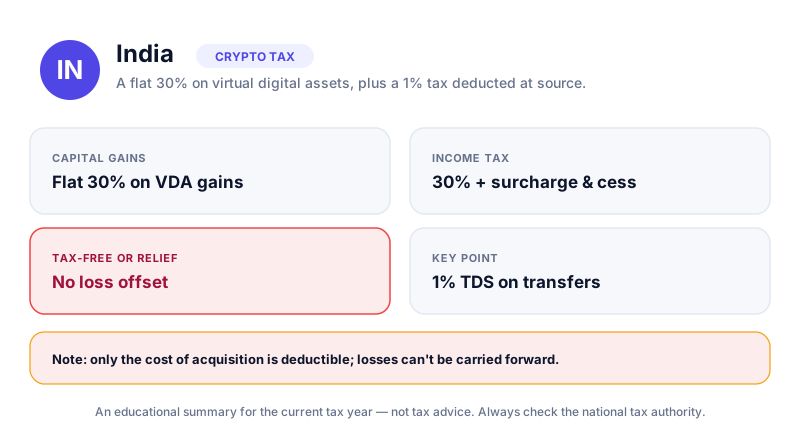
No loss offset, limited deductions
Two features make India's regime especially strict. First, when calculating gains you generally can only deduct the cost of acquisition — not other expenses. Second, losses from one VDA cannot be set off against gains from another VDA, against other income, or carried forward.
Why this matters
Because losses can't offset gains, an active trader can owe 30% on winning trades even if their overall portfolio is down. Model the tax before you trade frequently, and keep precise records of each transaction.
The 1% TDS
A separate 1% tax deducted at source (TDS) applies to most VDA transfers above a small annual threshold. It's not an extra tax on top of the 30% — it's collected upfront and credited against your final tax liability — but it does affect cash flow and creates a transaction trail.
- Indian exchanges usually deduct the 1% TDS automatically.
- Peer-to-peer and foreign-platform transfers can shift the TDS obligation to the buyer.
- TDS deducted shows up against your records and can be claimed when you file.
Records and reporting
Given the flat rate, the TDS trail and the no-offset rule, clean records are essential to file accurately and reconcile the TDS you've already paid. Tax software like Koinly can track the TDS trail and keep those records straight.
- Dates, amounts and rupee values of every transaction.
- Cost of acquisition for each asset sold.
- TDS certificates and exchange statements.
- Records of crypto received as income, gifts or rewards.
This is general information, not tax advice
India's VDA tax rules are detailed and still evolving. Check current guidance from the Income Tax Department or consult a qualified chartered accountant before filing.
Reconciling a year of trades by hand is miserable. Koinly connects your exchanges and wallets, applies the rules the taxman expects, and produces a ready-to-file report — free to preview, you only pay to download it.
Key takeaways
- Gains on virtual digital assets are taxed at a flat 30% plus surcharge and cess.
- Only the cost of acquisition is deductible — most other expenses are not.
- Crypto losses can't be offset against gains or other income, or carried forward.
- A 1% TDS applies to most transfers above a threshold; keep precise records.
Frequently asked questions
What is the crypto tax rate in India?
Income from transferring virtual digital assets is taxed at a flat 30%, plus applicable surcharge and cess, regardless of your income bracket or holding period. Confirm with current guidance.
Can I offset my crypto losses in India?
Generally no. Losses from one VDA cannot be set off against gains from another VDA or other income, and cannot be carried forward — one of the strictest features of the regime.
What is the 1% TDS on crypto?
It's a 1% tax deducted at source on most VDA transfers above a small threshold, usually collected by the exchange. It's credited against your final tax liability, not an extra charge.
Keep reading
Crypto Taxes in Singapore: A Plain-English Guide
How crypto is taxed in Singapore: no general capital gains tax, when trading becomes taxable income, GST treat
Crypto Taxes in Australia: A Plain-English Guide
How crypto is taxed in Australia: capital gains tax, the CGT discount, income from staking and airdrops, recor
How to Buy Bitcoin Safely (Step by Step)
A careful, beginner-friendly walk-through of buying Bitcoin on a regulated exchange — verifying your account,