Crypto Taxes in the US: A Plain-English Overview (IRS)
In the US, the IRS treats crypto as property, and most buying, selling, swapping or earning of crypto has tax consequences. This is a plain-English overview of the general principles — not personal tax advice.
The 20-second version
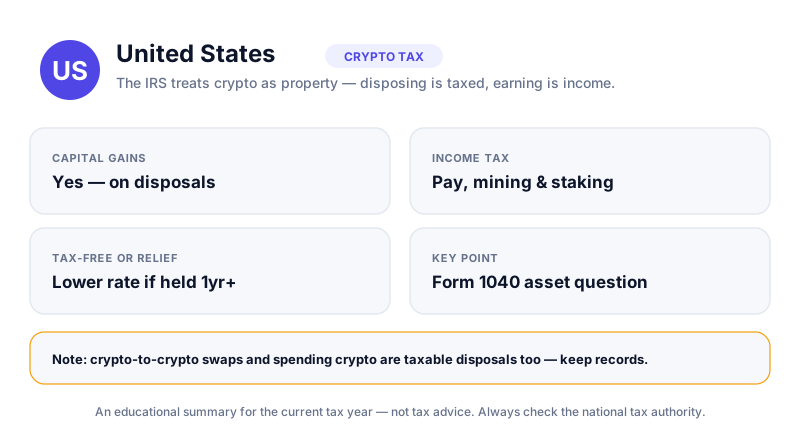
The IRS treats crypto as property. Selling, swapping or spending it is usually a taxable capital gain or loss; earning it (pay, mining, staking, some airdrops) is usually ordinary income. There's a yes/no digital-asset question on Form 1040, and you generally report gains on Form 8949 / Schedule D. Keep detailed records, and check current IRS guidance or a CPA — rules change.
Read this first
This is education, not tax advice
Tax law, rates and reporting forms change, and your situation is unique. Nothing here is personal advice. Always check current IRS guidance or speak with a qualified tax professional (CPA or enrolled agent) before filing.
How the IRS views crypto
The IRS treats cryptocurrency as property, not currency. That means the familiar rules for things like stocks broadly apply: when you dispose of crypto, you may have a capital gain or loss; when you earn it, it's usually ordinary income valued at the moment you received it.
There's also a digital-asset question near the top of Form 1040 that nearly every taxpayer must answer yes or no — a reminder that the IRS expects crypto activity to be reported.
Capital gains: disposing of crypto
You generally have a taxable disposal when you:
- Sell crypto for dollars.
- Swap one crypto for another — crypto-to-crypto trades are taxable, even with no cash involved.
- Spend crypto on goods or services.
Your gain is the value at disposal minus your cost basis (what you paid, including fees). How long you held it matters: assets held one year or less are typically taxed at short-term rates (like ordinary income), while those held more than a year may qualify for lower long-term capital gains rates.
Holding period matters
The one-year line is significant in the US: long-term gains are often taxed more favorably than short-term ones. Your records need to show when you acquired each lot, not just when you sold.
Ordinary income: earning crypto
When you receive crypto rather than buy it, it's generally ordinary income based on its fair market value when received. Common examples include:
- Getting paid in crypto for work or services.
- Mining rewards, and in many cases staking rewards when you gain control of them.
- Some airdrops and certain rewards.
Crypto you reported as income also gets a cost basis equal to that value — so when you later sell or swap it, you calculate a further capital gain or loss from there.
Reporting and record-keeping
US reporting tends to flow through a few common forms. Exchanges increasingly issue tax forms, but the ultimate responsibility for accurate reporting is yours.
- Answer the digital-asset question on Form 1040 honestly.
- Track every transaction: date acquired, date disposed, proceeds, cost basis, and resulting gain or loss.
- Report capital gains and losses on Form 8949 and summarize on Schedule D.
- Report crypto income (mining, staking, payment) on the appropriate income lines or schedules.
- Keep your supporting records, and consider crypto tax software or a CPA if you have many transactions.
Track lots as you go
Because the holding period and cost basis of each lot drive your tax, reconstructing them later is painful. A running log or reputable crypto tax software linked to your accounts saves real headaches at filing time.
Where to go next
Tax awareness pairs with the rest of responsible crypto use — keeping your coins secure and steering clear of scams. If you're in the UK, see our UK crypto tax overview. And always confirm specifics against current IRS guidance or a qualified professional.
Reconciling a year of trades by hand is miserable. Koinly connects your exchanges and wallets, applies the rules, and produces a ready-to-file report — free to preview, you only pay to download it.
Key takeaways
- The IRS treats crypto as property, with a digital-asset question on Form 1040.
- Selling, swapping or spending crypto is usually a capital gain or loss.
- Earning crypto (pay, mining, staking, some airdrops) is usually ordinary income.
- Holding over a year may mean lower rates — keep records and check IRS guidance or a CPA.
Frequently asked questions
Do I owe tax if I trade one crypto for another?
Generally yes. The IRS treats a crypto-to-crypto trade as a disposal of the first asset, so it can create a taxable gain or loss even though you never received dollars. Record the value of each trade.
What's the difference between short-term and long-term gains?
Crypto held one year or less is typically taxed at short-term rates (like ordinary income); held more than a year, it may qualify for lower long-term capital gains rates. Your records need to show acquisition dates.
Do I have to report crypto if I had a loss?
It's generally still reportable, and capital losses may offset gains and, within limits, other income. The rules are specific, so check current IRS guidance or a tax professional for your situation.
Keep reading
Crypto Taxes in the UK: A Plain-English Overview (HMRC)
How HMRC generally treats crypto for UK taxpayers — capital gains, income, record-keeping and allowances — exp
How to Buy Bitcoin Safely (Step by Step)
A careful, beginner-friendly walk-through of buying Bitcoin on a regulated exchange — verifying your account,
What Is Staking? How It Works and What It Costs
A plain-English guide to crypto staking: how it secures proof-of-stake networks, how rewards work, and the loc