How Meme Coin Liquidity Works (and Why It Matters)
When people talk about a meme coin's 'liquidity', they mean how easily you can actually buy or sell it without crashing the price. It is one of the most important — and most overlooked — risks in the whole meme-coin world. This guide explains what liquidity is in plain English, why 'locked liquidity' matters, and how thin or removable liquidity is exactly what makes a rug pull possible.
The 20-second version
Most meme coins trade in a 'liquidity pool' on a decentralised exchange — a shared pot of the coin paired with something like ETH. The bigger the pool, the more easily you can trade. If the team can pull that pool's funds out, they can drain the price to near zero in seconds. Always check whether liquidity is locked.
What does 'liquidity' actually mean?
Liquidity is simply how easily an asset can be bought or sold without moving its price much. A coin with deep liquidity lets you trade large amounts smoothly. A coin with thin liquidity can swing wildly the moment anyone buys or sells, because there is very little on the other side of the trade.
Most new meme coins do not trade on big exchanges like Coinbase. They trade on a decentralised exchange such as Uniswap, where prices come from a shared pool of funds rather than a traditional order book. Understanding that pool is the key to understanding meme-coin risk.
How a liquidity pool works
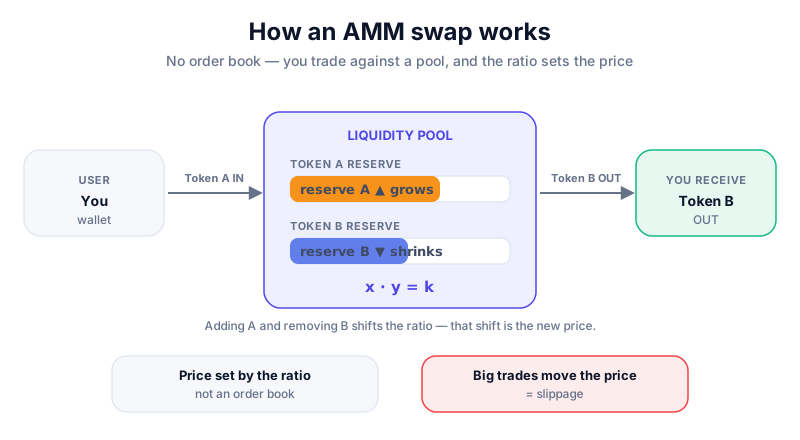
On a decentralised exchange, a meme coin is usually paired with a well-known asset such as ETH or a stablecoin inside a liquidity pool — a shared pot holding both sides of the pair. When you buy the meme coin, you add ETH to the pool and take meme coins out; the price adjusts automatically based on the changing balance.
- Liquidity providers deposit both tokens into the pool and, in return, earn a slice of the trading fees.
- The pool size decides how much you can trade before the price moves sharply. A tiny pool means huge price swings.
- The price is set by a formula based on the ratio of the two tokens, not by an order book of buyers and sellers.
This is the same automated market maker model used across DeFi. For meme coins, the catch is that pools are often very small and controlled by an anonymous team — which is where the danger lives.
Why 'locked liquidity' matters
Whoever provides the liquidity can usually also remove it. If a meme coin's team supplies the pool and then withdraws all the ETH paired against their token, the price collapses to near zero almost instantly and holders are left with coins they cannot sell. That is the classic rug pull.
To reassure buyers, some projects 'lock' their liquidity — the pool funds are sent to a time-locked smart contract or a third-party locker so they cannot be pulled for a set period. Others 'burn' the liquidity tokens entirely. Locked or burned liquidity does not make a coin safe, but unlocked liquidity is a glaring red flag. Whatever you connect to, sign carefully: an air-gapped wallet like the Keystone shows you the full transaction on its own screen before anything leaves your hands.
Locked is not the same as safe
A locked pool only stops liquidity removal for the lock period. The team can still dump their own token holdings, the lock can expire, and the contract itself may be malicious. Treat 'liquidity locked' as one box ticked, never as proof a coin is trustworthy.
How thin liquidity hurts ordinary buyers
Even without an outright scam, low liquidity quietly works against newcomers. With a shallow pool, the price you see is not the price you get, and getting out can be far harder than getting in.
- Slippage. Your trade moves the price against you, so you receive far fewer coins — or far less cash — than expected.
- You can buy but not sell. Some malicious tokens are coded to block selling entirely (a 'honeypot'), trapping your funds.
- Whale dumps. A single large holder selling into a thin pool can crash the price in one transaction.
- Fake volume. Bots trading back and forth can make a coin look liquid and popular when it is not.
Education, not financial advice
Meme coins are extremely volatile and many are designed to part you from your money. Only ever risk what you can afford to lose, and never borrow to buy crypto. This guide explains how liquidity works — it is not a recommendation to buy any coin.
Where to go next
Liquidity is just one piece of the puzzle. Read the full list of meme coin risks and learn how to spot a rug pull before going near any new token. For the foundations, see what is DeFi and what is a stablecoin, and always know how to avoid crypto scams.
Key takeaways
- Liquidity is how easily a coin can be traded without crashing its price.
- Most meme coins trade in a shared liquidity pool on a decentralised exchange.
- If a team can withdraw the pool, they can rug-pull holders in seconds — so check whether liquidity is locked.
- Thin liquidity causes slippage, honeypots and whale dumps; only risk what you can afford to lose.
Frequently asked questions
What does 'liquidity locked' mean?
It means the project's pool funds are held in a time-locked contract or locker so the team can't withdraw them for a set period. It reduces rug-pull risk during the lock but does not make a coin safe — the team can still dump their own tokens and the lock eventually expires.
Why did the price move so much when I bought?
That's slippage. In a small liquidity pool, even a modest trade shifts the token ratio and moves the price against you, so you get fewer coins than the quoted figure suggested.
Can a coin stop me from selling?
Yes. Some malicious tokens are coded as 'honeypots' that let you buy but block selling, trapping your funds. Thin or manipulated liquidity makes such traps easier to hide, which is why checking liquidity matters.
Keep reading
Meme Coin Risks and Red Flags
The core safety lesson on meme coins: the real risks, the warning signs to look for, and the scams that separa
How to Spot a Rug Pull
A practical guide to spotting rug pulls before they happen: liquidity locks, ownership concentration, contract
What Is DeFi? Decentralised Finance Explained
A beginner's guide to decentralised finance: what DeFi is, how lending, trading and yield work without a bank