How to Bridge Tokens Between Networks (Safely)
A bridge moves a token from one blockchain to another — say USDC from Ethereum to Solana. It's how you get assets onto a new network. But bridges have been targeted in some of the largest hacks in crypto history, so this guide treats safety as the main event, not a footnote.
The 20-second version
Bridges move tokens between blockchains. They've been hacked for billions, so use only well-established bridges, bridge small amounts at a time, and never bridge more than you can afford to lose. Double-check the destination network before you confirm.
What a bridge does
Networks like Ethereum and Solana can't talk to each other directly. A bridge fills that gap: it locks (or burns) your token on the first chain and releases an equivalent token on the second. The result is often a 'wrapped' version that represents the original asset on the new network.
Bridging is different from a swap. A swap exchanges two tokens on the same chain; a bridge moves the same value across chains. You'll often pay fees on both networks.
Why bridges are risky
Bridges have been hacked for billions
Because bridges hold large pools of locked assets, they're prime targets. Major exploits — including the Ronin bridge (about $600m in 2022) and Wormhole (about $320m in 2022) — drained enormous sums. Treat bridging as one of the higher-risk actions in crypto and only move what you can afford to lose.
The risk isn't only theft. Bridges can pause, get congested, or leave you holding a wrapped token that loses its peg to the original asset. The more hops and the newer the bridge, the more can go wrong.
How to bridge tokens, step by step
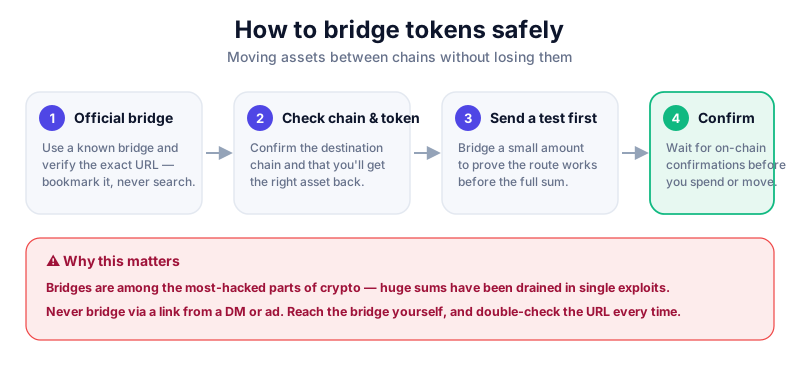
- Choose a well-established bridge with a long track record and audits — avoid brand-new or obscure ones.
- Connect your wallet and select the source network, the destination network, and the token.
- Confirm you'll have a small amount of the destination network's native coin for fees once you arrive.
- Bridge a small test amount first and confirm it lands correctly on the other side.
- Check the destination address and network one more time, then bridge the rest if you're satisfied.
- Track the transfer on a block explorer for both chains until it completes.
Rabby simulates transactions and warns about suspicious approvals before you sign, which is handy when interacting with bridges and DeFi. Download only from the official site.
Bridging more safely
- Prefer established, audited bridges over the newest one promising the best rate.
- Move in smaller batches rather than your whole balance at once.
- Be wary of links — only reach a bridge through its official, bookmarked URL to avoid phishing.
- After bridging, revoke any approvals you granted that you no longer need.
Key takeaways
- A bridge moves a token from one blockchain to another.
- Bridges are high-risk and have suffered some of crypto's biggest hacks.
- Use established bridges, test with a small amount, and never bridge funds you can't afford to lose.
- Always verify the destination network before confirming.
Frequently asked questions
Is bridging safe?
It's one of the riskier things you can do in crypto. Established, audited bridges are safer than new ones, but the safest habit is to bridge small amounts you can afford to lose and to reach bridges only via their official URL.
What is a wrapped token?
It's a stand-in token on the destination chain that represents your original asset locked on the source chain — for example, wrapped BTC on Ethereum. Its value depends on the bridge keeping that backing intact.
Do I need fees on both networks?
Usually yes. You pay a fee to leave the source chain and you'll need a little of the destination chain's native coin to do anything once you arrive.
Keep reading
How to Swap Tokens (Step by Step)
How token swaps work: slippage, price impact, network fees, approvals, and how swapping on an exchange differs
How to Use a DEX (Decentralised Exchange)
A beginner's guide to using a decentralised exchange: connecting a wallet, token approvals, slippage, fees, an
How to Revoke Token Approvals (and Why It Matters)
Token approvals let apps spend your tokens — and stale ones are a real risk. How to review and revoke approval