How to Buy Crypto in the UK (2026 Beginner's Guide)
Buying crypto in the UK is straightforward once you know the steps — but the rules around adverts, ID checks and tax have tightened a lot in recent years. This guide walks you through doing it safely and legally, from picking an exchange to keeping your coins secure afterwards.
The 60-second version
Pick a crypto exchange that's registered with the FCA, verify your identity, deposit pounds by bank transfer or card, then buy. Move anything you'd be upset to lose into your own wallet. Crypto isn't covered by the FSCS, and gains can be taxable — keep records.
Is buying crypto legal in the UK?
Yes. Buying, holding and selling cryptocurrency is legal for adults in the UK. What's regulated is *how* firms can offer and advertise crypto to you. Since the Financial Conduct Authority's financial-promotions regime took effect, exchanges marketing to UK customers must register with the FCA and show clear risk warnings — including a 24-hour 'cooling-off' period for first-time buyers.
Crypto isn't protected like a bank account
Cryptoassets are high-risk and largely unregulated. They are not covered by the Financial Services Compensation Scheme (FSCS) or the Financial Ombudsman Service. If a platform fails or you're scammed, you are unlikely to get your money back. Only ever risk what you can afford to lose, and never borrow to buy crypto.
Step 1: Choose an FCA-registered exchange
Stick to platforms that appear on the FCA's register of crypto firms allowed to operate in the UK. Several large global exchanges serve UK customers, but availability and features change, so always check the current FCA register before signing up.
- Check the FCA register for the firm's name before depositing a penny.
- Compare fees — trading fees, the spread, and deposit/withdrawal charges all add up.
- Check GBP support so you can pay in pounds without costly currency conversion.
- Look at security — two-factor authentication and the ability to withdraw to your own wallet.
Coinbase is one of the more beginner-friendly exchanges available to UK users, with GBP support. Compare options yourself and check the live FCA register first — we may earn a commission at no cost to you, and it never changes our verdicts.
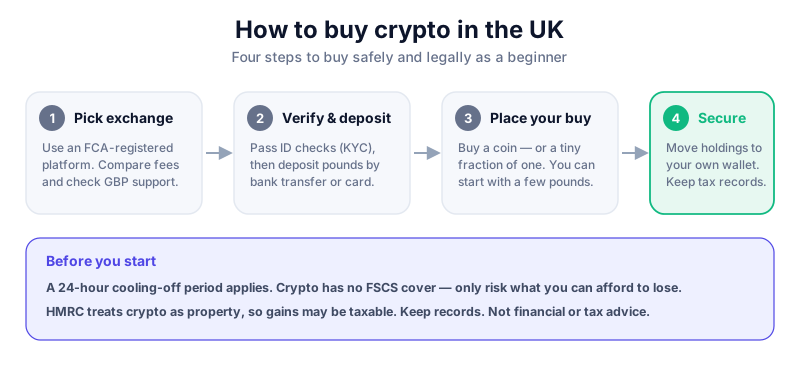
Step 2: Verify, deposit and buy
- Create your account and complete identity verification (KYC) — usually photo ID and a selfie. This is a legal requirement, not optional.
- Read the risk warnings honestly. First-time buyers face a 24-hour cooling-off period before they can complete a purchase — use it to be sure.
- Deposit pounds. Bank transfer is usually cheapest; debit cards are faster but often cost more. Many banks block or delay crypto payments, so a transfer may need approval.
- Place your buy order. You don't need a whole coin — most cryptoassets are divisible into tiny fractions, so you can start small.
- Withdraw to your own wallet. For anything beyond pocket money, move it off the exchange (see below).
Step 3: Store it safely and keep tax records
Leaving coins on an exchange means the exchange holds the keys — not you. For larger amounts, learn how to store crypto safely and consider hot vs cold wallets. Whatever you do, never share your seed phrase with anyone.
On tax: in the UK, HMRC generally treats crypto as property, not currency. Selling, swapping or spending crypto can trigger Capital Gains Tax, and earning it (mining, staking, airdrops) can be Income Tax. Keep records of every transaction. This guide is education, not tax advice — check HMRC guidance or speak to an accountant for your situation.
Scams target new buyers
No legitimate firm guarantees returns or pressures you to 'act now'. Learn how to avoid crypto scams before you start — fake celebrity endorsements and 'recovery' fraud are rife in the UK.
Key takeaways
- Buying crypto is legal in the UK, but only use FCA-registered platforms.
- Crypto has no FSCS protection — only risk what you can afford to lose.
- Expect ID checks and a 24-hour cooling-off period as a first-time buyer.
- Move serious holdings to your own wallet and keep records for HMRC.
Frequently asked questions
Do I have to pay tax on crypto in the UK?
Often, yes. HMRC generally treats crypto as property, so selling, swapping or spending it can create a Capital Gains Tax liability, and earning it can be Income Tax. Keep full records and check current HMRC guidance — this isn't tax advice.
Why did my bank block my crypto payment?
Some UK banks limit or delay payments to crypto exchanges to reduce fraud. You may need to approve the payment in your banking app or contact the bank. Bank transfers are generally smoother than card payments.
How much do I need to start?
Very little. Most cryptoassets are divisible into small fractions, so you can buy a few pounds' worth. Starting small while you learn is sensible.
Keep reading
How to Buy Crypto in the US (2026 Beginner's Guide)
A step-by-step guide to buying cryptocurrency in the United States — choosing a regulated exchange, passing ID
The FCA and UK Crypto Rules Explained
How the Financial Conduct Authority regulates crypto in the UK: registration, the financial-promotions regime,
How to Buy Bitcoin Safely (Step by Step)
A careful, beginner-friendly walk-through of buying Bitcoin on a regulated exchange — verifying your account,