How to Buy Crypto in the US (2026 Beginner's Guide)
Buying crypto in the US is easy to do and legal at the federal level, but the rules are a patchwork — different agencies, different states, and tax reporting that catches many beginners off guard. This guide covers how to buy safely and what to keep records of.
The 60-second version
Choose a US-regulated exchange, verify your identity, fund your account in dollars, then buy. Some products and tokens aren't available in every state. The IRS treats crypto as property, so most sells and swaps are taxable — keep records from day one.
Is buying crypto legal in the US?
Yes. Owning and trading cryptocurrency is legal across the United States. Oversight is split between several bodies — the SEC for assets it deems securities, the CFTC for commodities like Bitcoin, FinCEN for anti-money-laundering, and the IRS for tax. On top of that, individual states license money transmitters, so what's available can vary by where you live.
Crypto is high-risk and not FDIC-insured
Money held at a crypto exchange is not protected by FDIC insurance the way bank deposits are. Crypto prices are highly volatile, and platforms can fail. Only risk what you can afford to lose, and never borrow to buy crypto. This is education, not financial advice.
Step 1: Choose a US-regulated exchange
Use established platforms that comply with US registration and state licensing rules. Availability of specific coins and features (like staking or certain tokens) can differ by state, so confirm what's offered where you live.
- Check state availability — some services are restricted in states like New York, which requires a BitLicense.
- Compare fees — trading fees and the spread vary widely between platforms.
- Confirm USD funding via ACH transfer, wire, or debit card.
- Prioritize security — two-factor authentication and self-custody withdrawals.
Coinbase is a US-based, publicly listed exchange that's popular with first-time buyers. Compare fees and state availability yourself before signing up — we may earn a commission at no cost to you, and it never affects our verdicts.
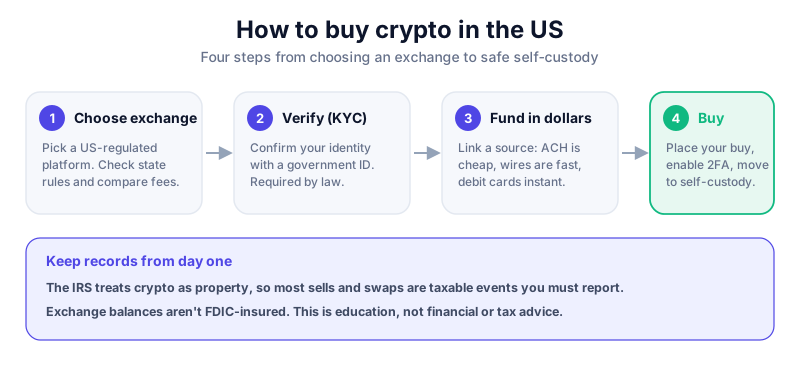
Step 2: Verify, fund and buy
- Open your account and complete identity verification (KYC) — typically a government ID and Social Security number for tax reporting. This is required by law.
- Link a funding source. ACH bank transfers are usually free or cheap; wires are faster for large amounts; debit cards are instant but often pricier.
- Place your first buy. You can buy a small dollar amount — most cryptoassets divide into tiny fractions.
- Enable two-factor authentication on your account before doing anything else.
- Withdraw larger holdings to a wallet you control rather than leaving them on the exchange.
Step 3: Understand taxes and store safely
The IRS treats cryptocurrency as property. Selling, trading one coin for another, or spending crypto are generally taxable events, and you must answer the digital-asset question on your federal return. Earned crypto (mining, staking, airdrops, payment for work) is usually ordinary income. New broker reporting rules mean exchanges report more to the IRS than before — so your records need to match. Keep them carefully; this is education, not tax advice.
For storage, don't leave large balances on an exchange. Learn how to store crypto safely and the difference between hot and cold wallets. Never share your seed phrase with anyone, and learn how to avoid crypto scams.
Watch the wash-sale debate
Crypto tax rules evolve. Strategies that work for stocks may not apply the same way to crypto, and proposals change. Check current IRS guidance or a qualified tax professional for your situation.
Key takeaways
- Buying crypto is legal in the US, but rules vary by agency and by state.
- Exchange balances aren't FDIC-insured — only risk what you can afford to lose.
- The IRS treats crypto as property; most sells and swaps are taxable.
- Move serious holdings to self-custody and keep detailed records.
Frequently asked questions
Is crypto available in every US state?
Not entirely. Some platforms and products are restricted in certain states — New York's BitLicense regime is the best-known example. Check what your chosen exchange offers in your state before signing up.
Do I have to report crypto to the IRS?
Yes. Every federal tax return asks about digital assets, and most sells, swaps and earnings are reportable. Exchanges now report more information directly to the IRS, so keep your own records consistent. This isn't tax advice.
What's the cheapest way to fund my account?
ACH bank transfers are usually the lowest-cost option, though they can take a few days to settle. Debit cards are instant but typically carry higher fees.
Keep reading
How to Buy Crypto in the UK (2026 Beginner's Guide)
A plain-English, step-by-step guide to buying cryptocurrency in the UK — choosing an FCA-registered exchange,
The SEC and US Crypto Regulation Explained
How the SEC and other US agencies regulate crypto: the securities question, the SEC vs CFTC divide, major enfo
How to Buy Bitcoin Safely (Step by Step)
A careful, beginner-friendly walk-through of buying Bitcoin on a regulated exchange — verifying your account,