The FCA and UK Crypto Rules Explained
If you buy crypto in the UK, the Financial Conduct Authority (FCA) shapes much of what you'll experience — the registration of exchanges, the risk warnings you see, and the cooling-off period for first-time buyers. This guide explains what the FCA does, and just as importantly, what it doesn't protect.
The 60-second version
The FCA registers UK crypto firms for anti-money-laundering and controls how crypto is advertised. It does not approve crypto as an investment or protect you from losses. Use FCA-registered firms, but understand crypto sits largely outside the FSCS and Ombudsman safety nets.
What the FCA does for crypto
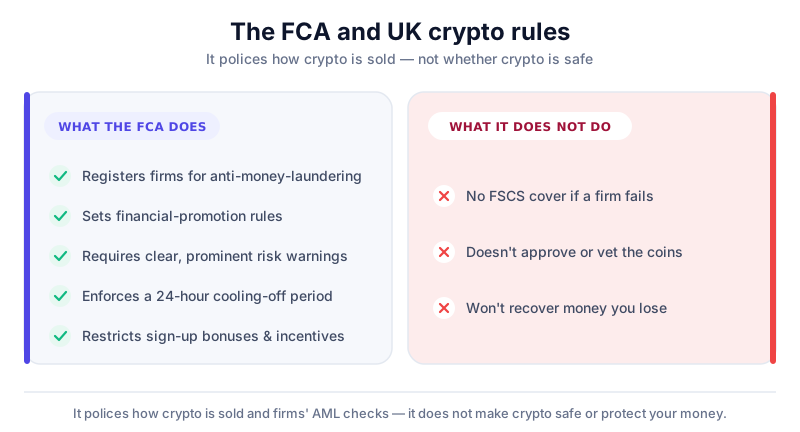
The FCA is the UK's main financial regulator. For crypto, its role currently centres on two things: registering crypto firms under anti-money-laundering (AML) rules, and policing how crypto is promoted to the public. Firms marketing cryptoassets to UK consumers must be FCA-registered or have their promotions approved by an authorised firm.
- AML registration — exchanges must verify customers' identities and report suspicious activity.
- Financial promotions — crypto adverts must be clear, fair and not misleading, with prominent risk warnings.
- Cooling-off period — first-time buyers get a 24-hour pause before they can complete a purchase.
- Banning inducements — 'refer a friend' bonuses and free-crypto sign-up offers are restricted.
What the FCA does NOT do
This is the part many buyers misunderstand. FCA registration is largely about anti-money-laundering compliance and promotions — it is not a stamp of approval that a coin is a sound investment.
No FSCS or Ombudsman cover
Most cryptoassets fall outside the Financial Services Compensation Scheme and the Financial Ombudsman Service. If a platform fails or you lose money, you usually have no compensation route. The FCA itself warns: be prepared to lose all the money you put in. Only risk what you can afford to lose.
What's changing
The UK is moving towards a fuller regulatory regime that would bring more crypto activities — like exchange operation and custody — under formal FCA authorisation, similar in spirit to the EU's MiCA. The government has signalled plans to regulate stablecoins and trading platforms more comprehensively. The exact shape continues to evolve, so check the FCA's website for the current position.
What it means for you
Before using any platform, check it appears on the FCA register of crypto firms. Be wary of any firm advertising without the required risk warnings — that's a red flag. And remember that regulation reduces some risks but never removes market risk. Pair sensible platform choice with good habits: learn how to buy crypto in the UK, how to store it safely, and how to avoid scams. Never share your seed phrase with anyone, including someone claiming to be from the FCA.
Key takeaways
- The FCA registers UK crypto firms for AML and controls crypto adverts.
- First-time buyers get a 24-hour cooling-off period.
- FCA registration is not approval of crypto as an investment.
- Crypto largely sits outside FSCS and Ombudsman protection.
Frequently asked questions
Does FCA registration mean a crypto firm is safe?
Not in the way people assume. It means the firm meets anti-money-laundering rules and can legally market to UK consumers. It does not guarantee the firm's solvency or that any coin is a good investment.
Will the FCA refund me if I'm scammed or a platform collapses?
Generally no. Most crypto activity falls outside the FSCS and Financial Ombudsman Service. The FCA's own message is to be prepared to lose everything you put in, so protect yourself with good security and caution.
What is the cooling-off period?
First-time buyers with a firm must wait 24 hours after their initial request before completing a purchase. It's designed to discourage impulsive, pressured decisions.
Keep reading
How to Buy Crypto in the UK (2026 Beginner's Guide)
A plain-English, step-by-step guide to buying cryptocurrency in the UK — choosing an FCA-registered exchange,
The SEC and US Crypto Regulation Explained
How the SEC and other US agencies regulate crypto: the securities question, the SEC vs CFTC divide, major enfo
What Is MiCA? The EU's Crypto Regulation Explained
A plain-English guide to MiCA — the EU's Markets in Crypto-Assets regulation: what it covers, how it affects e