How to Buy Ethereum Safely (Step by Step)
Now that you understand what Ethereum is and how it works, here's the practical bit: actually getting some. Buying Ethereum is straightforward once you know the steps — the hard part isn't the buying, it's doing it safely and not leaving your coins somewhere they can vanish. This guide walks through choosing a reputable exchange, staying safe, placing your first order, and the part most people skip: moving your ETH somewhere you actually control.
The 20-second version
Pick a reputable, regulated exchange, verify your identity, deposit money, and buy ETH. Start small, keep a little ETH spare for fees, and move larger holdings off the exchange to a wallet you control.
Before you buy
A few minutes of preparation saves a lot of regret. Make sure you genuinely understand what Ethereum is and that you're comfortable with the risk before spending anything. Buying crypto because a friend, an ad or a stranger online is excited about it is how most people get burned — by the time the hype reaches you, the people making noise have usually already bought in and want someone to sell to. Buy because you understand it, or don't buy yet. There is genuinely no rush, whatever anyone tells you.
Read this first
ETH's price is highly volatile and can fall sharply, sometimes very fast. This guide is education, not financial advice — never financial, legal or tax advice. Only ever buy with money you can afford to lose entirely, never borrow to invest, and ignore anyone promising guaranteed returns. They are lying.
Choosing an exchange
Most people buy ETH on a centralised exchange — a regulated company, a bit like an online broker, where you swap normal money for crypto. The main things to look for are a solid security record, proper regulation in your region, clear fees you can actually find before you buy, and easy withdrawals to your own wallet. That last one matters more than it sounds: some platforms make it suspiciously hard to take your coins out, and a business that fights you when you try to leave is telling you something important about how it sees your money.
| Exchange | Good for | Notes |
|---|---|---|
| Coinbase | Beginners | Simple interface, strong compliance; fees can be higher |
| Kraken | Security-minded users | Long track record, good support |
| Binance | Lower fees, more features | Very large; availability varies by region |
There's a deeper trade-off lurking here between exchanges that hold your coins for you and wallets where you hold them yourself — covered in centralised vs decentralised exchanges and our Coinbase review. For a first purchase, a simple regulated exchange is usually the sensible path: easy on-ramp now, and you can always take custody of the coins yourself once you're comfortable.
Coinbase is a regulated, easy-to-use exchange that's a sensible first stop for many people. We may earn a commission at no cost to you — it never changes our verdicts. Always compare options and read our full review first.
How to buy, step by step
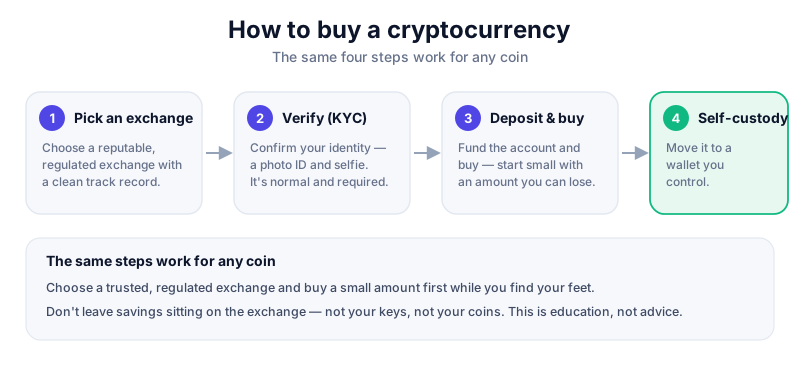
The process is more boring than scary, which is exactly how you want it — boring means working as designed. Here's the whole thing from start to finish:
- Create an account on a reputable exchange and turn on two-factor authentication straight away — use an authenticator app rather than SMS where you can, since SIM-swap attacks can defeat text-message codes by hijacking your phone number.
- Complete identity verification (an ID check, sometimes a selfie). This is normal and legally required on regulated platforms — not a scam, just paperwork, and a sign the platform is playing by the rules.
- Deposit funds from your bank. Start with a small amount for your very first purchase, enough to learn the ropes without much at stake. Your first buy is a rehearsal, not the main event.
- Buy ETH with a simple market or limit order. A market order buys at the current price now; a limit order waits for a price you set. Check the fees shown before you tap confirm — they're easy to overlook in the moment.
- Keep a small amount of ETH spare to cover future gas fees, then move the rest to a wallet you control.
Do a small test first
When you later withdraw to your own wallet, send a tiny test amount first, confirm it arrives, then send the rest. Crypto transactions are irreversible, and a single mistyped character in an address can mean the funds are gone for good. The test costs pennies in gas and saves heartbreak.
After you buy: don't leave it on the exchange
Here's the part most guides gloss over. An exchange holds the keys to any crypto kept there, which means it isn't truly yours — hence the crypto saying 'not your keys, not your coins'. Leaving ETH on an exchange is like leaving cash with a cloakroom attendant: usually fine, but it relies entirely on them staying solvent, honest and unhacked. Exchanges can be hacked, freeze withdrawals during a panic, or simply fail, and history has plenty of painful examples of all three. For anything you'd genuinely be upset to lose, move it to self-custody, where you hold the keys.
A software wallet like MetaMask is fine for small, active amounts you're using day to day. For larger holdings, a hardware wallet — a small device that keeps your keys offline, out of reach of malware — is the gold standard. There's no single right answer for everyone; it depends on how much you hold and how often you touch it. We walk through both, step by step, in the next lesson, how to store Ethereum safely.
A hardware wallet like the Ledger Nano X keeps your keys offline and away from hackers. Buy it only direct from Ledger — never second-hand. We may earn a commission at no extra cost to you, and it never sways our reviews.
Mistakes and scams to avoid
The crypto world is full of people trying to separate beginners from their money. The good news is that almost all of it follows a few predictable patterns — learn the shapes once and you'll spot them from a mile off:
- Buying from links in DMs, ads, or 'support' messages — always go to the exchange directly by typing the address yourself or using a bookmark. A fake site can look identical to the real one.
- Falling for 'double your ETH' giveaways and fake airdrops. Nobody sends back more than you send them. These are always scams, with no exceptions, no matter whose face is on the post.
- Reusing passwords across sites, or storing your seed phrase as a photo, screenshot or note on your phone — all of which can be quietly hoovered up if a device is compromised.
- Sending ETH to an address you haven't double-checked, character by character or via a saved contact. Clipboard malware can swap an address out from under you.
If you're new to spotting fraud, read how to avoid crypto scams before you move any meaningful amount — it's the cheapest insurance you'll ever buy, and it pays for itself the first time it stops you. With your ETH bought and a plan to secure it, the next lesson is the important one: storing it safely so all this care isn't undone by a careless tap.
Key takeaways
- Buy ETH on a reputable, regulated exchange with two-factor authentication on.
- Start small, check fees, and keep a little ETH spare for gas.
- An exchange isn't self-custody — move larger holdings to a wallet you control.
- It's volatile and scams are common — only risk what you can afford to lose.
Frequently asked questions
How much ETH do I need to buy?
As little as you like — Ether is divisible into tiny fractions, so there's no minimum 'whole coin'. Just keep a little spare to cover gas fees when you transact.
Is it safe to leave ETH on an exchange?
For small or actively traded amounts it's convenient, but the exchange holds the keys, so it can be hacked or freeze withdrawals. For anything significant, move it to self-custody.
Keep reading
What Is Ethereum? A Plain-English Guide
A beginner-friendly explanation of Ethereum: what it is, how it differs from Bitcoin, what smart contracts do,
How to Store Ethereum Safely (Step by Step)
Keep your ETH safe from hackers and mistakes: hot vs cold wallets, hardware wallets, seed-phrase backups, toke
Ethereum Gas Fees Explained
What gas fees are, why they exist, what makes them rise and fall, and practical ways to pay less when using Et